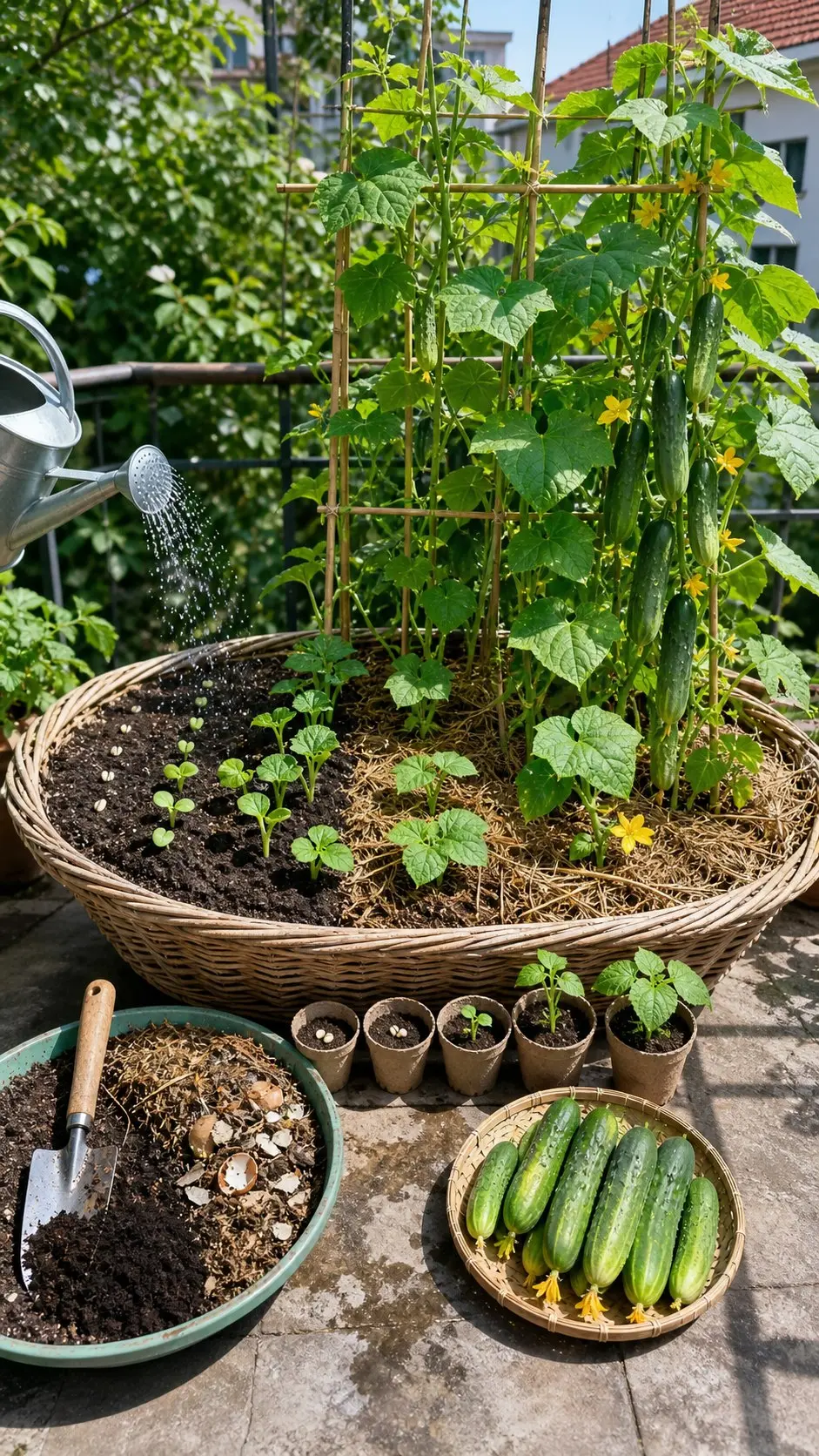
Cucumbers are a refreshing and versatile vegetable that thrive in both traditional gardens and small spaces. If you don’t have room for a sprawling garden bed, growing cucumbers in baskets is an excellent alternative. This method is not only space-saving but also decorative, adding greenery to balconies, patios, and terraces. With the right soil, basket setup, and care, cucumbers will grow vigorously and reward you with crisp, fresh harvests.
This step-by-step guide will walk you through everything you need to know about planting cucumbers in baskets—from choosing the right variety to harvesting your first crop.
Step 1: Select the Right Cucumber Variety
Not all cucumbers are ideal for container or basket gardening. Since baskets limit root space and overall plant size, compact and bushy varieties are the best choice.
- Bush types: Look for bush cucumbers, which stay smaller and adapt well to containers.
- Pickling cucumbers: These short-fruited varieties are well-suited to baskets and produce heavily.
- Salad cucumbers: Some smaller slicing types also do well if given support.
Choosing the right variety sets the foundation for a successful harvest.
Step 2: Prepare the Basket
The basket is your cucumber plant’s home, so selecting and preparing it properly is essential.
- Size: Use a basket at least 12–16 inches deep and wide. Bigger baskets allow more soil volume and reduce the risk of drying out quickly.
- Material: Woven baskets lined with coconut coir or burlap work well, but plastic or wire baskets with liners are also suitable.
- Drainage: Ensure the basket has sufficient drainage holes to prevent waterlogging. Good drainage keeps roots healthy.
- Liner: If using a woven basket, line it with coconut coir, sphagnum moss, or burlap to hold the soil while still allowing air circulation.
Step 3: Mix the Perfect Soil
Cucumbers grow quickly and produce heavily, so they need a nutrient-rich soil mix.
- Base: Start with a high-quality potting mix rather than garden soil, which can be too heavy.
- Compost: Add organic compost or well-rotted manure to provide fertility and improve soil structure.
- Aeration: Mix in perlite or coarse sand to prevent compaction and keep the roots oxygenated.
- Moisture balance: Coconut coir or peat moss helps retain water without becoming soggy.
This blend ensures a balance of drainage, aeration, and nutrition.
Step 4: Planting Seeds or Seedlings
You can grow cucumbers directly from seeds or start with young seedlings.
- Seeds: Plant 2–3 seeds about ½ inch deep in the center of the basket. Once they sprout, thin to the strongest seedling.
- Seedlings: If using transplants, place one healthy seedling in the center of the basket. Handle carefully to avoid disturbing the roots.
Spacing is crucial in basket gardening, so avoid overcrowding.
Step 5: Provide Proper Support
Even compact cucumber varieties benefit from some support to keep vines and fruits off the soil.
- Trellis: Place a small trellis inside the basket or behind it so vines can climb.
- Stakes: Wooden or bamboo stakes inserted into the basket can guide the plant upward.
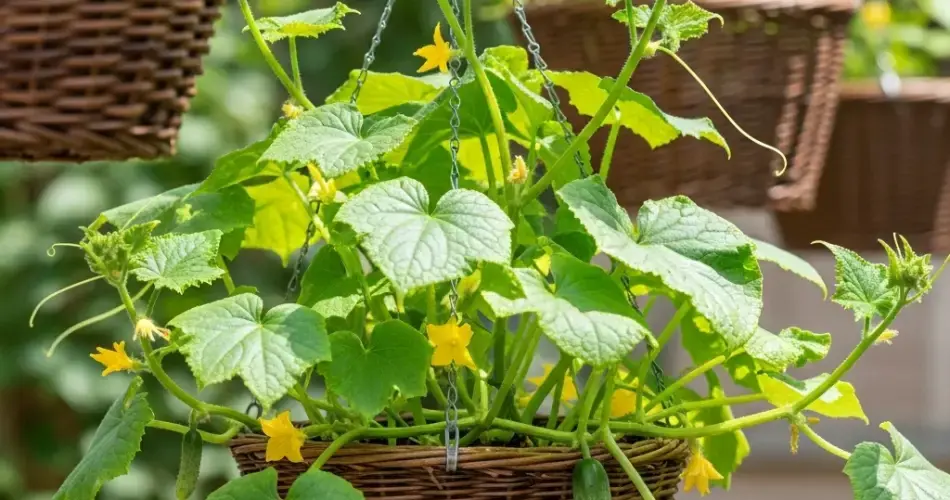
- Hanging baskets: For trailing types, let the vines cascade naturally over the basket’s edge.
Support improves air circulation, reduces disease risk, and keeps fruits cleaner.
Step 6: Watering Routine
Consistent watering is one of the most important factors for healthy cucumber plants.
- Frequency: Water deeply whenever the top inch of soil feels dry. In hot weather, this may mean daily watering.
- Consistency: Avoid letting the soil dry out completely, as this can cause bitter cucumbers.
- Mulching: Add a thin mulch layer on top of the soil to slow evaporation.
Since baskets dry out faster than ground soil, close monitoring is essential.
Step 7: Feeding and Fertilization
Cucumbers are heavy feeders and need regular nutrition for continuous production.
- At planting: Mix in a balanced slow-release fertilizer or compost.
- During growth: Apply liquid fertilizer every two weeks, focusing on potassium-rich blends to encourage flowering and fruiting.
- Boosts: Occasional feeding with compost tea or diluted fish emulsion supports vigorous growth.
Balanced feeding prevents nutrient deficiencies and boosts yields.
Step 8: Care and Maintenance
Healthy cucumbers in baskets require some ongoing care:
- Pruning: Pinch off damaged or yellow leaves to encourage airflow.
- Pollination: If growing indoors or in areas with fewer pollinators, hand-pollinate flowers using a small brush.
- Pest control: Keep an eye out for aphids, spider mites, or cucumber beetles, and treat promptly with organic methods like neem oil or insecticidal soap.
Regular attention ensures strong plants and reliable harvests.
Step 9: Harvesting Cucumbers
Cucumbers are ready to pick when they are firm, smooth, and reach the variety’s typical size.
- Timing: Harvest frequently to encourage more fruit production. Leaving cucumbers on the vine too long can reduce yield and cause bitterness.
- Method: Cut fruits with scissors or pruners rather than pulling to avoid damaging the plant.
Enjoy fresh cucumbers straight from your basket for salads, sandwiches, or pickling.
Conclusion
Growing cucumbers in baskets is a practical and rewarding way to enjoy fresh produce in small spaces. By choosing the right variety, preparing nutrient-rich soil, and providing consistent care, you can achieve abundant harvests even without a traditional garden. With proper support, watering, and feeding, basket-grown cucumbers will thrive and provide you with crisp, delicious vegetables throughout the season.
