
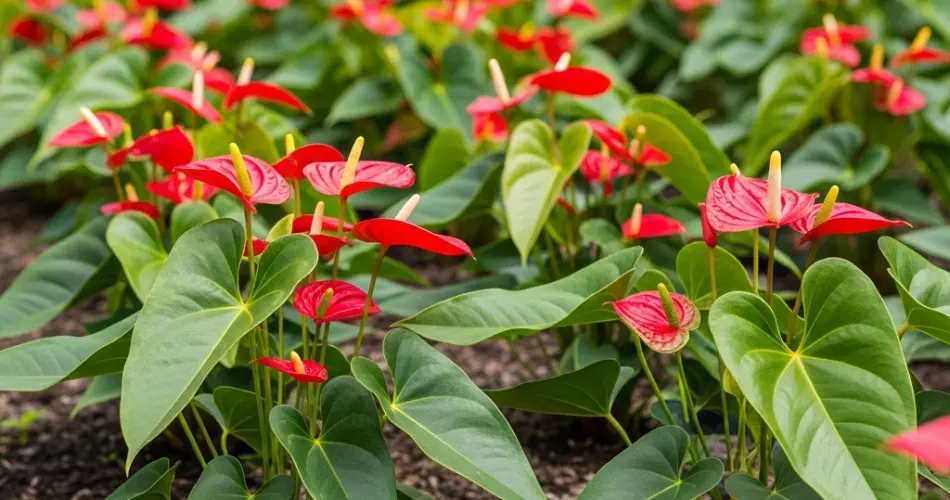
Anthuriums, also known as flamingo flowers or laceleaf, are striking tropical plants prized for their glossy, heart-shaped leaves and vibrant, long-lasting flowers. Their elegant appearance makes them a favorite choice for both indoor and outdoor gardens. The good news is you don’t need to be an expert gardener to successfully grow Anthuriums in your garden. With the right care and conditions, even beginners can enjoy these stunning plants.
Here’s a step-by-step guide to growing Anthurium in your garden, perfect for novices looking to add a splash of tropical color.
Why Choose Anthurium for Your Garden?
Anthuriums are more than just beautiful; they are relatively easy to grow and maintain. Some benefits include:
- Eye-catching blooms: Their waxy, bright spathes (modified leaves) can last for weeks.
- Air-purifying: Anthuriums help filter toxins from the air.
- Tolerant to indoor and outdoor environments: They adapt well to shade and partial sun.
- Long blooming season: They can flower almost year-round under the right conditions.
Choosing the Right Location in Your Garden
Anthuriums thrive in warm, humid environments with indirect sunlight. When planting in your garden:
- Light: Choose a spot that receives bright, filtered light — ideal locations are under trees or near a shaded patio.
- Avoid direct sunlight: Too much sun can scorch the leaves and cause flower fading.
- Temperature: Anthuriums prefer temperatures between 65°F and 80°F (18°C to 27°C). Avoid exposure to cold drafts or temperatures below 50°F (10°C).
- Humidity: High humidity is beneficial. If your garden is dry, consider misting or placing a humidity tray nearby.
Preparing the Soil
Anthuriums need well-draining, loose soil rich in organic matter.
- Soil type: A mixture of peat moss, orchid bark, and perlite works well. This mimics their natural epiphytic environment (growing on trees rather than soil).
- Drainage: Good drainage is crucial to prevent root rot. Avoid heavy garden soils that retain water.
- Soil pH: Slightly acidic to neutral soil (pH 5.5-6.5) is ideal.
If planting in the ground, amend the soil with organic compost and coarse bark to improve texture and drainage.
Planting Your Anthurium
You can start Anthuriums from nursery plants or division of mature plants.
- Dig a hole: Make a hole twice the width of the root ball and just as deep.
- Position the plant: Place the Anthurium so the base of the stems is level with the soil surface.
- Fill the hole: Backfill with the prepared soil mixture and gently firm around the roots.
- Water: Water thoroughly to settle the soil and remove air pockets.
Plant Anthuriums about 18-24 inches apart to allow airflow and growth.
Watering and Humidity Care
Watering Anthuriums correctly is key to their success:
- Keep the soil evenly moist but not waterlogged.
- Water when the top inch of soil feels dry.
- Use lukewarm water and water at the base to avoid wetting leaves, which can encourage fungal diseases.
- Increase humidity by misting leaves regularly or using a pebble tray filled with water.
- In dry climates or seasons, consider grouping plants together to maintain a humid microenvironment.
Fertilizing Your Anthurium
Feed your Anthurium to promote healthy growth and flowering:
- Use a balanced, water-soluble fertilizer (such as 20-20-20) diluted to half strength.
- Fertilize every 6-8 weeks during the growing season (spring through early fall).
- Avoid over-fertilizing, which can cause leaf burn or reduce flower production.
- Organic options such as fish emulsion or seaweed extracts are also beneficial.
Pruning and Maintenance
Regular maintenance keeps your Anthurium healthy and attractive:
- Remove yellow or damaged leaves by cutting them at the base with clean scissors.
- Deadhead spent flowers by cutting the flower stalk close to the base to encourage new blooms.
- Clean leaves occasionally with a damp cloth to remove dust and enhance photosynthesis.
- Watch for pests such as aphids, spider mites, and mealybugs. Treat infestations early with insecticidal soap or neem oil.
Common Problems and How to Solve Them
- Yellow leaves: Often caused by overwatering or poor drainage. Adjust watering habits and improve soil drainage.
- Brown leaf tips: Usually due to low humidity or fluoride in tap water. Use filtered or distilled water and increase humidity.
- Fungal diseases: Avoid overhead watering, improve air circulation, and remove infected leaves promptly.
- No flowers: Insufficient light or over-fertilization with nitrogen-rich fertilizer can reduce flowering. Provide adequate filtered light and use balanced fertilizer.
Propagating Anthuriums
If you want more plants, Anthuriums can be propagated through division:
- Carefully remove the plant from the soil.
- Separate clumps with roots attached.
- Replant divisions in fresh soil mixtures.
- Water well and provide shade while the new plants establish.
Propagation is best done during the active growing season for better success.
Final Tips for Growing Anthurium in Your Garden
- Choose healthy plants and provide consistent care.
- Avoid sudden changes in temperature or watering routines.
- Keep an eye on environmental factors like humidity and light.
- Be patient — Anthuriums may take some time to bloom but their striking flowers are worth the wait.
With minimal experience and simple care, you can cultivate beautiful Anthuriums that brighten your garden and home. Their exotic charm and lush foliage make them a rewarding addition for any gardener.
