
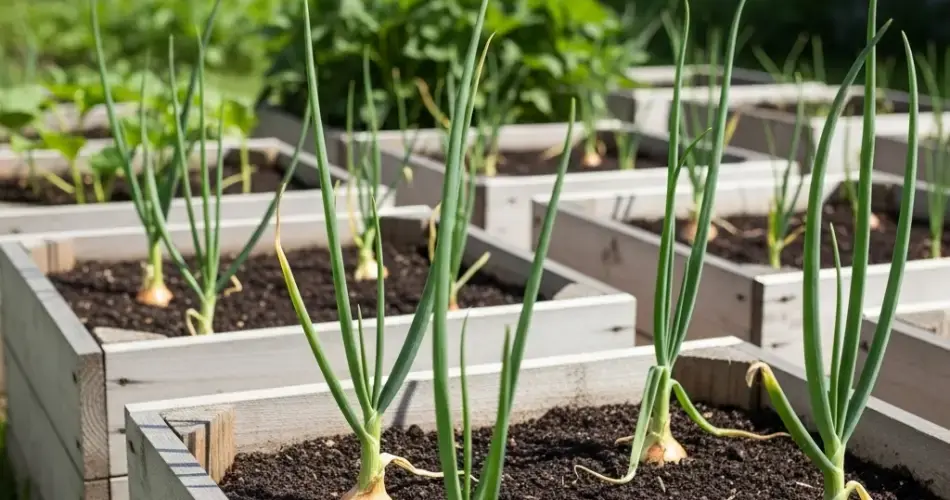
Growing onions at home is easier than many gardeners think, and it can be done successfully even in small spaces using wooden boxes. These compact planters offer a practical and attractive way to cultivate fresh onions right on your balcony, patio, or small garden. With proper care and attention, wooden box gardening allows you to enjoy crisp, flavorful onions without the need for extensive garden beds.
Choosing the Right Wooden Box
The foundation of successful onion gardening in small spaces is selecting an appropriate container. Wooden boxes are ideal because they provide sufficient depth for onion roots while allowing for good drainage. A box that is at least 8–12 inches deep and 12–18 inches wide is suitable for a small group of onions. Make sure the container has drainage holes to prevent water from pooling, which can cause root rot. Untreated or food-safe wood, such as cedar or redwood, is preferred because it resists decay and avoids chemical contamination.
Preparing the Soil
Onions prefer loose, fertile soil that drains well. A mix of garden soil, compost, and a small amount of sand or perlite works well for wooden boxes. Compost enriches the soil with nutrients while improving moisture retention, while sand or perlite ensures proper drainage. Fill the wooden box to about an inch below the top to leave space for watering. Onions grow best in slightly acidic to neutral soil, with a pH of 6.0–7.0.
Selecting Onion Varieties
For container gardening, choose onion varieties suited for small spaces and short growing cycles. Green onions, shallots, and certain bulb onions are ideal choices. Green onions are particularly convenient, as they can be harvested gradually without uprooting the entire plant. Bulb onions require more space but can thrive in larger wooden boxes. Selecting the right variety ensures a successful harvest and allows you to enjoy onions in multiple forms, from fresh greens to mature bulbs.
Planting Onions
Onions can be grown from seeds, sets, or seedlings. Seeds are ideal if you want a longer growing season and a wider selection of varieties, but sets and seedlings provide faster results. If starting from seeds, sow them indoors 8–10 weeks before the last frost and transplant seedlings when they have 2–3 true leaves. For sets or seedlings, plant them directly in the wooden box, spacing each plant 2–4 inches apart for green onions and 4–6 inches apart for bulb varieties. Gently press the roots into the soil and cover lightly, then water thoroughly.
Watering and Fertilizing
Onions require consistent moisture to develop healthy bulbs and tender greens. Water the soil whenever the top inch feels dry, ensuring thorough saturation without waterlogging. Mulching with straw or shredded leaves can help retain soil moisture and suppress weeds. Fertilization is important for growth; use a balanced, slow-release fertilizer or organic compost every 3–4 weeks. Nitrogen-rich fertilizers promote leafy growth, while phosphorus and potassium support bulb formation.
Sunlight Requirements
Onions thrive in full sun, requiring at least 6–8 hours of direct sunlight daily. Position your wooden boxes in a sunny spot where they can receive maximum light. If natural sunlight is limited, supplemental grow lights can help maintain vigorous growth and prevent onions from becoming spindly.
Managing Pests and Diseases
Even in containers, onions can be affected by pests like onion maggots, thrips, and aphids. Regularly inspect your plants and remove any damaged leaves. Organic remedies, such as neem oil or insecticidal soap, are effective for managing pests. Ensuring good air circulation around your wooden box also helps reduce the risk of fungal diseases, which can occur when leaves stay wet for extended periods.
Harvesting Onions
The timing of the harvest depends on the type of onion and your intended use. Green onions can be harvested gradually once they reach a usable size, while bulb onions should be left in the soil until the tops begin to yellow and fall over. Use a small garden fork or hand tool to gently lift bulb onions from the soil, then allow them to cure in a cool, dry place before storing. Fresh green onions can be cut and used immediately for cooking or garnishing.
Benefits of Wooden Box Onion Gardening
Using wooden boxes for onion cultivation offers several advantages. It maximizes limited space, protects plants from soil-borne diseases, and allows for controlled soil quality. Additionally, wooden boxes add rustic charm to balconies or patios while providing an efficient way to grow fresh, homegrown onions year-round.
By selecting the right container, preparing fertile soil, providing consistent care, and monitoring for pests, gardeners can enjoy a productive onion harvest even in small spaces. Wooden box gardening combines convenience, beauty, and sustainability, making it an excellent solution for urban gardening enthusiasts and home cooks who value fresh ingredients.
