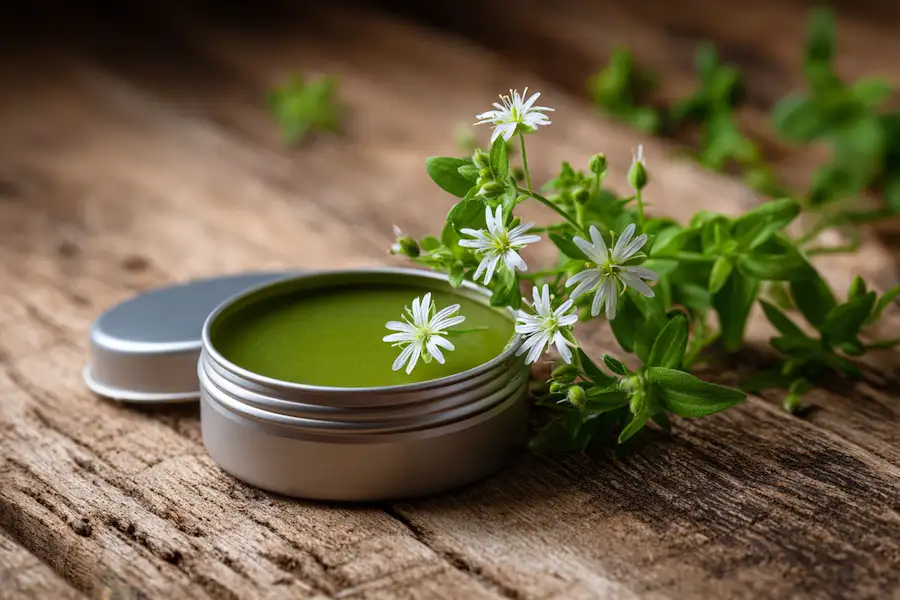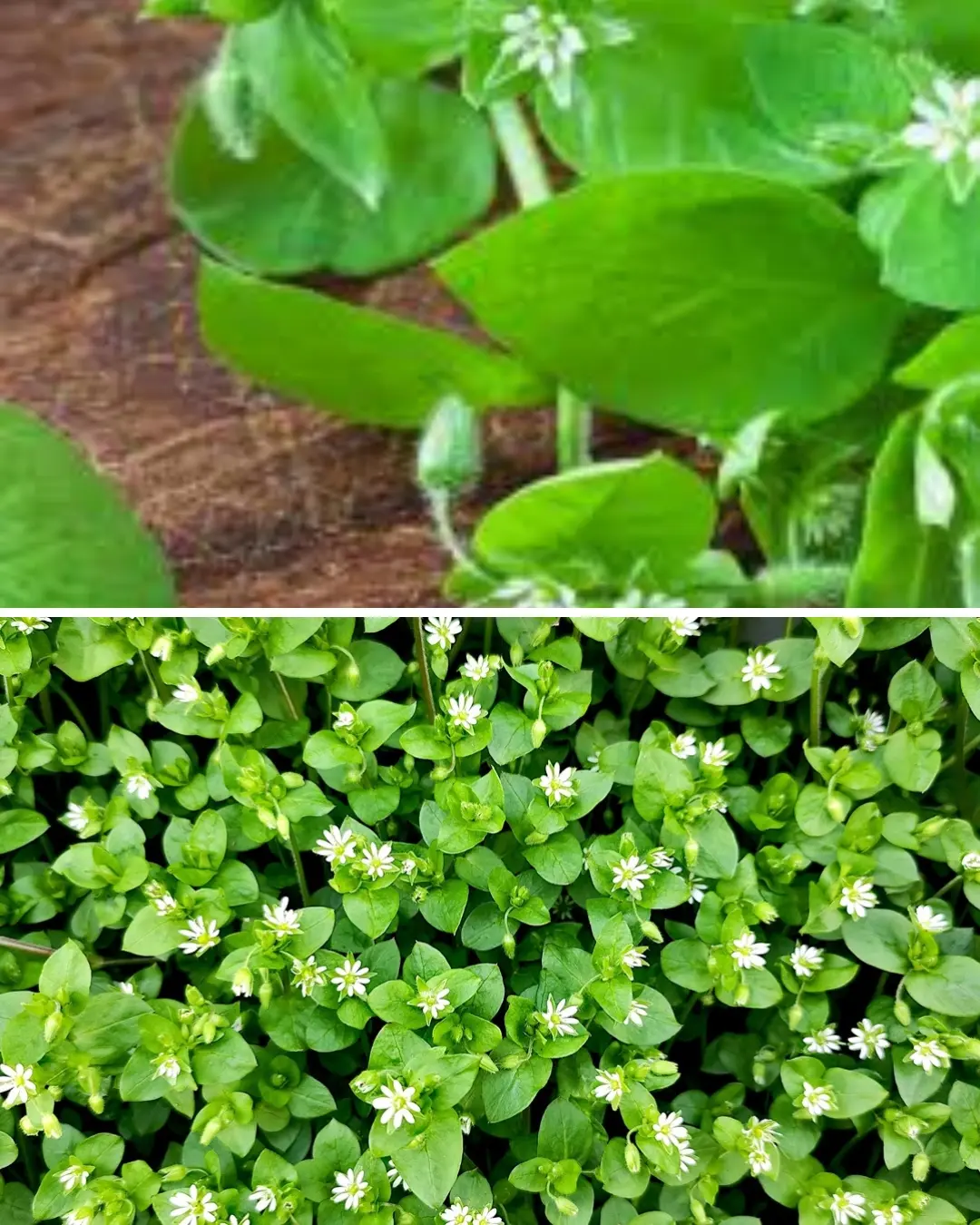
For many gardeners, the arrival of spring means the arrival of weeds. Among the first to appear in cool, damp soil is a sprawling, bright green plant with delicate, star-shaped white flowers. This is chickweed (Stellaria media). While often pulled and discarded, those in the know recognize chickweed not as a nuisance, but as one of nature’s most gentle and effective soothing remedies, particularly for the skin.
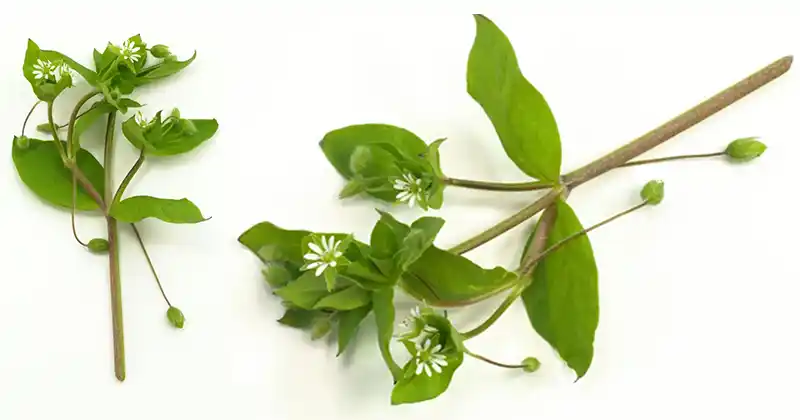
Chickweed is a powerhouse of traditional herbal medicine, revered for centuries for its ability to cool inflammation and relieve intense itching. By understanding its properties, you can transform this common backyard plant into highly effective homemade remedies.
The Cooling Philosophy Behind Chickweed
To understand how chickweed works, herbalists look at its “energetics.” Chickweed is classified as a profoundly “cooling” and “moistening” herb.
Consider the symptoms of common skin complaints: eczema, insect bites, rashes, sunburns, and poison ivy all share characteristics of heat, redness, and dryness. Chickweed acts as the antidote to these fiery conditions. It brings the temperature down on inflamed tissue and provides hydration to dry, cracked skin. It is widely considered the paramount herbal remedy for anything that itches.
Furthermore, chickweed is known as a “vulnerary” (an herb that promotes wound healing) and a mild “demulcent” (an herb that soothes irritated mucous membranes).
Creating Homemade Chickweed Remedies
Harvesting chickweed is best done in the cool of the spring or autumn. Snip the top several inches of the lush green growth. Always ensure you have correctly identified the plant before use; a key identifier is a single line of fine hairs running up one side of the stem, which switches sides at each leaf node.
Here is how to utilize this plant in your own home apothecary.
1. The Fresh Poultice: Immediate Relief
The simplest way to use chickweed is fresh from the earth. This method is ideal for immediate, acute issues like a fresh wasp sting, a throbbing splinter, or a sudden patch of itchy hives.
How to use it: Gather a handful of fresh chickweed. Crush it thoroughly between your palms, or mash it with a mortar and pestle until the plant juices are released and it forms a vibrant green pulp. Apply this pulp directly to the affected area. You can hold it in place with a bandage or cloth.
The Benefits: The fresh juices provide instant cooling relief to hot, itchy bites. Chickweed also has a traditional reputation as a “drawing” agent, helping to pull out splinters or draw infection from minor wounds.
2. The Soothing Bath Vinegar
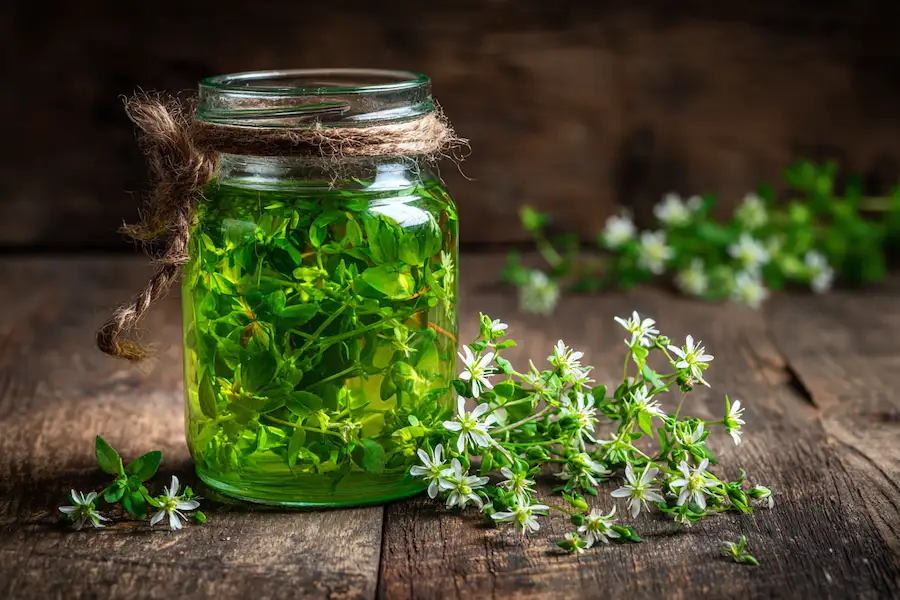
As indicated by common herbal practices, infusing chickweed into vinegar creates a potent, shelf-stable liquid excellent for widespread skin irritation. Vinegar itself helps restore the skin’s natural acid mantle, and when combined with chickweed, it becomes a powerful therapeutic agent.
How to make it: Pack a clean glass jar loosely with chopped, fresh chickweed. Pour organic apple cider vinegar over the herb until it is completely submerged. Cap the jar tightly with a non-reactive lid (or place parchment paper under a metal lid to prevent corrosion). Let this sit in a dark cupboard for two to four weeks, shaking occasionally. Strain out the plant material, and the resulting green-tinted vinegar is ready.
How to use it: Add roughly 1/4 to 1/2 cup of the infused vinegar to a warm (not hot) bath. Soak for at least 20 minutes.
The Benefits: This is unsurpassed for soothing full-body issues like winter dryness, widespread eczema, hives, or sunburn over large areas. It is gentle enough for children’s sensitive skin.
3. Chickweed-Infused Oil and Salve
For long-term storage and portable use, capturing the medicinal qualities of chickweed in oil is essential. This oil can be used on its own or thickened with beeswax to create a salve, often nicknamed “green goo” by herbalists.
Note: Because chickweed has a very high water content, it is crucial to wilt the fresh plant for 12 to 24 hours to let excess moisture evaporate before adding oil, otherwise your oil may grow mold.
How to make it: Fill a jar halfway with wilted chickweed. Cover it with a carrier oil, such as olive oil or almond oil, ensuring the herb is submerged by an inch. You can let this infuse slowly in a sunny window for four weeks, or speed up the process using a double boiler on very low heat for several hours. Strain the oil thoroughly. To make a salve, gently heat the strained oil and add roughly one ounce of beeswax shavings for every four ounces of oil, stirring until melted. Pour into tins to solidify.
The Benefits: This creates a rich, moisturizing barrier that holds the soothing properties of the herb against the skin. It is excellent for diaper rash, dry cracked hands, psoriasis patches, and chapped lips.
4. Internal Nutritional Support
We often forget that skin health starts from within. Chickweed is highly nutritious, packed with vitamins (especially C and A) and minerals like calcium, magnesium, and iron.
How to use it: Fresh, young chickweed tops have a taste similar to raw corn silk or spinach. They can be chopped and eaten raw in salads, added to smoothies, or steamed lightly like spinach. It can also be brewed into a fresh tea.
The Benefits: Internally, chickweed acts as a gentle metabolic tonic and a mild diuretic, helping the body flush toxins that might otherwise manifest through the skin. Its demulcent qualities also make it soothing for inflamed throats or dry coughs when taken as a tea.