
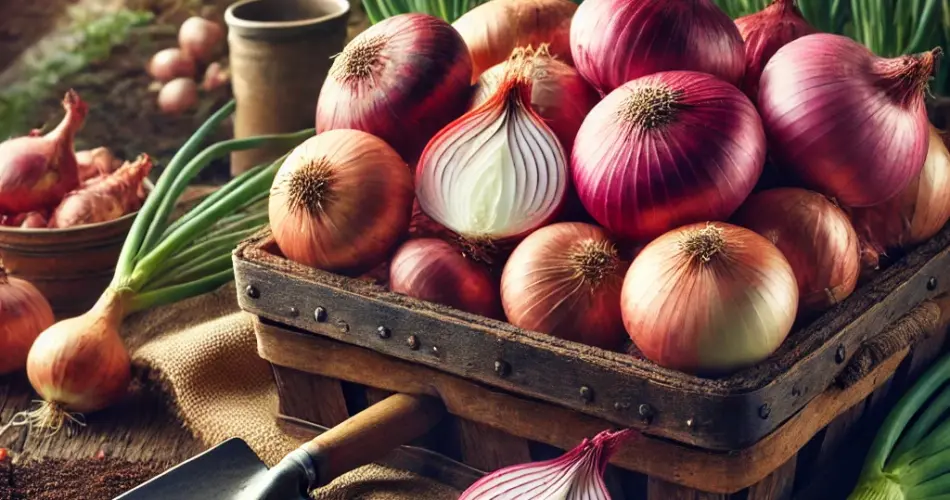
Early spring is the ideal time to plant onions, whether white, red, or spring varieties. For gardeners aiming for a healthy and abundant harvest, proper preparation is key. Like other vegetables, onions are vulnerable to pests and diseases, including blight, rust, rot, and the notorious onion fly. By carefully preparing the planting material and using natural treatments, you can protect your crop, encourage uniform sprouting, and ensure strong growth from the very beginning.
Why Preparing Onion Bulbs Matters
The first step to a successful onion harvest is selecting the right bulbs. Inspect each bulb carefully and discard any that are damaged, undersized, brittle, deformed, or showing signs of disease. Shriveled or weak bulbs may fail to sprout or produce weak seedlings, as onions rely heavily on nutrients stored in the bulb before roots and leaves are fully established.
Sorting bulbs by size is also important. Uniform bulbs germinate at similar rates, allowing for even growth and easier crop management. If the outer skin can be peeled away without damaging the bulb, take a moment to inspect the underlying layers for firmness and health. Healthy, robust bulbs give your onions the best start possible.
Activating Bulbs: Heat and Soaking Methods
Proper pre-planting treatments can significantly improve germination and protect onions from pests and diseases. Two of the most effective techniques are heat treatment and soaking.
Heat Treatment: Bulbs can be gently warmed two to three weeks before planting. A simple approach is to place them near a radiator or another moderate heat source, making sure they are not dried out or overheated. For a faster method, immerse bulbs in hot water at 40–50°C for two to three hours. This technique not only activates sprouting but can also eliminate potential pathogens. Heat treatment is often combined with soaking for enhanced results.
Soaking Bulbs: Soaking rehydrates the bulbs and stimulates uniform growth. There are several soaking options:
- Warm Water Soaking: Submerge bulbs in water at 30°C for 30 minutes to two hours. This method helps revive stored nutrients and promotes even sprouting.
- Rapid Soaking: A shorter soak in water at 40–50°C can accelerate activation but must be carefully timed to avoid overheating.
- Salt Solution Soaking: A saline soak is particularly useful for preventing pests such as onion flies. Dissolve one tablespoon of salt in one liter of warm water (40–50°C) and immerse the bulbs for no more than 30 minutes. For best results, pre-soak bulbs in plain water for two hours before the salt treatment, allowing them to better absorb the solution. After soaking, rinse the bulbs thoroughly three to four times to remove excess salt. Both table salt and sea salt work effectively, though saline treatment should be limited to once per season to avoid soil degradation.
Using Wood Ash for Disinfection and Growth Stimulation
Wood ash is another highly effective natural solution for onion cultivation. It acts as a disinfectant, stimulates growth, and enriches the bulbs with essential minerals. Avoid using ash from pellet stoves or burned materials containing chemicals, as these can harm plants.
To create a simple ash solution, dissolve 250g of wood ash in five liters of water and soak the bulbs for about ten minutes. Dry them in sunlight before planting. This treatment not only protects against disease but also enhances early development by supplying minerals directly to the bulb.
Applying Ash to the Soil
Wood ash is versatile and can be applied in multiple ways to improve soil structure, provide nutrients, and combat pests and fungal diseases. It can act as a natural fertilizer, insecticide, and fungicide while promoting soil aeration and preventing problems like head rot. However, it should be used judiciously, with a maximum of two to three applications per growing season.
Methods of Application:
- Pre-Sowing Soil Preparation: Sprinkle ash on the prepared bed and mix thoroughly into the soil before planting.
- Direct Application: Spread one cup (approximately 100g) of ash per square meter on the soil surface, then water to activate nutrients.
- Ash Solution for Watering: Dissolve 250g of ash in 10 liters of water, leave at room temperature for three days, and use to water seedlings. This method provides essential phosphorus and potassium while nourishing the developing bulbs.
Preventing Pests and Disease Naturally
Onion flies and fungal infections are major threats to early spring onions. Heat, soaking, and ash treatments provide a natural defense, reducing reliance on chemical pesticides. Saline and ash solutions can prevent common pests, while the nutrients in ash strengthen the plant’s immune system, making seedlings more resilient to environmental stress.
Key Steps for Successful Onion Cultivation
- Inspect and Sort Bulbs: Remove damaged or weak bulbs and group by size for uniform growth.
- Activate Sprouting: Use heat treatment and water or saline soaking to stimulate even germination.
- Disinfect Naturally: Treat bulbs with wood ash or saline solutions to prevent pests and fungal infections.
- Enrich Soil: Apply ash to the soil before planting or as a nutrient solution to improve growth and yield.
- Prevent Pests Early: Saline and ash treatments offer natural protection without harming the environment.
- Follow Seasonal Timing: Early spring planting after proper treatment ensures robust root development and healthier seedlings.
Conclusion
Proper preparation of onion planting material is a critical step toward a successful harvest. By combining careful selection, heat and soaking treatments, and natural disinfectants like wood ash and saline solutions, gardeners can improve germination, reduce pest risks, and boost overall yields. These natural methods offer an eco-friendly, sustainable approach that strengthens the crop while enriching the soil.
With careful planning, pre-planting preparation, and ongoing attention, your onions can grow vigorously, resist pests and diseases, and provide a plentiful harvest. Following these techniques ensures that your early spring planting develops into a productive, healthy, and resilient crop season after season.
