
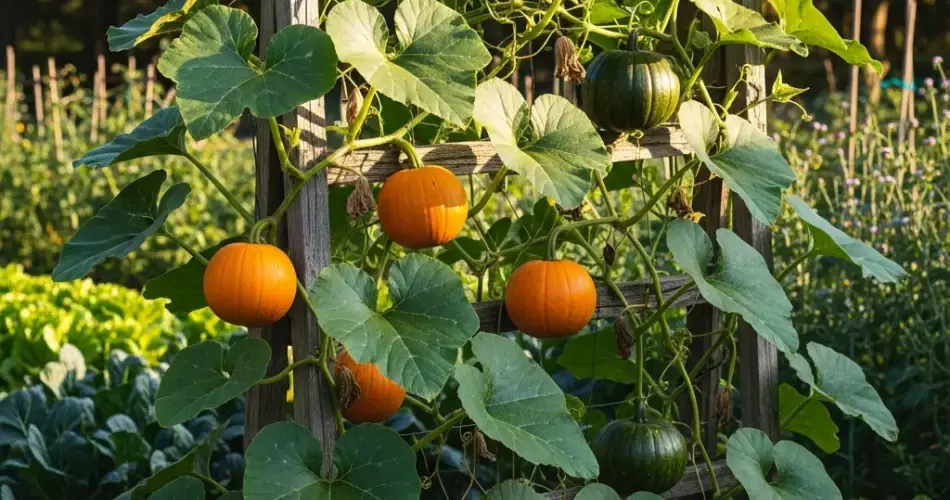
Pumpkins are often associated with sprawling fields, wide garden beds, and endless vines spreading across the soil. While this traditional image is charming, it doesn’t always fit into the reality of smaller home gardens, patios, or compact growing spaces. Thankfully, rustic wooden A-frames provide an elegant and functional solution for cultivating pumpkins vertically. With the right planning and structure, even gardeners with limited space can enjoy the rewards of growing compact pumpkin varieties.
Why Grow Pumpkins Vertically?
Pumpkins naturally sprawl across the ground, often consuming more room than most gardeners can spare. Vertical growing changes the game by offering several key benefits:
- Space Efficiency: Training vines upward frees ground space for other crops.
- Cleaner Fruits: Elevating pumpkins keeps them off damp soil, reducing the risk of rot and pest infestations.
- Healthier Plants: Improved airflow around leaves helps prevent fungal diseases like powdery mildew.
- Simplified Maintenance: Weeding, watering, and harvesting become easier when plants are neatly trained.
- Aesthetic Appeal: A rustic A-frame covered in vines adds natural charm to any garden.
For compact pumpkin varieties in particular, vertical growing ensures better yields without overwhelming the garden.
The Appeal of Rustic Wooden A-Frames
Among vertical gardening structures, A-frames stand out for their practicality and design. When constructed from rustic wooden materials, they blend seamlessly into garden landscapes while offering sturdy support.
Key advantages of wooden A-frames include:
- Strength and Stability: Properly built frames can handle the weight of pumpkin vines and fruits.
- Natural Look: Wooden structures harmonize with the garden environment.
- Ease of Construction: Many gardeners can build an A-frame with basic tools and lumber.
- Foldable Design: A-frames can be stored flat during off-seasons to save space.
By combining functionality with rustic charm, wooden A-frames provide both structure and beauty in compact gardens.
Building a Wooden A-Frame for Pumpkins
Creating a wooden A-frame doesn’t require advanced carpentry skills. Here’s a simple approach:
- Materials: Choose rot-resistant wood such as cedar, redwood, or treated pine. Gather screws, hinges (optional), and sturdy garden netting or wire for the vine support.
- Size: For compact pumpkin vines, a frame 4–6 feet tall and 3–4 feet wide per side is sufficient.
- Assembly: Construct two identical wooden panels and join them at the top with hinges or bolts to form the A-shape.
- Support Surface: Attach netting, lattice, or wire mesh across each side of the frame for vines to cling to.
- Anchoring: Ensure the frame is stable by securing its base into the soil or weighting the sides with stakes.
This simple structure offers reliable support for pumpkins throughout the growing season.
Choosing the Right Pumpkin Varieties
Not all pumpkins are suitable for vertical growing. Large, heavy varieties may strain the vines and damage the frame. Compact or small-fruited varieties are ideal for wooden A-frames. Some excellent choices include:
- Jack Be Little: Miniature pumpkins perfect for decorative or culinary use.
- Baby Pam: Small, sweet pumpkins great for pies.
- Sugar Pie: Compact fruits ideal for cooking.
- Wee-B-Little: Tiny pumpkins well-suited to trellises and A-frames.
These varieties produce manageable fruits that can easily be supported on vertical structures without risk of damage.
Training Pumpkin Vines on A-Frames
Pumpkin vines need guidance to climb since they don’t naturally twine like beans or peas. To ensure success:
- Weave Vines Early: As vines grow, gently thread them through the frame openings.
- Use Soft Ties: Secure stems with twine, cloth strips, or plant clips without constricting growth.
- Support Fruits: Create slings from fabric or mesh to cradle developing pumpkins and reduce stress on vines.
- Prune Wisely: Trim excess growth to encourage energy toward fruit production and reduce crowding.
With consistent attention, vines will cover the A-frame beautifully, producing hanging pumpkins that ripen cleanly.
Caring for Pumpkins on Wooden A-Frames
Pumpkins require the same care whether grown on the ground or vertically, with slight adjustments for trellised plants:
- Sunlight: Provide at least 6–8 hours of direct sunlight daily.
- Watering: Keep soil evenly moist, especially during fruit set, but avoid overwatering.
- Fertilization: Feed with a balanced fertilizer, focusing on phosphorus and potassium for fruit development.
- Pollination: Ensure flowers are pollinated—hand pollinate if natural pollinators are scarce.
Regularly check fruits and ties to ensure they remain secure as pumpkins gain weight.
Harvesting Pumpkins from A-Frames
One of the biggest perks of using A-frames is simplified harvesting. Pumpkins are suspended off the ground, making them easier to spot and pick. Look for signs of maturity such as hardened rinds, deep color, and dry stems before cutting pumpkins from the vine.
Harvest with pruning shears, leaving a few inches of stem attached to extend storage life.
Conclusion
Rustic wooden A-frames make it possible to grow compact pumpkin varieties in even the smallest gardens. They provide sturdy support, protect fruits from soil contact, and add rustic beauty to the landscape. With the right variety, proper training, and regular care, pumpkin vines thrive vertically, rewarding gardeners with clean, healthy, and easy-to-harvest fruits.
For those seeking a practical yet charming way to incorporate pumpkins into a compact garden, a handmade wooden A-frame may be the perfect solution. It combines traditional gardening wisdom with creative space-saving techniques, proving that even limited spaces can yield an abundant pumpkin harvest.
