
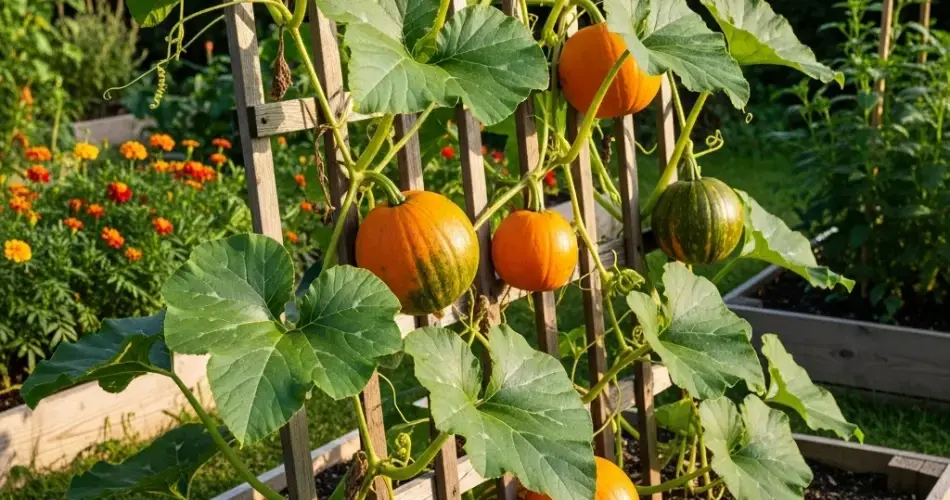
Pumpkins are among the most iconic crops of the gardening season. From small sugar pumpkins perfect for pies to giant varieties grown for decoration, these fruits bring beauty, flavor, and tradition to the garden. Yet, pumpkins present a common challenge: their vigorous vines and heavy fruits sprawl across large areas of soil, often overrunning beds and crowding out other crops. Fruits lying directly on the ground are also more prone to rot, insect damage, and uneven growth.
One of the most effective ways to manage pumpkin plants—especially in small gardens or tidy plots—is to grow them vertically. With the help of heavy-duty metal grids, gardeners can train pumpkin vines upward, lifting fruits off the soil and creating a healthier, more space-efficient growing system. These strong supports not only carry the weight of pumpkins but also add a structured, organized look to the garden.
Why Pumpkins Need Strong Support
Unlike lighter crops such as beans or peas, pumpkins require sturdy structures to thrive vertically. Their fruits, which can range from a few pounds to over 20 pounds depending on the variety, place significant strain on vines. Without proper support, stems can snap or fruits may drop prematurely. Heavy-duty metal grids solve this problem by:
- Holding weight securely: Thick wire or welded grids can handle the load of developing pumpkins.
- Preventing fruit damage: Pumpkins suspended above soil remain clean and dry.
- Saving space: Vertical growth frees up garden beds for other crops.
- Improving airflow: Vines climbing grids dry quickly after rain, reducing fungal disease risks.
- Simplifying harvest: Ripe pumpkins are easier to spot and reach when elevated.
Best Metal Grid Options for Pumpkins
When selecting a trellis system, strength and durability are key. Several designs work especially well for pumpkins:
1. Welded Wire Panels
Made from thick-gauge steel or galvanized wire, welded panels are among the strongest options available. They can be attached to sturdy posts or frames to create vertical or angled supports.
- Advantages: Long-lasting, capable of supporting heavy fruits.
- Best for: Medium- to large-sized pumpkin varieties.
2. Reinforcing Mesh Grids
Construction-grade reinforcing mesh, often used in concrete work, doubles as an excellent trellis material. The wide square openings make it easy to weave vines through.
- Advantages: Affordable, widely available, and extremely tough.
- Best for: Gardeners building large trellises or archways.
3. Metal Arch Grids
Bending heavy-duty mesh into arches creates both a functional trellis and an eye-catching garden feature. Pumpkin vines climb naturally over the arch, with fruits hanging downward.
- Advantages: Strong, attractive, and space-saving.
- Best for: Creating walkways or shaded tunnels in larger gardens.
4. Wall-Mounted Grids
For gardeners with limited ground space, attaching metal grids directly to a sturdy fence or wall provides vertical support.
- Advantages: Saves space, ideal for urban gardens or patios.
- Best for: Small pumpkin varieties or decorative mini-pumpkins.
Training Pumpkins on Metal Grids
Pumpkins do not climb on their own, so they need some assistance to grow vertically. Here’s how to train them successfully:
- Install the trellis early: Put grids in place before planting to avoid disturbing roots later.
- Plant seedlings at the base: Space them about 2–3 feet apart for healthy growth.
- Guide vines upward: As vines develop, weave them through grid openings or tie them loosely with soft twine.
- Support fruits: For larger pumpkins, use slings made of cloth, mesh bags, or old T-shirts to cradle them and prevent stem breakage.
- Prune selectively: Remove excess side shoots to focus plant energy on fruit production.
Tips for Success
- Choose the right varieties: Smaller pumpkins like sugar pie, jack-be-little, or mini decorative types are easier to grow vertically. Larger pumpkins can also thrive but need extra support.
- Water consistently: Pumpkins need steady moisture, especially during flowering and fruiting.
- Mulch at the base: Mulching conserves soil moisture and reduces weeds.
- Fertilize organically: Use compost or balanced organic fertilizer to encourage strong vine growth and fruiting.
- Harvest carefully: Cut fruits from the vine with pruners, leaving a few inches of stem attached for longer storage.
Design Ideas with Metal Grids
Metal grids not only serve a practical role but also enhance garden aesthetics. Consider these creative applications:
- Pumpkin tunnels: Use arch-shaped grids to form shaded walkways lined with hanging pumpkins.
- Garden walls: Turn fences into productive vertical pumpkin patches.
- Mixed plantings: Grow pumpkins alongside climbing beans or cucumbers for a layered, productive trellis.
- Decorative displays: Smaller pumpkins hanging from trellises create a striking seasonal feature.
Final Thoughts
Heavy-duty metal grids are a game-changer for pumpkin growers. They provide the strength needed to support sprawling vines and heavy fruits, keeping pumpkins clean, elevated, and easy to harvest. By growing vertically, gardeners make better use of their space while also reducing disease, improving airflow, and adding structure to their gardens.
Whether you choose welded panels, reinforcing mesh, or archway grids, these strong supports will ensure your pumpkin plants thrive. With the right system in place, you’ll enjoy abundant harvests and a more organized garden—proving that even heavy fruits like pumpkins can reach new heights.
