
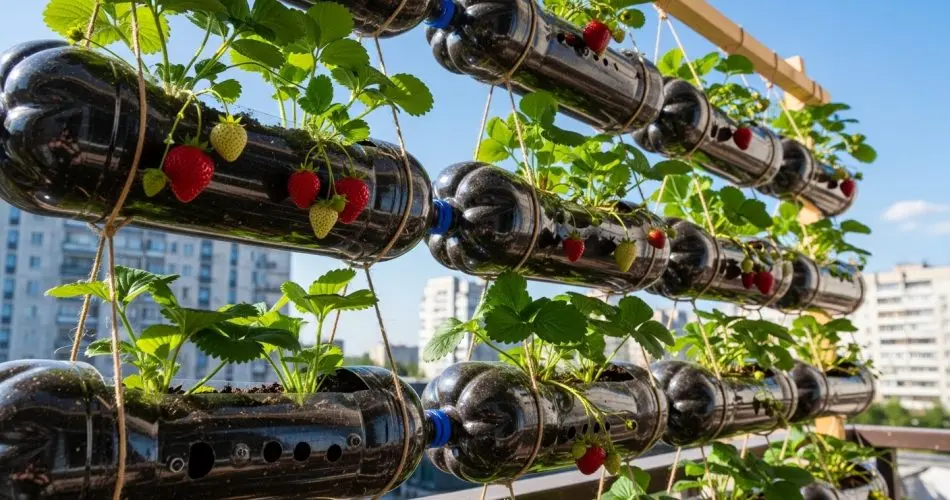
There’s nothing more satisfying than picking fresh, sweet strawberries straight from your own home garden. But what if you don’t have a garden? What if you live in an apartment or have only a balcony or window ledge? The good news is—you can still grow lots of juicy strawberries using recycled plastic bottles.
This method is not only space-saving and inexpensive, but it’s also a fun, eco-friendly way to turn everyday waste into a thriving vertical garden. With a few simple steps, you can enjoy your own harvest of delicious berries that look and taste better than anything from the store.
Why Grow Strawberries in Plastic Bottles?
Strawberries are one of the best fruits to grow in containers. Their compact roots, trailing growth, and decorative flowers make them perfect for limited spaces. However, they need well-draining soil and good sunlight. Plastic bottles—when prepared properly—offer exactly that.
By recycling bottles, you can create a vertical strawberry garden that saves space, conserves water, and gives you control over soil quality. Plus, it helps reduce plastic waste while producing fresh, organic fruits right at home.
What You’ll Need
To get started, gather these materials:
- 1.5- or 2-liter plastic bottles (as many as you want for multiple plants)
- Sharp scissors or knife for cutting
- Potting mix (garden soil + compost + cocopeat or rice hulls)
- Strawberry seedlings (choose everbearing varieties like Albion strawberry, Seascape strawberry, or Tristar strawberry)
- Twine or wire (for hanging)
- Watering can or spray bottle
- Organic fertilizer or compost tea
Step 1: Preparing the Bottles
Start by cleaning your plastic bottles thoroughly and removing the labels. Using scissors or a knife, cut a rectangular opening on the side of the bottle—this will be where you plant the strawberry. Leave enough space at the bottom to hold the soil.
Poke 3–4 small holes at the base of each bottle for drainage. Strawberries don’t like “wet feet,” so proper drainage is essential to prevent root rot.
If you want to create a hanging or vertical system, make two holes near the top and thread twine or wire through them for hanging. You can also stack the bottles vertically by inserting one bottle’s neck into the bottom of another.
Step 2: Adding Soil and Planting
Fill each bottle with your prepared potting mix. A good mix should be light, fertile, and slightly acidic—perfect for strawberries. Mix compost or organic fertilizer into the soil before planting.
Make a small hole in the soil and place your strawberry seedling inside, making sure the crown (where the stem meets the roots) stays above the soil surface. Firm the soil gently around the plant.
If you’re planting multiple bottles, space them so each plant receives enough sunlight and air circulation.
Step 3: Choosing the Perfect Location
Strawberries love sunlight. Place your bottles where they’ll get at least 6 hours of direct sunlight per day—balconies, windowsills, or terraces are ideal.
If you live in a very hot area, provide light shade during the peak afternoon hours to prevent leaf burn.
Step 4: Watering and Moisture Control
One of the main challenges in container gardening is maintaining proper moisture. Strawberries need consistently moist soil, but it should never be soggy.
Water your plants daily or every other day, depending on the weather. You can use a small watering can or even install a simple drip system using another bottle with tiny pinholes at the bottom to slowly release water.
To retain moisture, spread a thin layer of mulch—such as rice hulls, dried grass, or coconut fiber—on the soil surface. This helps prevent rapid evaporation and keeps the roots cool.
Step 5: Feeding for Fruity Growth
Strawberries are nutrient-loving plants. Feed them every two weeks with an organic liquid fertilizer such as compost tea, banana peel water, or diluted fish emulsion.
For extra sweetness and fruit size, add a little potassium (found naturally in banana or wood ash). If you prefer a DIY option, soak banana peels in water for two days and use this as a natural growth booster.
Step 6: Flowering and Pollination
After about 5–6 weeks, your strawberry plants will begin to flower. Each flower holds the potential for a fruit, so proper pollination is important.
If your plants are indoors, gently shake them or use a small brush to move pollen between flowers. Outdoors, bees and wind will take care of this naturally.
Once pollinated, the petals will fall off, and small green berries will start to form. These will grow and turn red over the next few weeks—an exciting sight for any home gardener!
Step 7: Harvesting and Enjoying
When your strawberries turn fully red and plump, they’re ready to pick. Twist the fruit gently from the stem instead of pulling to avoid damaging the plant.
Harvest regularly to encourage new flowers and fruits. Most strawberry varieties will keep producing for months with proper care.
Enjoy your strawberries fresh, or use them to make jam, smoothies, or desserts. The flavor of homegrown fruit is unmatched—sweet, fragrant, and chemical-free.
Common Problems and Easy Fixes
- Leaves turning yellow: Often due to overwatering or poor drainage. Check the holes and water less frequently.
- No fruits: The plant may lack sunlight or nutrients. Move it to a brighter spot and feed with a fertilizer rich in potassium and phosphorus.
- Pests like aphids: Spray with neem oil or a mild soap-water solution every 10 days.
Why This Method Works So Well
Growing strawberries in bottles offers several benefits:
- Space-saving: Ideal for balconies, fences, or walls.
- Recycling-friendly: Gives new life to old plastic bottles.
- Water-efficient: The small container limits waste and encourages deep root growth.
- Aesthetic: A hanging strawberry garden looks beautiful and lush.
With just a few bottles, you can create a vertical strawberry farm that yields dozens of fruits in a small area.
Final Thoughts
You don’t need fancy tools, a big garden, or expensive pots to grow strawberries. All you need is creativity, care, and a few recycled bottles.
Every time you see a bottle of water or soda, imagine it filled with green leaves and red berries instead of ending up as waste. Growing strawberries this way is not just about fruit—it’s about sustainability, simplicity, and the joy of nurturing life from things we often throw away.
So try it today—turn your trash into treasure, and your small space into a strawberry paradise overflowing with sweetness and color.
