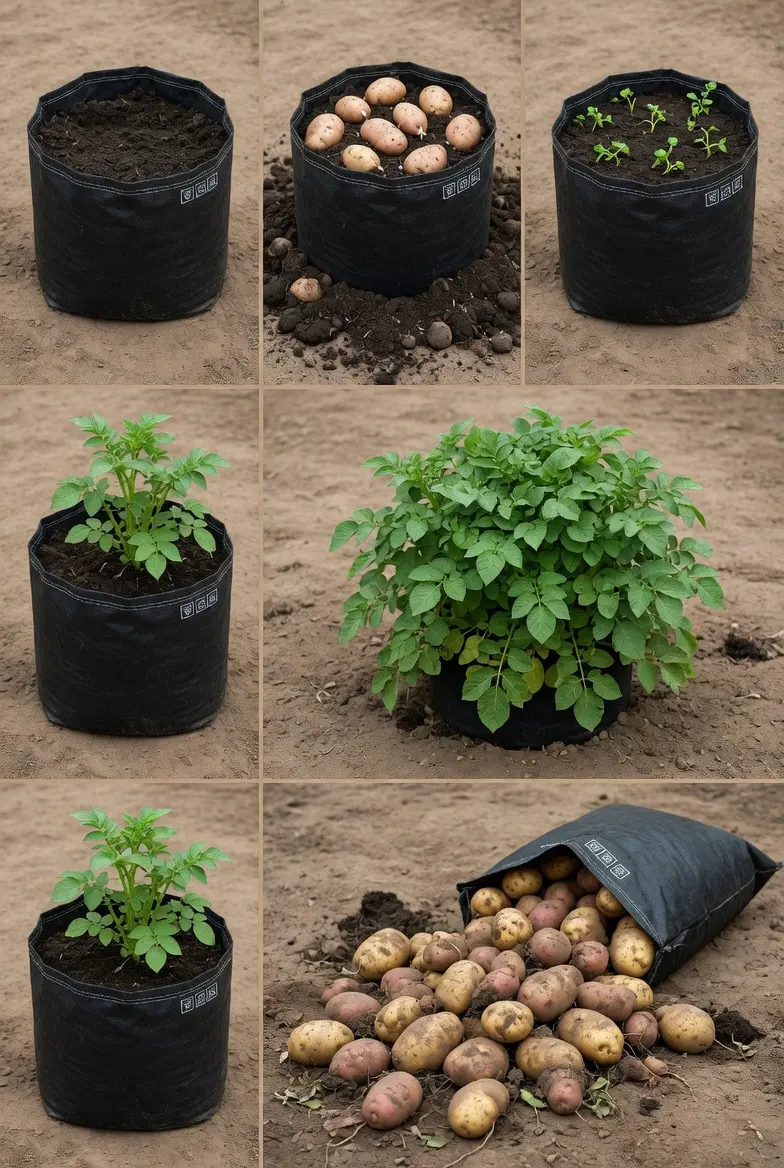
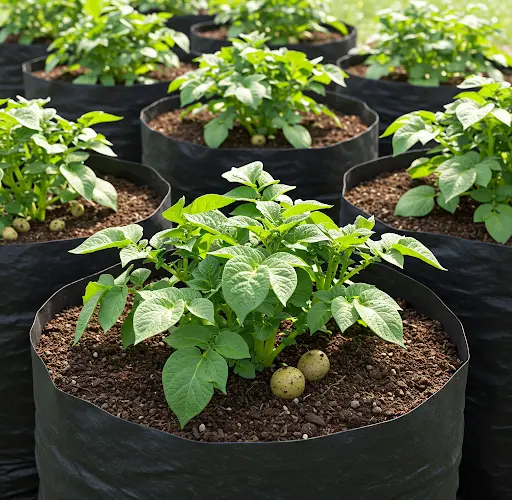
Growing potatoes in bags of soil has gained popularity among gardeners due to its convenience, space efficiency, and impressive yield. Many gardeners who use this method have noticed that their potato plants produce an abundant number of tubers. But what is the secret behind this high productivity? Here’s a breakdown of the key factors that contribute to the success of growing potatoes in soil bags.
1. Optimal Root Expansion and Tuber Formation
Potatoes are underground stems, not roots, and they require space to form multiple tubers. When potatoes are planted in soil bags, the confined yet flexible environment encourages the plant to spread its tuber-producing stolons evenly throughout the bag. Unlike traditional in-ground planting, where tubers might be limited by compacted soil or competition with other plants, bags provide a loose, well-aerated medium for extensive growth.
2. Improved Drainage and Aeration
Soil bags allow excellent drainage, preventing waterlogging, which can lead to rot or fungal diseases. The aeration provided by the loose soil in bags ensures that the potato roots receive ample oxygen, which is crucial for root development and tuber formation. The well-drained environment reduces stress on the plant and promotes healthier tuber growth.
3. Layering and Hilling for Maximum Yield
One of the best techniques used when growing potatoes in soil bags is hilling, which involves adding more soil as the plant grows. This method encourages the plant to produce additional stolons, leading to more tubers. By continuously adding soil or compost as the stems grow, the plant can maximize its tuber production. Since soil bags allow gardeners to add layers easily, it ensures a more extensive yield compared to traditional planting methods.
4. Controlled Soil Composition and Nutrient Supply
When growing potatoes in soil bags, gardeners have full control over the soil composition. A nutrient-rich, well-balanced soil mix containing compost, aged manure, and organic matter provides an ideal growing medium. This ensures that the plants receive consistent nutrients, leading to healthy growth and abundant tubers. Adding potassium-rich fertilizers or wood ash can further enhance tuber production, as potassium plays a significant role in root and tuber development.
5. Protection from Pests and Diseases
Traditional potato planting in the ground often exposes plants to soil-borne diseases and pests such as nematodes and wireworms. Soil bags offer a level of protection by allowing gardeners to use fresh, sterilized soil, reducing the risk of infections. Additionally, the ability to move soil bags to different locations makes crop rotation easier, preventing disease build-up in the same area.
6. Consistent Moisture Retention Without Overwatering
Potatoes require consistent moisture to develop properly, and soil bags help in maintaining the right balance. The enclosed environment helps retain moisture while ensuring excess water drains out. This prevents the tubers from drying out or becoming waterlogged, both of which can negatively impact yield. Gardeners can easily monitor soil moisture levels in a bag and adjust watering schedules accordingly.
7. Temperature Control and Extended Growing Season
Soil bags allow for better temperature control, especially when placed in strategic locations such as patios, balconies, or sunny garden corners. Potatoes thrive in warm but not excessively hot conditions, and bags can be moved to adjust for ideal growing temperatures. This adaptability can help extend the growing season, allowing for an earlier or later harvest, depending on climatic conditions.
8. Space Efficiency and High-Density Planting
Growing potatoes in bags allows gardeners to maximize space, making it ideal for small gardens, urban settings, and balconies. By using multiple bags, more plants can be grown within a limited area, increasing overall yield per square foot. This method also enables vertical gardening, where several bags are stacked or hung to optimize space utilization.
Conclusion
The method of growing potatoes in soil bags offers numerous advantages, resulting in a higher number of tubers per plant. The combination of optimal aeration, nutrient-rich soil, hilling techniques, controlled moisture, and protection from pests and diseases creates the perfect environment for potatoes to thrive. If you’re looking to maximize your potato harvest, consider trying soil bags for an efficient and productive growing experience. Whether you’re a beginner or an experienced gardener, this method ensures a plentiful yield with minimal effort and space requirements.
