Lemongrass is a fragrant, tropical herb known for its citrusy flavor and aroma, widely used in teas, soups, curries, and sauces. Growing lemongrass indoors provides a year-round supply of fresh stalks, perfect for cooking and herbal remedies. Even in small spaces or apartments, lemongrass can thrive indoors with minimal care when provided with proper containers, light, and watering. This guide offers beginner-friendly instructions for successfully cultivating lemongrass indoors.
Why Grow Lemongrass Indoors
Indoor lemongrass cultivation offers several advantages:
- Year-Round Access: Fresh stalks are always available regardless of outdoor weather conditions.
- Space Efficiency: Compact pots make lemongrass suitable for windowsills, countertops, or small indoor gardens.
- Aromatic Environment: Its fragrant leaves enhance your kitchen with a natural, refreshing scent.
- Health Benefits: Fresh lemongrass provides nutrients and can be used in teas and remedies.
Growing lemongrass indoors also allows greater control over soil, light, and watering conditions, which leads to healthier plants and more flavorful stalks.
Choosing Lemongrass Varieties
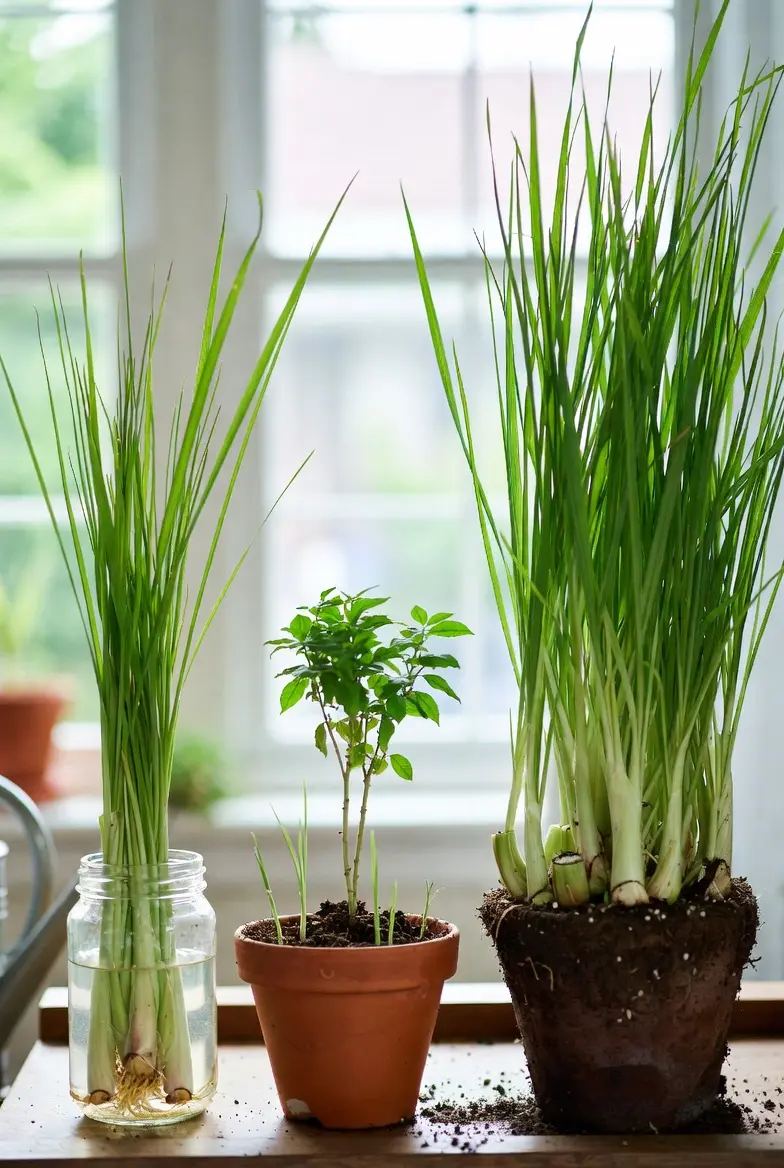
For indoor cultivation, select dwarf or tender lemongrass varieties, which are more manageable in containers. These varieties produce smaller stalks suitable for indoor growth and thrive in limited space. You can start with nursery-grown plants, rooted stalks from grocery lemongrass, or propagate from healthy stalks with roots attached.
Selecting Containers and Soil
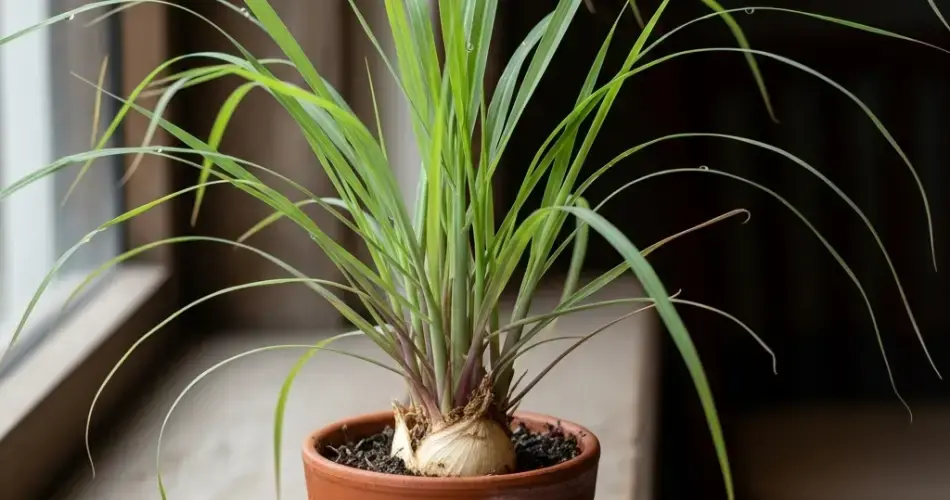
Lemongrass requires deep containers to accommodate its long roots. Use pots that are at least 10–12 inches deep with drainage holes to prevent waterlogging.
Fill containers with a nutrient-rich, well-draining potting mix. A blend of garden soil, compost, and perlite or sand works well. Avoid dense or clay-heavy soils that retain excessive moisture, as lemongrass roots are prone to rot.
Planting Lemongrass Stalks
Lemongrass can be grown from stalks or seeds, though stalks are faster and easier for beginners. To plant stalks:
- Select healthy stalks with firm bases and visible roots.
- Trim the leaves to about 6–8 inches to reduce water loss during establishment.
- Plant the base in soil, burying the roots and lower portion of the stalk.
- Firm the soil gently around the stalk and water lightly to settle it in place.
For seeds, sow them ¼ inch deep in soil, keep the medium moist, and cover with plastic wrap to maintain humidity until germination, which typically occurs in 2–3 weeks.
Light Requirements
Lemongrass thrives in bright, indirect light. Place your containers near south- or west-facing windows where they can receive at least 6–8 hours of sunlight daily. If natural light is limited, supplement with full-spectrum LED grow lights for 6–8 hours each day. Rotate the plants periodically to ensure even growth and prevent leaning.
Watering and Care
Proper watering is essential for healthy indoor lemongrass:
- Keep soil consistently moist but not waterlogged. Allow the top layer to dry slightly between waterings.
- Fertilize every 3–4 weeks with a balanced, water-soluble fertilizer to encourage strong growth.
- Trim dead or yellowing leaves to maintain plant health and promote new growth.
- Occasional misting helps maintain humidity, especially in dry indoor environments.
Harvesting Lemongrass
Lemongrass is ready to harvest once stalks reach 12–18 inches in height and have thick, firm bases. Cut stalks at the base while leaving a few inches above the soil to encourage regrowth. For continuous harvesting, trim the outer stalks first and allow inner stalks to grow. Fresh leaves can also be harvested for teas, adding versatility to your indoor garden.
Benefits of Growing Lemongrass Indoors
- Provides fresh, aromatic stalks for cooking and teas year-round
- Adds greenery and natural fragrance to your indoor space
- Requires minimal space and care, making it ideal for apartments
- Encourages sustainable gardening using household containers
- Supports overall kitchen productivity and culinary creativity
Final Thoughts
Growing lemongrass indoors is a simple and rewarding way for beginners to enjoy fresh, flavorful herbs year-round. By selecting healthy stalks, using deep, well-draining containers, and providing sufficient light and water, you can cultivate strong, aromatic plants in your kitchen or small indoor garden. With proper care and regular harvesting, indoor lemongrass will thrive, supplying fresh leaves and stalks for culinary and herbal uses while enhancing your home with vibrant greenery and natural aroma.
