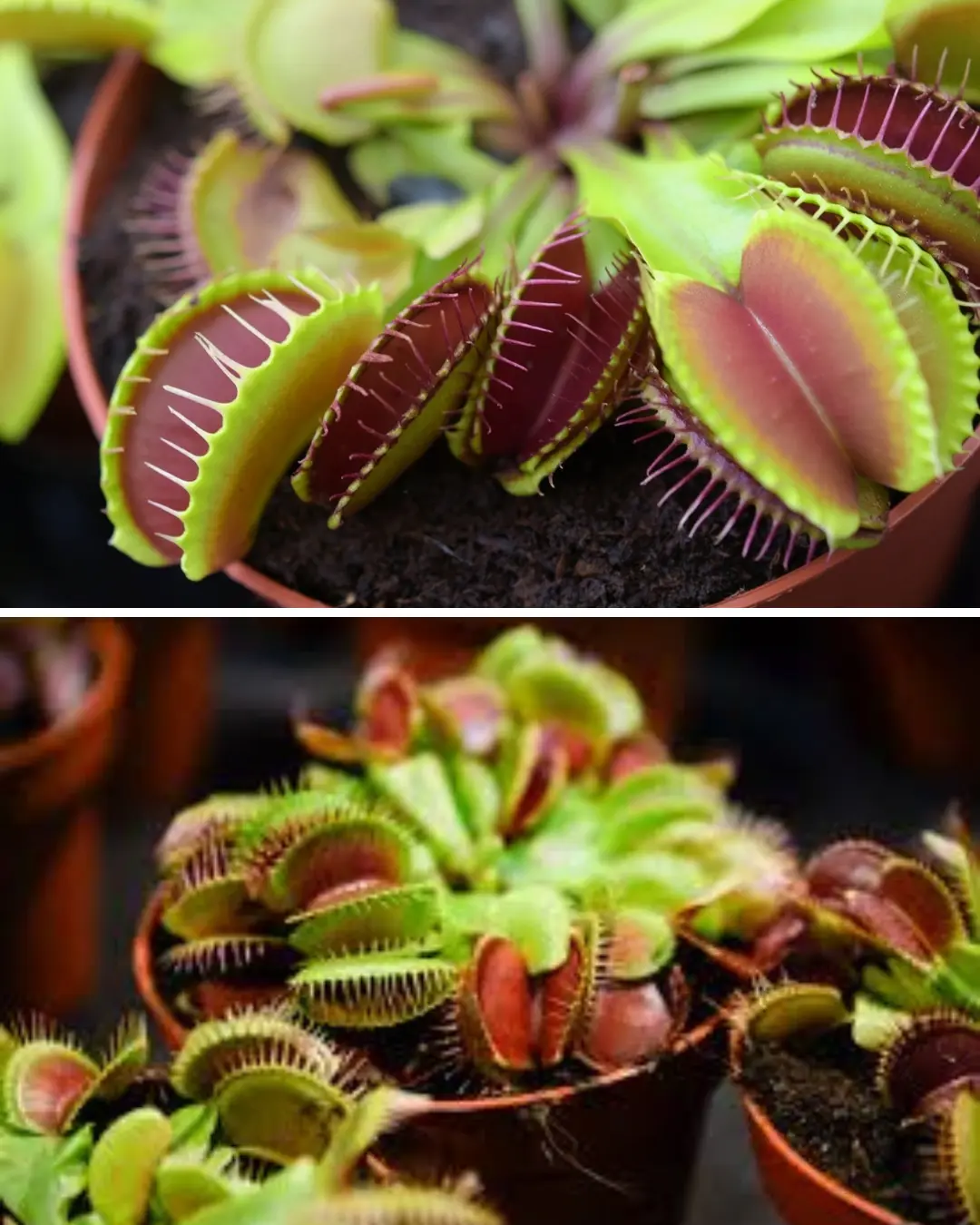
The Venus flytrap (Dionaea muscipula) is a perennial carnivorous plant, a member of the sundew family, well known for consuming small insects. People grow it in part because of its unique and eye-catching look, but mostly because of what it does.
Notoriously difficult to care for, these fickle moisture-lovers can still thrive in your home with the proper knowledge and care. Follow these tips to successfully grow and care for a Venus flytrap.
| Common Name | Venus flytrap, Venus fly trap |
| Botanical Name | Dionaea muscipula |
| Family | Droseraceae |
| Plant Type | Perennial |
| Mature Size | 6-12 in. tall, 6-9 in. wide |
| Sun Exposure | Full, partial |
| Soil type | Sandy, moist |
| Soil pH | Acidic |
| Bloom Time | Spring, summer |
| Flower Color | White |
| Hardiness Zones | 5-8 (USDA) |
| Native Area | North America |
:max_bytes(150000):strip_icc():format(webp)/venus-fly-trap-plant-profile-4688605-4-a554c2a9e7de4fdc8c0117e9ac6f4506.jpg)
:max_bytes(150000):strip_icc():format(webp)/venus-fly-trap-plant-profile-4688605-5-77c865f45e094739a592d2eca8824c3d.jpg)
About the Venus Flytrap
Venus flytrap grows in a narrow geographic range; it is native only to North and South Carolina. The “trap” of a Venus flytrap is a modified leaf. A plant can have as many as eight of them arising from flat stems (technically part of the leaf) around a basal rosette.
This leaf/trap consists of two lip-like lobes united by a hinge. Nectar within the trap is the bait that draws an insect into its death. Once inside, if the insect makes contact with one of the trigger hairs, the trap is sprung: It closes, shutting up the prey inside. After digestion, the “jaws” reopen.
:max_bytes(150000):strip_icc():format(webp)/venus-fly-trap-plant-profile-4688605-1-b73c65ea9627409092847039054f3848.jpg)
Venus Flytrap Care
The Venus flytrap is best grown as an indoor potted houseplant, where it will be more convenient for you to study its strange behavior. It is no harder to care for than many other houseplants, but it does require specific conditions.
Light
Venus flytraps should be placed in locations where they will receive 12 hours of light daily during the growing season from spring to fall. Aim for at least 4 hours of this to be bright, direct sunlight.
Water
It is better to water a Venus flytrap with rainwater than tap water. Set up a rain barrel or leave a container outdoors to collect the rainwater. In the absence of rainwater, use distilled water. Avoid watering from the top of the pot, and instead opt to place your Venus flytrap’s pot into a small dish of water.
Fertilizing
Do not fertilize Venus flytraps, as they perform best in soil that is low in nutrients. Just like its native bog environment. Venus flytraps get all of their necessary nutrition from sunlight and from insects they consume, and fertilizers will be too harsh and loaded with chemicals for these delicate plants.
Temperature and Humidity
Venus flytraps prefer warm temperatures between 70°F and 95°F, but survives temperatures as low as 40°F if properly protected. They also prefer humid environments with good air flow, so consider using a humidifier in your space, and running a small fan to keep air moving.
Types of Venus Flytraps
Plant developers have produced many cultivars of this unusual plant. Playing up the bizarre nature of the Venus flytrap, the cultivars sport colorful names. These cultivar names are also often highly descriptive, focusing on a particular feature that distinguishes the cultivar from the many others. Examples include:
- Dionaea ‘Petite Dragon’: One of the smallest Venus flytraps, its traps measure just 1/2 inch across.
- Dionaea ‘Ginormous’: At the other end of the spectrum, this cultivar’s traps measure 2 1/4 inches across.
- Dionaea ‘DC All Red’: The greatest distinction between one type of Venus flytrap and another is color-based. Most have traps with at least some green in them, and some are all green. Others have some combination of red, yellow, green, or purple in them. ‘DC All Red’ is entirely red.
Feeding a Venus Flytrap
If you live in a location with warm temperatures year-round and can grow your Venus flytrap outside, it will catch enough insects to feed itself. When grown indoors, as is more common, you may need to provide it with some meals. However, Venus flytraps won’t consume insects until they’re healthy and have all of their needs met, so focus first on creating the right growing conditions for a healthy plant.
Once your plant is healthy, occasionally provide it with live insects. After gently dropping an insect into the open trap, you’ll need to gently stimulate the trigger hairs to ensure healthy digestion, using a finger, a toothpick, or another tool.
Potting a Venus Flytrap
Because Venus flytraps are fickle about their growing conditions, it’s essential to know how best to plant them, the type of soil they need, and how often you should be repotting them to keep them thriving. Using all-purpose houseplant soil or planting methods will likely cause your Venus flytrap to die.
What Kind of Soil Is Best?
Venus flytraps thrive in wet, acidic, nutrient-poor soil. To recreate it indoors, use a 1:1 mixture of peat moss and perlite. A combination of soil mix with peat moss, or horticultural sand with an equal amount of peat moss, also works well. Wood-based materials such as bark, sawdust, or wood fiber are good sustainable alternatives to peat moss because they also have a low pH. Just make sure that the wood hasn’t been chemically treated. Coir, a sustainable alternative to peat moss, is not suitable because its pH is close to neutral.
Type of Pot
The best type of pot for a Venus flytrap is one made of fiberglass or plastic. Ceramic, glass, and especially closed terrarium-style containers are best avoided. The pot doesn’t need to be particularly wide, but providing decent depth is helpful. Four inches deep is a minimum, but deeper is better, up to 12 inches.
When to Repot
Venus flytraps grow best if they’re repotted every 6 to 12 months. This provides them with a fresh, healthy growing medium, as their containers and soil will have accumulated harmful chemicals, minerals, and weeds naturally over time.
To repot a Venus flytrap, use a pot that is at least 4 inches deep. Fill it with an equal mixture of peat moss and perlite and poke a hole in the center that is large enough to hold the plant’s roots. Grabbing the venus trap by the root ball (not by the traps), place it in the hole. Gently pat down the soil around the roots and water the plant deeply.
How to Propagate a Venus Flytrap
The most dependable method to propagate the Venus flytrap is by division.
- A mature plant will send up offshoots in the early spring. Remove them with a sharp knife or pruners, making sure they include roots.
- Fill pots 4 to 5 inches wide and at least 6 inches deep with fresh peat-based growing medium. Poke a hole in the center of each pot.
- Plant the offshoots in the holes. Water them well and keep the soil evenly moist at all times.
- Place the pot where it will receive indirect light, but avoid bright sunlight until the plant begins to develop new roots.
Warning
Like some other native species, the wild populations of the Venus flytrap have been drastically reduced due to over-collecting and habitat destruction. It is a threatened species in North Carolina and should never be taken from the wild, but only sourced from reputable nurseries that propagate their own plants.
Overwintering Venus Flytraps
The plant goes through a period of dormancy beginning in fall when the hours of daylight and sunlight levels decrease. It will lose its leaves and appear to die, but it lives on underground through rhizomes. This is normal, and you should not try to make up for the reduction of daylight hours by giving the plant artificial light.
Keep the plant in the coolest room of your home and cut back on the amount of water. Give it just enough water so the soil does not dry out completely. In the early spring when it starts regrowing, resume the regular watering schedule to keep it moist at all times.
Common Pests & Plant Diseases
Aphids and fungus gnats do occasionally bother the Venus flytrap despite it being an insect-eater itself.1 These pests are too tiny for the plant to capture and eat. Horticultural oil or insecticidal soap provides some control for a severe aphid infestation. Apply Bacillus thuringiensis (Bti) as a natural control for fungus gnats.
