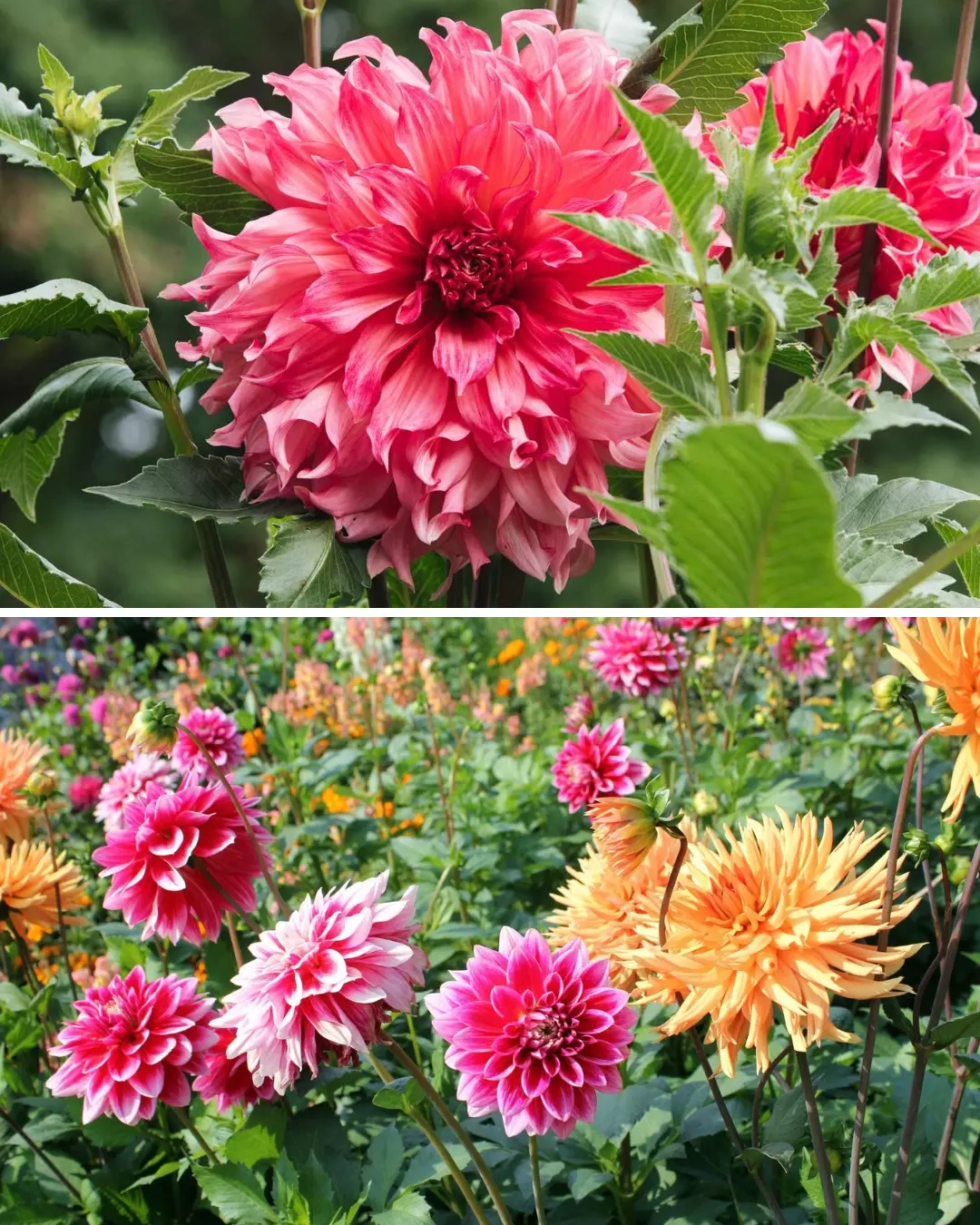
Dahlias are a stunning summer favorite with spectacular blooms that last for months.

From dainty snowball varieties to showstopping dinner plate dahlias with flowers that measure at least eight inches in diameter, dahlias are a gardener’s delight that thrive with the right care. Best of all, they come in a kaleidoscope of colorways that range from burgundy to white.
There’s nothing quite like a bountiful dahlia harvest. Yet to reap the benefits of these vibrant summer flowers, you’ll need to put in a bit of hard work upfront and give them plenty of love throughout the growing season to ensure bloom after bloom until the cooler fall months.
Ready to plant dahlias? Here’s how to grow and care for dahlias like a pro, according to experts.
How to plant dahlias
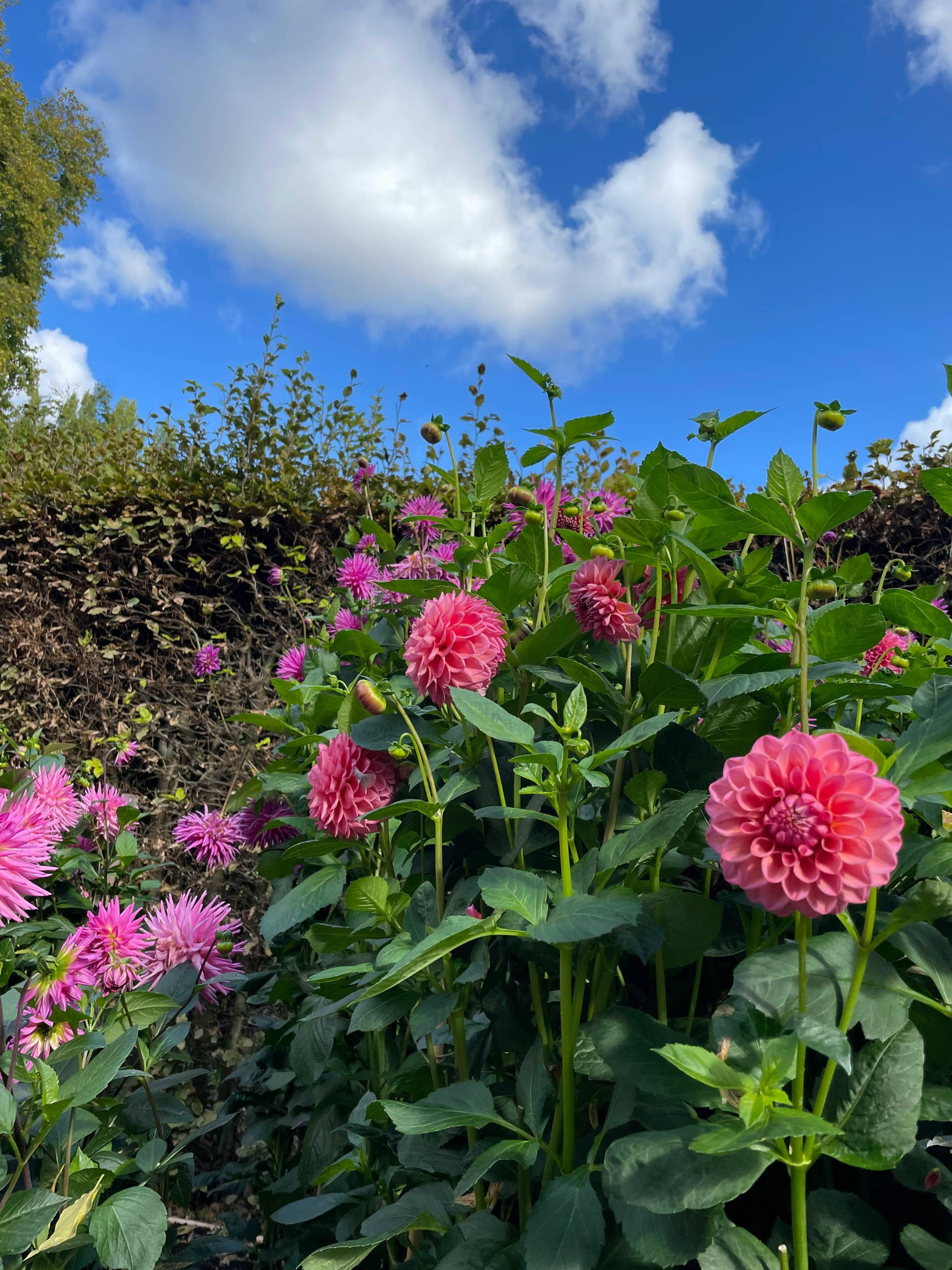
Dahlias typically bloom from midsummer until the first frost in the fall.
It’s best to plant dahlias after the last frost when the soil has warmed up to at least 55 degrees Fahrenheit (typically mid-April to mid-May), which sets the stage for bountiful summer blooms.
“Dahlias thrive in full sun and rich, well-drained loamy soil,” says Dr. Liz Fiedler Mergen, flower farmer at Sunny Mary Meadow and host of the Flower Farmer Forum Podcast.
Plant tubers four-to-six inches deep with the eye, or the tiny nub where growth starts, facing up.
Space tubers 12-18 inches apart for efficient field use or 18-24 inches apart for a fuller home garden display, Fiedler Mergen says. Adrian Aviles, owner of Athletic Club Flower Shop, adds that dahlias grow fast and bushy, so be sure to give them adequate space to do their thing.
“They need that airflow to prevent mildew and disease,” he says.
Dahlias also don’t like to sit in soggy soil, so it’s best to avoid clay-heavy areas unless amended. “I like to mix in compost and a bit of coarse sand,” Aviles says.
Dahlias should be planted in an area that receives at least six-to-eight hours of sunlight daily.
“Morning sun with a bit of afternoon shade works well in hotter climates,” Aviles recommends.
If you’re growing multiple dahlia varieties, you can also label plants for easier care.
“You can write directly on the tuber with a garden marker, drive in labeled stakes or tie flagging tape to the base of the stem,” says Jessica Ferris, owner and flower farmer at Ferris Farm. “Whatever works best for you, just make sure it’s something that will last through the season.”
How to water dahlias
It’s best to avoid watering tubers until you see green growth, Fiedler Mergen says, which helps prevent tuber rot. Yet dahlias grow extraordinarily thirsty once green shoots pop through the soil.
“After that, I water deeply about two-to-three times a week depending on the heat,” Aviles says. “You want the water to reach at least 6-8 inches deep to encourage strong root growth.”
Aviles also loves drip irrigation or soaker hoses for dahlia gardens. “They’re great because they deliver consistent moisture and keep the foliage dry,” he says, “which helps prevent fungus.”
Ferris also uses a unique spin on drip irrigation to keep her dahlias well hydrated.
“On my farm, I plant tubers into holes burned into reusable plastic landscape fabric, then water with drip irrigation directly at the root zone,” she explains. “This setup helps retain moisture and significantly reduces weed pressure.”
Mulching dahlias around the base can also help keep moisture in and weeds out, but be sure to avoid mulching directly on the stems, which can lead to rot by trapping too much moisture.
“Always check that the top few inches of soil have dried out before watering again,” Ferris says.
How to care for dahlias
Dahlias require regular pruning to keep these awe-inspiring summer flowers in tip-top shape.
“Pinching is a must if you want bushier plants and more blooms,” Aviles says. “Once your plant is about a foot tall and has 4-6 sets of leaves, pinch out the center stem just above a leaf node.”
While Aviles says this may feel counterintuitive at first, pinching leads to a healthy, full plant that produces vibrant flowers for months to come. Deadheading is also key for stunning blooms.
“I cut the spent bloom down to the nearest leaf junction with a strong set of buds,” Aviles says. “This encourages the plant to keep sending up flowers instead of putting energy into seeds.”
Be sure to use sharp shears, Fiedler Mergen adds, “and avoid leaving stubs that invite disease.”
Right after pinching is also the best time to set up plant support. “For individual plants, you can use peony cages, tomato cages or wooden stakes loosely tied to the main stem,” Ferris says.
“For larger plantings, I use horizontal Hortonova netting stretched across the beds. It allows the dahlias to grow up through a grid and helps keep them upright even in heavy wind or rain.”
Some growers, Ferris adds, prefer twine strung between stakes or a corral-style method to support taller varieties. Yet if you’re entering the dahlia growing game for the very first time, don’t be afraid to cut these resilient, bountiful plants for gorgeous bouquets all summer long.
“Dahlias are cut-and-come-again,” Aviles says. “Regular harvesting keeps them going strong.”
