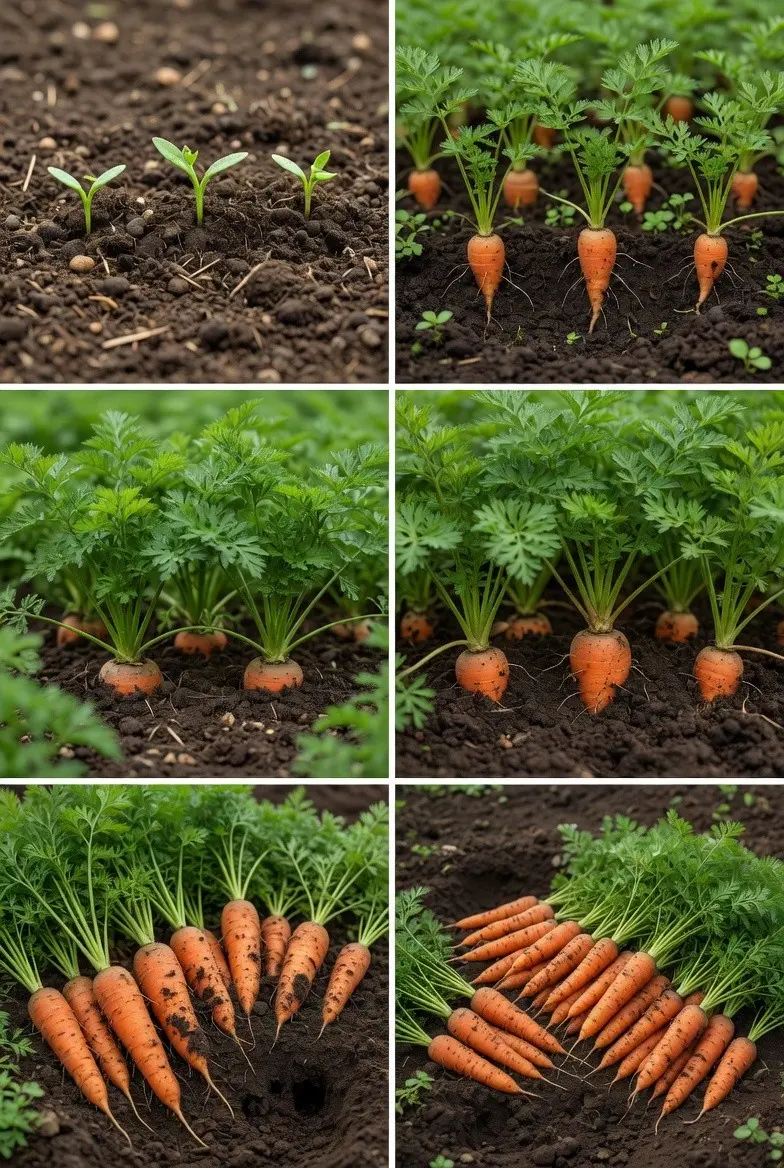
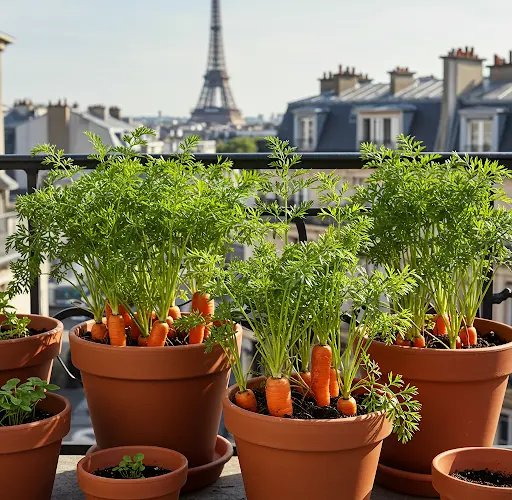
Carrots are a staple vegetable in kitchens around the world. Sweet, crunchy, and packed with beta-carotene, vitamins, and minerals, they are ideal for salads, soups, and snacks. While many people assume that carrots require a large garden plot to thrive, the truth is that they can grow successfully on terraces or balconies with the right techniques. In fact, growing carrots at home can be surprisingly easy, and with careful planning, you can achieve high yields even in small spaces.
1. Choosing the Right Carrot Variety
The first step to successful terrace gardening is selecting a carrot variety suited for container or small-space growth. Some of the best options include:
- Nantes: Sweet, cylindrical roots that grow straight and uniform.
- Imperator: Long, slender carrots ideal for deep containers.
- Chantenay: Shorter, robust carrots perfect for shallow containers or terraces.
Choosing the right variety ensures that your carrots develop fully without crowding or deformity.
2. Selecting Containers and Space
Carrots need space to grow deep, straight roots, so container choice is essential:
- Depth: Use containers at least 12 inches deep for long varieties. Shorter varieties can grow in 8–10 inch containers.
- Width: Containers should be wide enough to allow multiple carrots to grow without competing for nutrients—about 6 inches between plants.
- Drainage: Ensure containers have adequate drainage holes to prevent waterlogging, which can damage roots.
Even a small terrace can yield a generous harvest when containers are chosen wisely.
3. Preparing Soil for Maximum Growth
Healthy soil is critical for high-yield carrot growth:
- Loosen the soil: Carrots need soft, loose soil free of stones and clumps to grow straight and long.
- Add organic matter: Mix compost or well-rotted manure to provide essential nutrients.
- Avoid high nitrogen fertilizers: Too much nitrogen encourages leafy growth but weakens root development.
Well-prepared soil encourages deep root growth and improves both flavor and texture.
4. Sowing Seeds
Carrots can be sown directly in containers or terrace beds:
- Sow seeds ½ inch deep and 1–2 inches apart in rows or containers.
- Water gently after sowing to avoid washing away seeds.
- Thin seedlings to 2–3 inches apart once they reach 2–3 inches tall to ensure each root has space to develop.
Patience is key—carrot seeds may take 1–2 weeks to germinate. Proper thinning ensures healthy, large roots.
5. Watering and Care
Consistent moisture is essential for tender, high-yield carrots:
- Regular watering: Keep the soil evenly moist, avoiding overwatering which can cause rot.
- Mulching: Apply a light layer of straw or dried leaves to retain moisture and regulate soil temperature.
- Avoid disturbing roots: Be careful when weeding to prevent damaging young carrot roots.
Proper watering promotes steady root growth, resulting in longer, sweeter carrots.
6. Sunlight Requirements
Carrots grow best in full sun but can tolerate partial shade:
- Aim for at least 5–6 hours of direct sunlight daily.
- In very hot climates, provide some afternoon shade to prevent soil from drying too quickly.
Sufficient sunlight ensures healthy leaves and promotes root development.
7. Pest and Disease Management
Even terrace carrots can face pests like carrot flies or aphids:
- Inspect plants regularly for signs of pests.
- Use natural remedies such as neem oil or floating row covers to protect young seedlings.
- Ensure proper airflow between containers to reduce fungal diseases.
With minimal effort, pest issues can be managed organically, keeping your carrots healthy.
8. Harvesting for High Yields
Carrots are ready for harvest in 60–80 days, depending on the variety:
- Look for firm, brightly colored roots.
- Pull carrots gently to avoid breaking them.
- Regular harvesting encourages continued growth if succession planting is practiced.
Harvesting at the right time ensures optimal flavor and maintains plant productivity.
9. Tips for Continuous Terrace Harvests
- Succession planting: Sow new seeds every 2–3 weeks to enjoy fresh carrots throughout the season.
- Rotate planting spots: Prevent soil depletion and reduce disease risks by alternating planting locations.
- Companion planting: Grow carrots alongside onions, lettuce, or herbs to maximize space and deter pests.
These strategies help terrace gardeners achieve high yields with minimal effort.
Conclusion
Growing carrots on a terrace is easier than most people think. With the right variety, deep containers, loose nutrient-rich soil, and consistent care, you can harvest sweet, tender carrots without a traditional garden. Proper watering, sunlight, and attention to pests ensure high yields and flavorful results.
Whether you’re an urban gardener or someone looking to maximize small spaces, terrace-grown carrots prove that delicious, homegrown vegetables are achievable with surprisingly little effort. By following these tips, you can enjoy a bountiful harvest of crunchy, vibrant carrots straight from your terrace to your kitchen.
