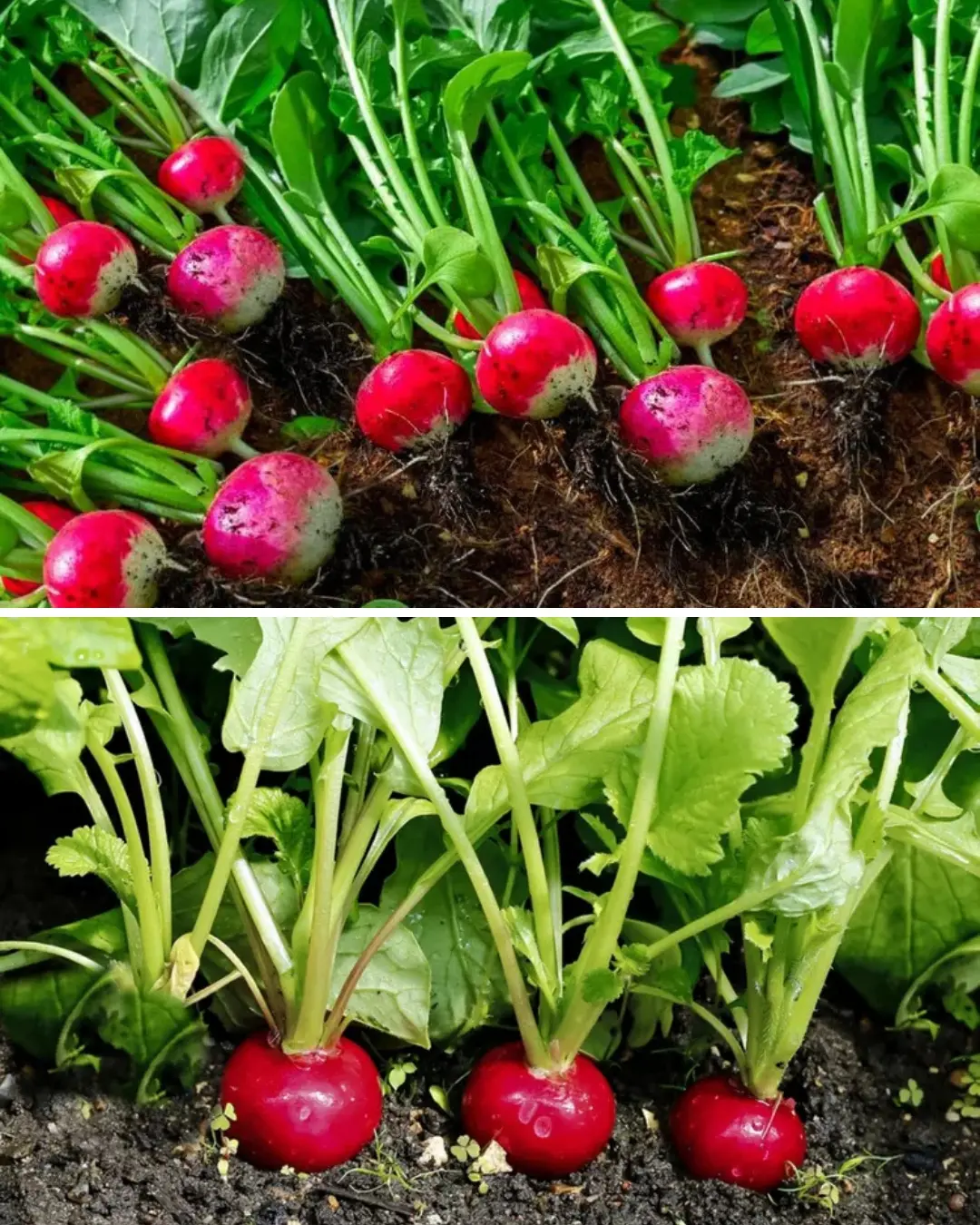
Radishes are one of the first spring vegetables you can harvest from seed planted four to six weeks before the final frost. Follow this timeline to find out how fast and easy it is to grow this cool-weather crop.

When to Plant Radishes
Radishes are almost always directly sown as seed and should be planted as soon as the soil can be worked in early spring, ideally four to six weeks before the final frost. Climates with long, cool springs are suited for succession sowing by planting seeds every two weeks from early to late spring.
Radishes are also grown as a fall crop. Plant seeds four to six weeks before the first frost in your growing zone.
Winter-sown varieties take longer to mature but survive light frosts and tolerate temperatures with occasional drops to 20°F.
Bolting
Radishes tend to bolt and go to seed when air temperatures remain above 70°F. Roots turn tough, pithy, and inedible. In frost-free zones with hot summers, radishes are often grown as a winter crop.
Germination
Radish seeds germinate in soil temperatures as low as 40°F and as high as 85°F. The sweet spot falls between 55°F and 65°F, which yields uniform plants with better quality.
At ideal temperatures, seeds sprout in three to four days, but may take up to 10 days depending on the variety. Seeds planted at 40°F may take as long as 20 days to germinate.
Radishes start to form bulbs in cool weather and grow best between 50°F and 65°F. Timing is key, particularly in climates with brief spring weather or widely fluctuating spring temperatures.
Look for varieties recommended for your growing zone and sow seeds as soon as the soil can be worked for better harvests.
Starting radish seed indoors for transplanting allows control of temperature and light. It’s not impossible, but seldom done since, like most root crops, radishes do not transplant easily.
They need to be planted outdoors when small, with just two to four true leaves, and handled gently to avoid disturbing the tiny, delicate roots. Plant loss is fairly common.
Days to Maturity
Radishes mature rapidly, with popular ball-shaped varieties like Cherrybelle, French Breakfast, and Easter Egg ready to harvest in 24 to 30 days. Daikon radishes grow long, white, mild-flavored roots up to a foot long and 3 inches in diameter and need 50 to 70 days to reach maturity.
Daikon varieties are better suited to heavy soils and can improve composition by penetrating deeply for better aeration and texture. Watermelon radishes are a larger, sweet ball type maturing at around 4 inches in diameter in 60 to 65 days.
Interplant Radishes
Due to rapid germination rates, radishes are a good choice for interplanting with slower germinating crops like carrots. Plants emerge quickly to mark rows and are harvested early, leaving plenty of room for carrots to develop. Ball-type radishes that mature quickly are also well-suited to container growing.
When to Harvest
Start checking ball type, standard radish plants about three weeks after sowing the seed. One of the easiest ways to tell if they’re ready to pull is to look for the ‘shoulders’ (the very top of the root ball) to show just above the soil surface.
You can also brush away soil at the base and feel the top of the radish to check for size, which should be about 1 inch in diameter except for Watermelon varieties, which should be wider. Plants should have leafy, green tops 6 to 8 inches long.
Follow the same process for root type Daikon radishes. Shoulders appear 2 to 3 inches above the surface, indicating the root is mature. Look for leaves about 8 inches long and feel for the top of the root to span 2 to 4 inches. Daikon varieties are ready to harvest in 50 to 70 days.
Radishes can be thinned, with tops used in salads and recipes with other leafy greens. Leaves have a pungent, peppery flavor similar to arugula. Snip leaves off at ground level when they reach about 2 inches tall, leaving 2 to 3 inches between remaining seedlings.
The emergence of a thick, tough center stalk indicates the plant is preparing to bolt and go to seed. Once this occurs, the root part of the plant will not develop, and the leaves will turn tough and bitter. Bolted radishes are inedible and should go into the compost. If one or two plants start to bolt, check the remainder of your crop, which may be ready to harvest.
