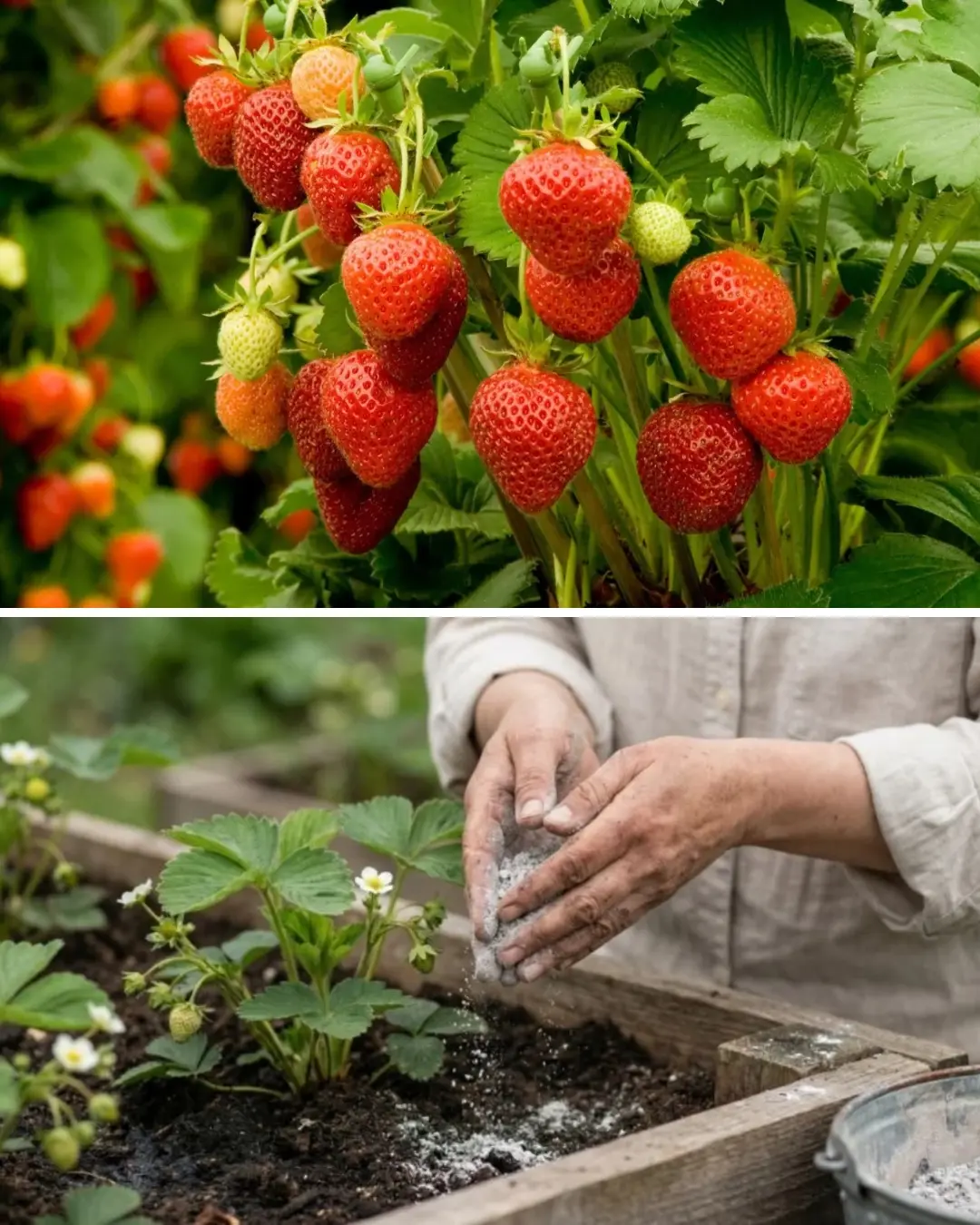
The Golden Rule of Strawberry Care: Using Wood Ash for a Record HarvestEvery season, many gardeners wonder why their strawberries are small, sour, or attacked by pests before they can even ripen. The secret to a massive, honey-sweet harvest doesn’t lie in expensive chemicals, but in something many people throw away: wood ash. When used correctly, wood ash for strawberries acts as a biological treasure, transforming your garden bed and ensuring baskets full of juicy, aromatic fruits. Understanding how this natural mineral cocktail interacts with the soil is the first step toward becoming a master grower.
Why Garden Strawberries Lose Their Flavor and Strength
Strawberries are intensive feeders that rapidly deplete the soil of essential minerals. If you grow them in the same spot for more than two years, the substrate naturally becomes impoverished, and the plants begin to struggle. A deficiency in potassium and magnesium is immediately evident in the fruit quality; the berries become watery, lack their typical aroma, and have a very short shelf life because their tissues are too soft. While many turn to industrial fertilizers, these often contain too much nitrogen, leading to lush leaf growth at the expense of the sweet berries we all crave.
Wood Ash: A Mineral Goldmine for Your Garden Bed
Most people view fireplace ash as useless waste, but it is actually a concentrated cocktail of minerals that took decades to form within the structure of hardwood. This natural product contains high doses of calcium, potassium, and phosphorus in a bioavailable form that strawberry roots can absorb instantly. The most valuable ash comes from hardwoods like oak or beech, as it contains a balanced ratio of trace elements that strengthen the plant’s immune system against spring molds and late frosts.
How Ash Boosts Strawberry Sweetness and Soil Structure
The potassium found in wood dust is directly responsible for photosynthesis and the accumulation of sugars in the plant tissues. Without enough of this element, a strawberry will never reach that true, honey-like sweetness. Calcium, on the other hand, strengthens cell walls, making the fruits firm and resistant to bruising. Furthermore, wood ash improves the soil structure itself, making it more aerated. This allows the roots to breathe and prevents rot during those rainy spring days that can otherwise ruin a crop.
Nutrient Profile: Benefits of Wood Ash for Strawberries
| Nutrient | Function in Strawberries | Result for the Gardener |
| Potassium | Sugar accumulation & photosynthesis | Maximum sweetness and aroma |
| Calcium | Cell wall strengthening | Firm berries with longer shelf life |
| Phosphorus | Root development & flowering | More blossoms and larger fruit size |
| Magnesium | Chlorophyll production | Deep green, healthy foliage |
Mastering the Timing and Application Technique
The best time to apply wood ash for strawberries is early spring, before the first flower buds emerge. This is when the plant has its greatest hunger for minerals. You can also apply it right after the final harvest when the plant is preparing new buds for the next season. However, never sprinkle ash directly onto open blossoms, as the fine powder can interfere with pollination by clogging the pistils. A light hand is key; one to two handfuls of sifted ash per square meter is more than enough to provide nutrients without over-neutralizing the soil’s ideal pH.
Natural Protection Against Slugs and Snails
Beyond its nutritional value, wood ash serves as a vital security guard in your strawberry patch. Its microscopically sharp structure and moisture-wicking properties are repulsive to slugs and snails. Their soft bodies suffer upon contact with the ash, forcing them to avoid your garden bed. By creating a continuous ring of ash around your plants, you build a nearly impenetrable barrier. Keep in mind that this effect lasts only until the first heavy rain, so you should lightly refresh the protective layer after a storm to keep your ripening fruit hole-free.
