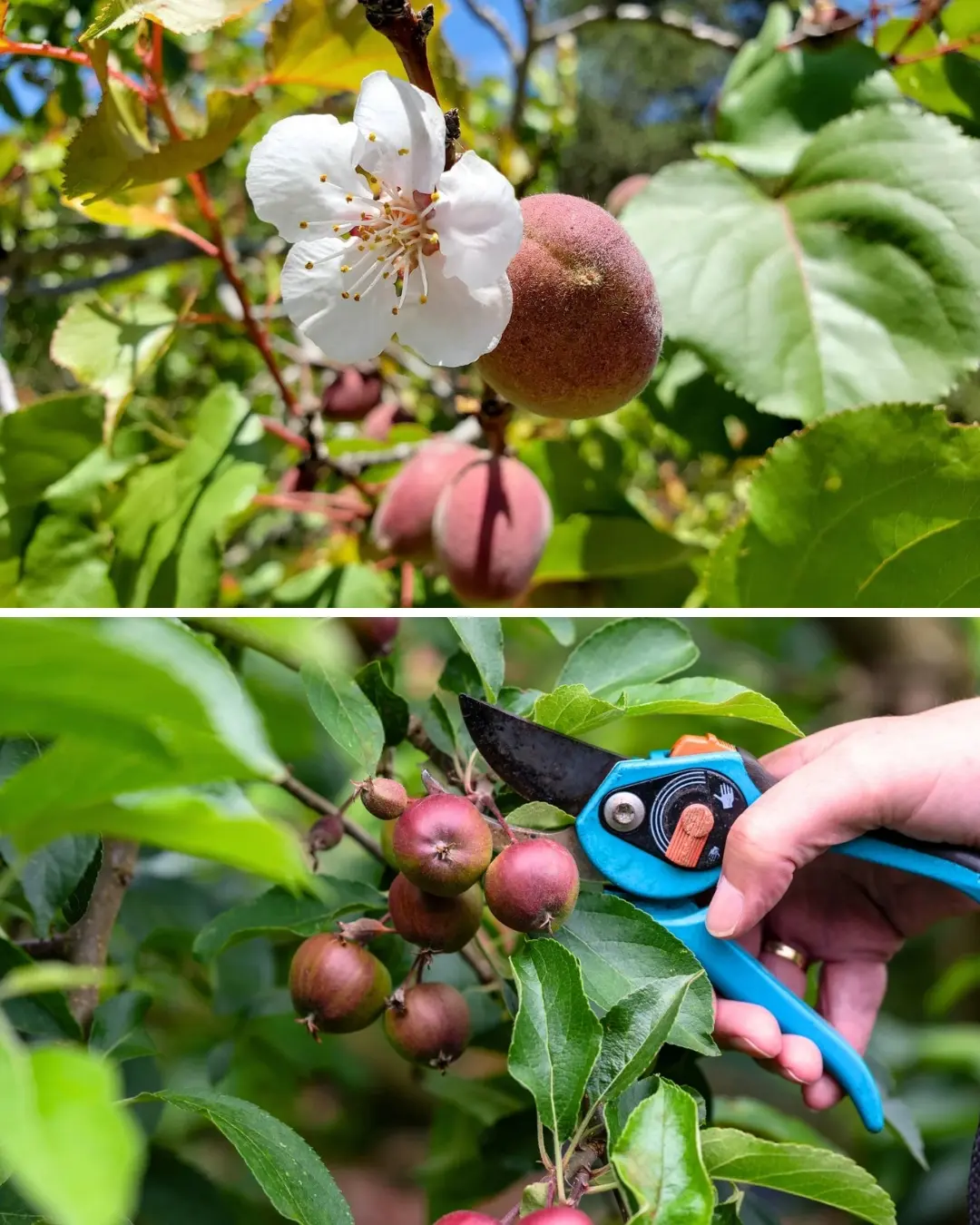
Are you growing fruit trees at home? Come learn everything you need to know about thinning fruit trees to grow bigger, more flavorful fruit and healthier trees! It’s admittedly one of the more painful spring gardening tasks; one that many home gardeners avoid or neglect to do completely. But once you understand the significant benefits of thinning, I hope you won’t feel so bad doing it. You know what they say: no pain, no gain!
This post will explore when, why, and how to thin fruit trees, including the best spacing recommendations for apples, peaches, apricots and more. We’ll also explore what types of fruit trees require thinning, and those don’t need to be thinned at all.
View more
RELATED: Learn all about the importance of chill hours for fruit trees, including a handy chart and tips on choosing the best varieties for your climate! Or visit our guide on planting trees for best practices on soil, depth, spacing and more.What is Thinning?
Thinning fruit trees is the act of physically removing excess fruit from a tree by hand, ideally when the fruit is still quite small. The goal is to focus on fruit quality over quantity, among other benefits to the tree.
Remove unwanted fruit by gently twisting or pinching it off the tree, taking care not to break branches or disturb the “keeper” fruit in the process. You can also use small clean pruning snips to trim off extra fruit if needed, particularly for tougher stems like apples or pears.

Disclosure: Homestead and Chill is reader-supported. When you purchase through links on our site, we may earn an affiliate commission. What types of fruit trees need thinning?
Apples, peaches, nectarines, plums, pluots and apricots are the most common types of trees that require thinning. Pears, persimmons, and loquats also benefit from thinning at times, as explored more to follow.
On the other hand, fruit trees that don’t need to be thinned include: avocado, citrus, cherry, fig, pomegranate, mulberry, papaya, mango, banana, guava, or most nut trees. Kiwi vines, blueberry bushes, and bramble or cane berries (blackberries and raspberries) also do not typically require thinning.

Why Thin Fruit Trees? Benefits Explained
Trees usually set far more fruit than they can realistically (or healthily) support and develop to full size. They need a healthy leaf-to-fruit ratio to stay strong and produce a good crop. Thinning out extra fruit offers a number of benefits:
- Removing extra fruit reduces competition. It allows the tree to focus it’s limited energy and resources on growing fewer but higher-quality fruit instead of many smaller, subpar fruits. The fruit left to develop on the tree will grow larger, juicier, and sweeter in turn!
- Thinning fruit helps protect trees from damage, especially young trees. Crowded, fruit-laden branches are likely to bend, break, or even become permanently misshapen under the weight of too much fruit. This can apply to more mature trees too!
- Leaving too much fruit on the tree can lead to alternate bearing or biennial bearing: when a tree produces an especially heavy yield (bumper crop) one year, but at the expense of a much smaller crop the following year. Instead, thinning fruit leaves energy for the tree to develop flower buds and fruit more evenly each year.
- Improved spacing between fruit can also limit the spread or prevalence of certain diseases and pests.
- Finally, if left un-thinned, fruit trees will often recognize they’re carrying more than they can support and start to naturally drop fruit early – including those you’d hoped to harvest!


When to Thin
Early spring is a good time to start thinking about thinning your fruit trees, within about 6 weeks of when the tree is in full bloom. You’ll want to remove fruit shortly after it begins to develop but before it gets too large. Ideally, it’s best to wait until the fruit is about the size of a marble (half-inch diameter) so you can clearly see which ones look the most promising. Try to remove the smallest or damaged fruits and keep the largest, most healthy-looking ones.

Fruit Thinning and Spacing By Tree Type
- Apples: Thin apples down to just one fruit per cluster, leaving the largest and best-looking apple in the cluster. Further thin apples to one fruit every 6 inches on the branch. If the overall crop is fairly small, or if the tree is nice and mature, it’s acceptable to leave two apples per cluster – but space them 8 inches apart instead of 6.
- Apricots: Since they’re smaller, apricots can be left to grow slightly closer together, with one fruit every 3 to 5 inches.
- Peaches and nectarines are notorious for overbearing, and should be thinned down to 6 inches apart on the branch. Focus on removing clusters and “twin” fruit that often develop.
- Plums and pluots: Thin and space to one fruit every 4 to 6 inches for Japanese plum varieties, and every 2 to 3 inches for European plum trees. (If you aren’t sure which type you have, check out this list. Popular ‘Santa Rosa’ plums are a Japanese variety.)
- Pears seldom require thinning since they don’t pack on fruit nearly as heavily as other fruit trees. However, if crowding, fruit drop, or biennial bearing becomes an issue with your trees, consider thinning as a potential solution. In that case, pears should be thinned similarly to apples: reduce clusters down to one (or two) fruits, with about 6 inches between each fruit on the branch.
- Persimmons can sometimes benefit from thinning, especially fragile young trees and heavy-bearing varieties like Fuyu. When branches are looking crowded and heavy, thin them down to one fruit every 6 inches. Persimmons also seem to do a good job at self-thinning, so many gardeners don’t find it necessary.
- Loquats don’t necessarily need to be thinned, though the fruit size and quality will be significantly improved with thinning on heavy fruit set years. Thin loquats by removing about half of the immature fruits, either by pruning off individual fruit or entire clusters.
Some sources recommend even further spacing than outlined here. Yet in an average home garden or hobby orchard, I think we can get away with more modest spacing to maximize yields without compromising the purpose of thinning!


What to do with thinned fruit?
There aren’t many edible uses for thinned fruit since they’re very underdeveloped and not at all sweet. We typically compost ours, or simply toss them out into a wild space in our yard to naturally decompose. You can also drop the thinned fruit right on the ground below the tree, letting the nutrients return to the soil. The only culinary use I’ve heard of for thinned fruit is to pickle unripe green plums like olives.
And that concludes this lesson.
See, I told you thinning was worth it! I hope you feel motivated and empowered to thin your own fruit trees after reading this post. If you found this useful, please consider pinning or sharing this article, or leave a comment below to let us know. Also feel free to ask any questions you may have. Otherwise, cheers to a beautiful and bountiful fruit harvest! Thank you so much for tuning in today.
