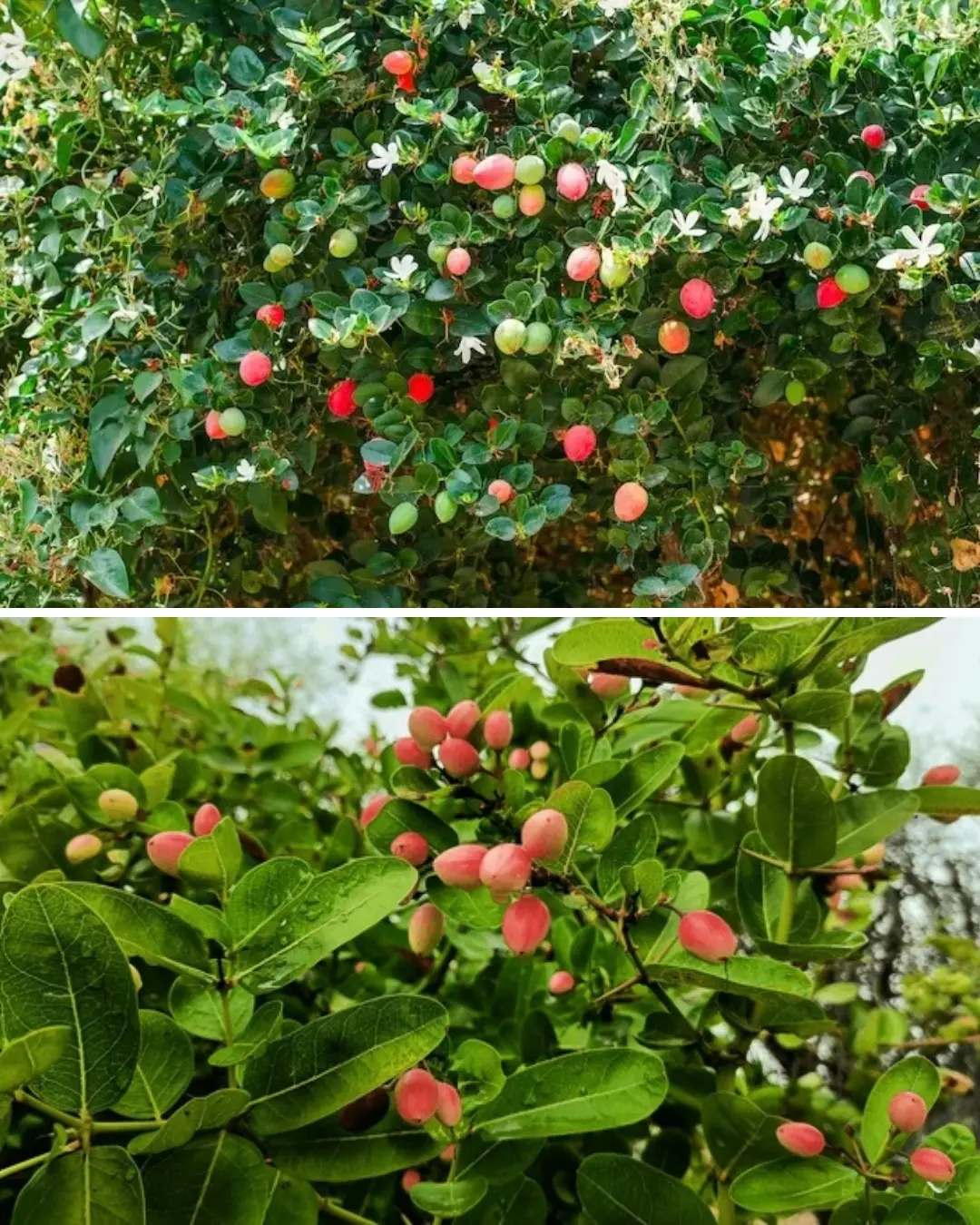
Natal plum (Carissa macrocarpa) is a flowering shrub grown mostly as a landscape specimen but also for its small fruits, which taste like cranberries. It has a moderate-to-fast growth rate and is best planted in fall or winter. Natal plum does best in sandy, well-draining soil.
This shrub can be propagated through cuttings, but it will take a couple of years for the propagated plants to product harvestable fruit. Note that all parts of the Natal plum plant, except for the fruit, can be mildly toxic to people.

| Common Name | Natal plum |
| Botanical Name | Carissa macrocarpa |
| Family | Apocynaceae |
| Plant Type | Shrub |
| Mature Size | 2–7 ft, but some varieties can grow to 30 feet |
| Sun Exposure | Full, partial |
| Soil Type | Sandy, well-drained |
| Soil pH | Acidic, neutral, alkaline |
| Bloom Time | Spring, summer, fall, winter |
| Flower Color | White |
| Hardiness Zones | 9–11 (USDA) |
| Native Area | Africa |
| Toxicity | Mildly toxic to people1 |
:max_bytes(150000):strip_icc():format(webp)/growing-the-natal-plum-3269227-04-913107c473e941158f53bb13f9452da4.jpg)
:max_bytes(150000):strip_icc():format(webp)/growing-the-natal-plum-3269227-03-a865c5d5f65943698ef97c405b2ef267.jpg)
:max_bytes(150000):strip_icc():format(webp)/growing-the-natal-plum-3269227-06-69254d701fc9415493b5a76d464b3afc.jpg)
Natal Plum Care
Here are the main care requirements for growing Natal plum:
- Pot in sandy, well-draining soil that is neutral to slightly acidic.
- Plant in full sun or part shade.
- Allow soil to dry out between watering.
- Feed with a balanced NPK (nitrogen, phosphorus, potassium) plant food.
Light
Grow Natal plum in a location that receives full sun for the best results. It will also do fine in light shade but will likely not have as many flowers and fruits.
Soil
Natal plums are not picky about soil, as long as it drains well. In general, these plants prefer a slightly acidic or neutral pH but will tolerate slightly alkaline soil. These plants are salt-tolerant and do well near coastal areas.
Water
Water monthly to weekly depending on the variety, but be careful not to overwater, as Natal plum is susceptible to root rot. Make sure the soil dries out completely between waterings. Good drainage is very important. Natal plum is fairly drought-tolerant.
Temperature and Humidity
The Natal plum thrives in temperatures that range above 68 degrees during the day and between 50 and 65 degrees at night. They are quite sensitive to cold.
Young plants cannot tolerate temps below 30 degrees, and established plants can be killed by temps below 25 degrees. These plants are equally tolerant of humid and dry air conditions, provided they get enough soil moisture.
Fertilizer
Use a fertilizer that has equal parts of nitrogen, phosphorus, and potassium. This will help maintain the shrub’s general health and promote fruiting. For the amount to use, follow product label instructions.
Types of Natal Plum
- ‘Emerald Blanket’: A low, spreading dwarf cultivar that is often used as a ground cover shrub.
- ‘Nana’: Thornless dwarf cultivar grows to only 12 to 18 inches tall and wide and has white flowers.
- ‘Boxwood Beauty’: Another thornless variety, with a mounded growth habit, often used as a foundation planting or ground cover; has white flowers and matures at about 24 inches tall and wide.
- ‘Fancy’: A standard upright form with upright, large fruit.
- ‘Tomlinson’: A standard-sized thornless variety.
- ‘Variegata’: Cream to yellow variegation.
Harvesting Natal Plum
The fruits of Natal plum ripen individually, not all at once. Pick them from the shrub as soon as they achieve a dark red or purple color.
They will persist in a ripened state on the tree for several days without spoiling. The fruit will store up to one week in the refrigerator and may be used in jams, jellies, pies, and preserves.
Pruning
You can shape Natal plum into a tree form or hedge through pruning. Trimming will also prompt the shrub to produce more flowers and fruit.
With many varieties having sharp spines, you may need to prune plants that are close to a sidewalk so that pedestrians do not get injured. Prune dead wood and frost damage in late winter or early spring, and trim back after peak blooming and fruiting season ends in late summer.
Propagating Natal Plum
Natal plum is easy to propagate using stem cuttings, which can be taken at any time of the year. Here’s how:
- Gather pruners, rooting hormone, sand, peat moss, loam, and a glass or small pot.
- Select 4- to 6-inch cuttings, treat them with rooting hormone, and either insert them in moist sand or place them in a glass of water.
- Once roots appear, plant the stems in a mix that consists of one part sand, one part peat moss, and two parts loam.
- Keep the new cuttings moist (not wet), and provide bottom heat with a heating pad until new growth begins.
- Plant the cuttings into larger containers or transplant into the garden.
Potting and Repotting
Natal plums grow well in containers on patios and balconies. Smaller varieties make great houseplants.
Use a well-draining, sandy potting soil in a pot that’s big enough for the roots to grow and has drainage holes. If the plant’s growth slows down and its roots are visible from the bottom holes of the container, it’s likely root-bound and should be repotted.
Common Pests & Plant Diseases
This shrub doesn’t suffer from many common pests or diseases. You may see Florida red scale or aphids, which can be removed with horticultural soap. Fungal infestation may occur if a Natal plum is overwatered, causing root rot.
How to Get Natal Plum to Bloom
Bloom Months
Natal plum blooms and fruits from May to September but can bloom throughout the year.
What Do Natal Plum’s Flowers Look and Smell Like?
Each Natal plum flower features five waxy petals arranged in a star shape. They are usually one ot three inches long and are formed along the branch in an opposite arrangement. Natal plum flowers smell similar to orange blossoms.
How to Encourage More Blooms
Pruning encourages the shrub to produce more flowers and fruit.
Common Natal Plum Problems
Yellowing Leaves
If you notice yellowing leaves, your plant may be overwatered. This can also cause root rot. Ensure that the soil is completely dry between waterings.
Wilting Leaves
While overwatering can damage the plant, underwatering can also cause leaves to wilt. Once the soil has dried out, make sure to water monthly to weekly depending on the variety.
