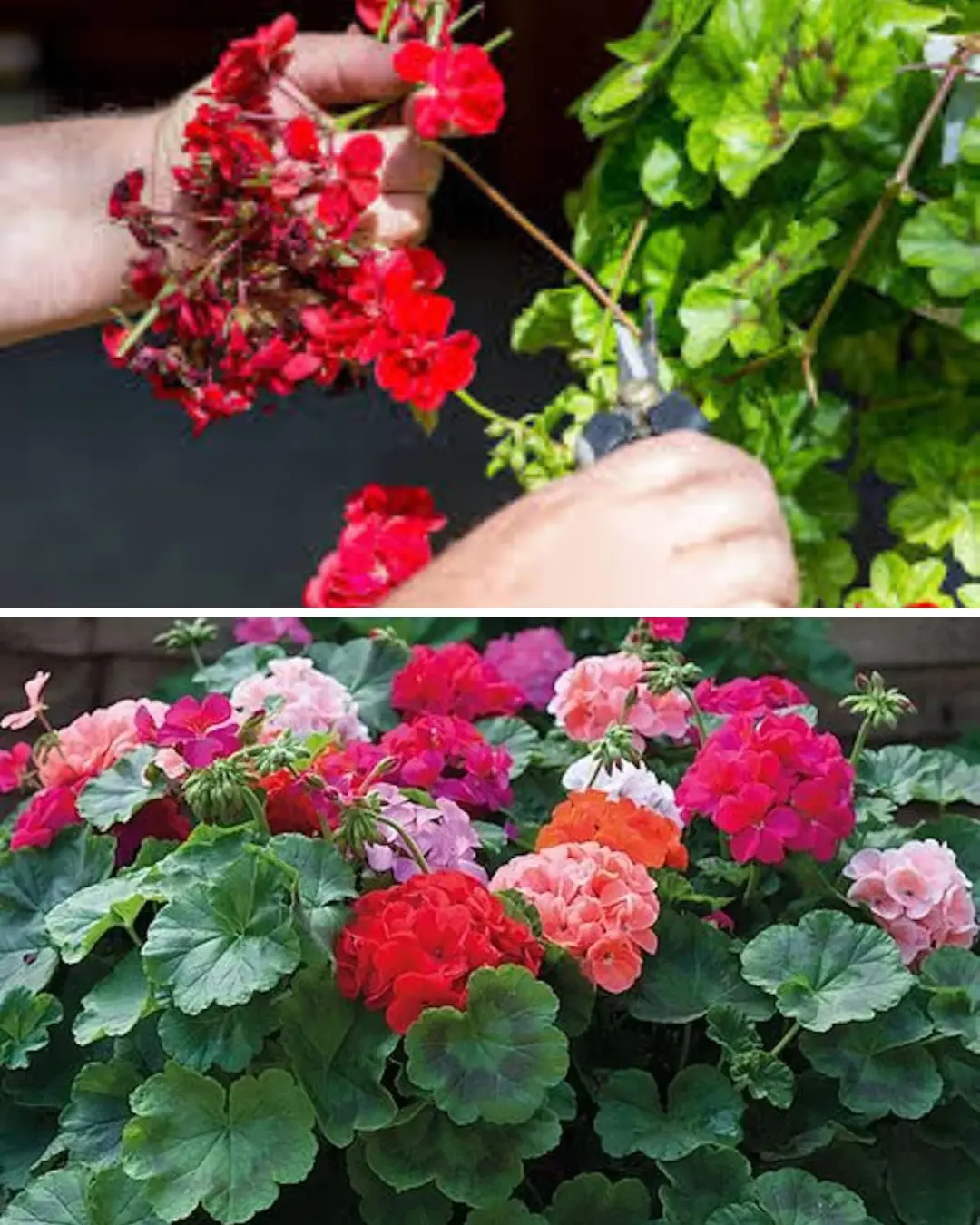
Geraniums will produce vibrant blooms well into the fall, but you don’t need to send these popular flowers to the compost after the first hard frost. Instead, you can overwinter geraniums and keep your plants alive and thriving through winter and replant them next spring.
It may sound too good to be true, but your geraniums are actually resilient perennials that can come back year after year with the proper care. Save your plants, time and wallet with these three easy ways to winterize geraniums for season upon season of colorful blooms.
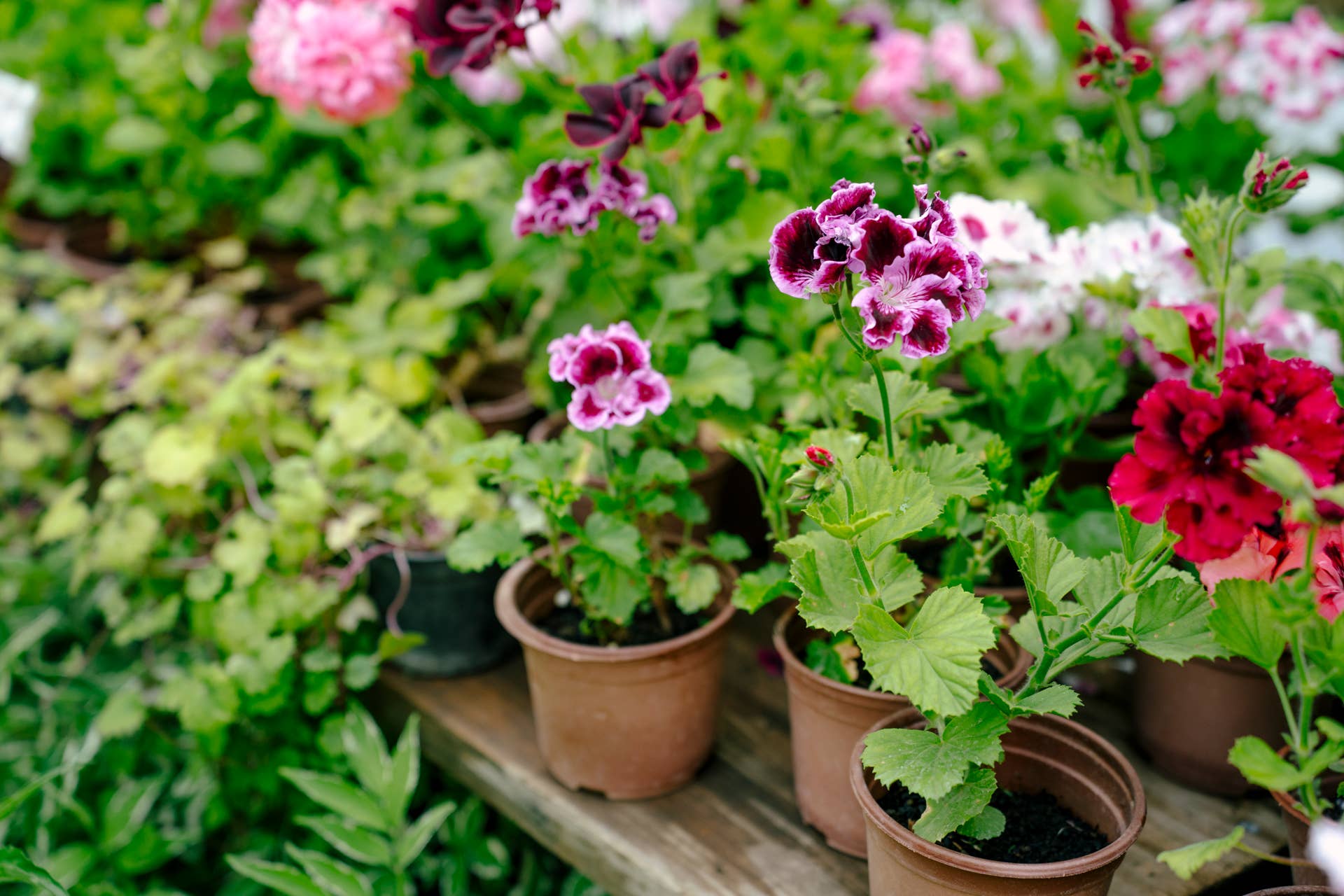
Note: The “geraniums” we’re referring to in this article are, in fact, pelargoniums: you’ll instantly recognize their bright red, pink or white blooms and pretty leaves that can be soft and heart-shaped or glossy and ivy-like. These South African natives are not the same as hardy geraniums, or cranesbill, that easily survive cold winters. Pelargoniums need a special approach to survive the cold winters they don’t naturally tolerate.
1. Store Them Dormant and Bare-Root
Geraniums are low-maintenance plants, but they have a weak spot: they’ll easily die off after the first hard frost of the season if left outdoors in temperatures below 45°F.
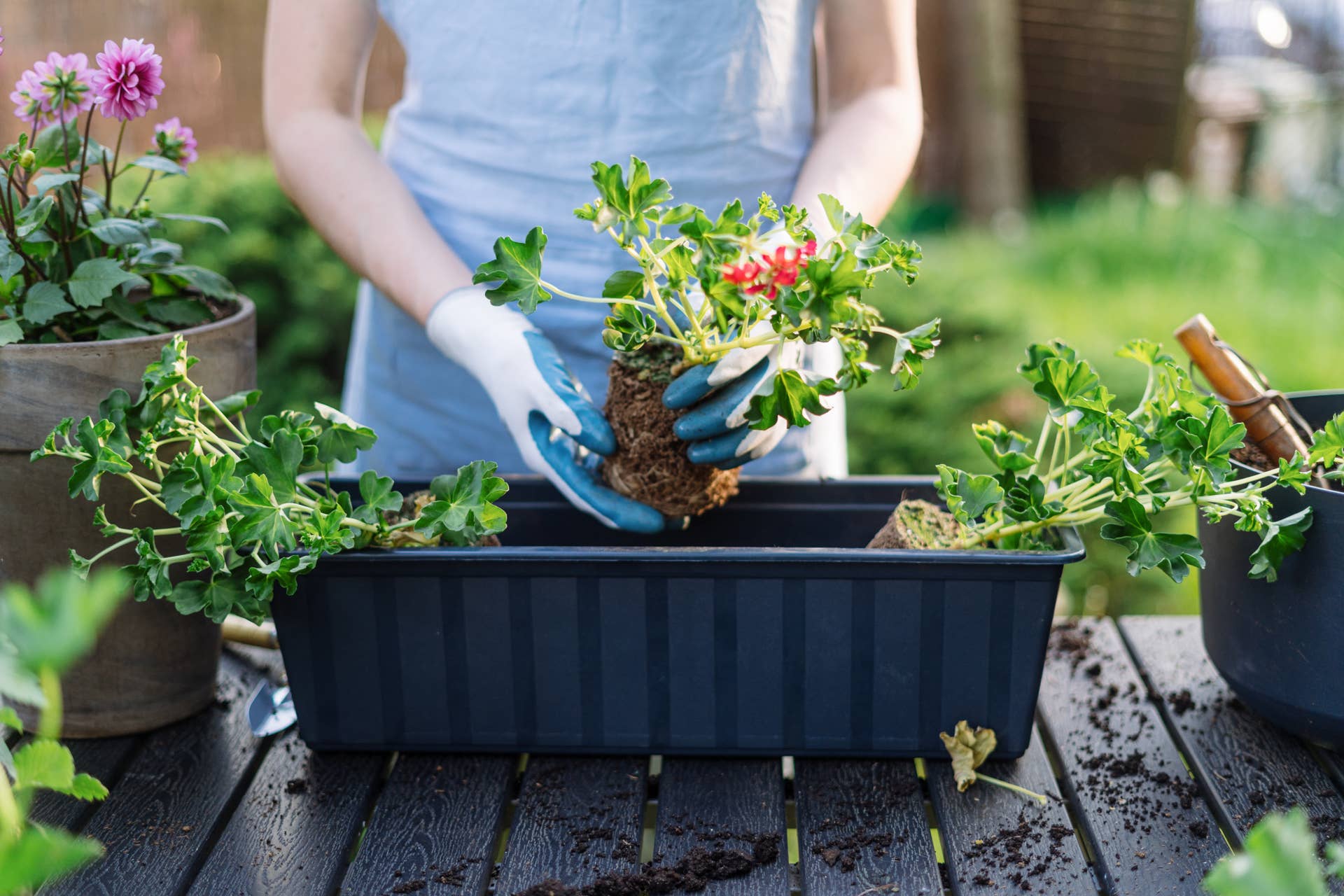
Rather than testing your luck, carefully dig up geraniums before the first expected freeze.
“I lift the plants gently, and shake off some of the soil,” says Tammy Sons, founder and CEO of TN Nursery. Then:
- Cut back dead branches, leaves, flowers and buds with clean pruning shears. Leave healthy, green areas alone: these will fuel stems and roots with energy over the winter.
- Let the roots dry in a shady spot for a few days to help prevent mold or mildew in storage.
- Hang the bare roots upside down in a cool, dry and dark place, such as a basement or garage (keep in mind that your garage may be too cold depending on your winter conditions).*
- Store dormant geraniums in an environment between 45-55°F. “Check them once a month and if the roots look too brittle, I mist them very lightly with water,” Sons says.
- Give the dormant plants one more good pruning about eight weeks before the last expected frost date in your region.
- Soak the roots in water for a few hours and plant in potting soil.
- Water each time the soil dries out an inch down, but be careful not to overwater, which can cause your newly replanted roots to rot. You should see new growth in about 7-14 days.
Then comes the fun part: your hardy geraniums should be ready to replant outdoors in 4-6 weeks, as soon as there are several inches of green, fresh growth above the soil line.
*You can also store geranium roots in a paper bag or a plastic tub unsealed with wood shavings – “similar to how you store dahlia tubers or other spring-planted bulbs,” says Ondrea Kidd, lead floral designer and founder of Sowing Joy Farm.
2. Bring Them Indoors as Houseplants
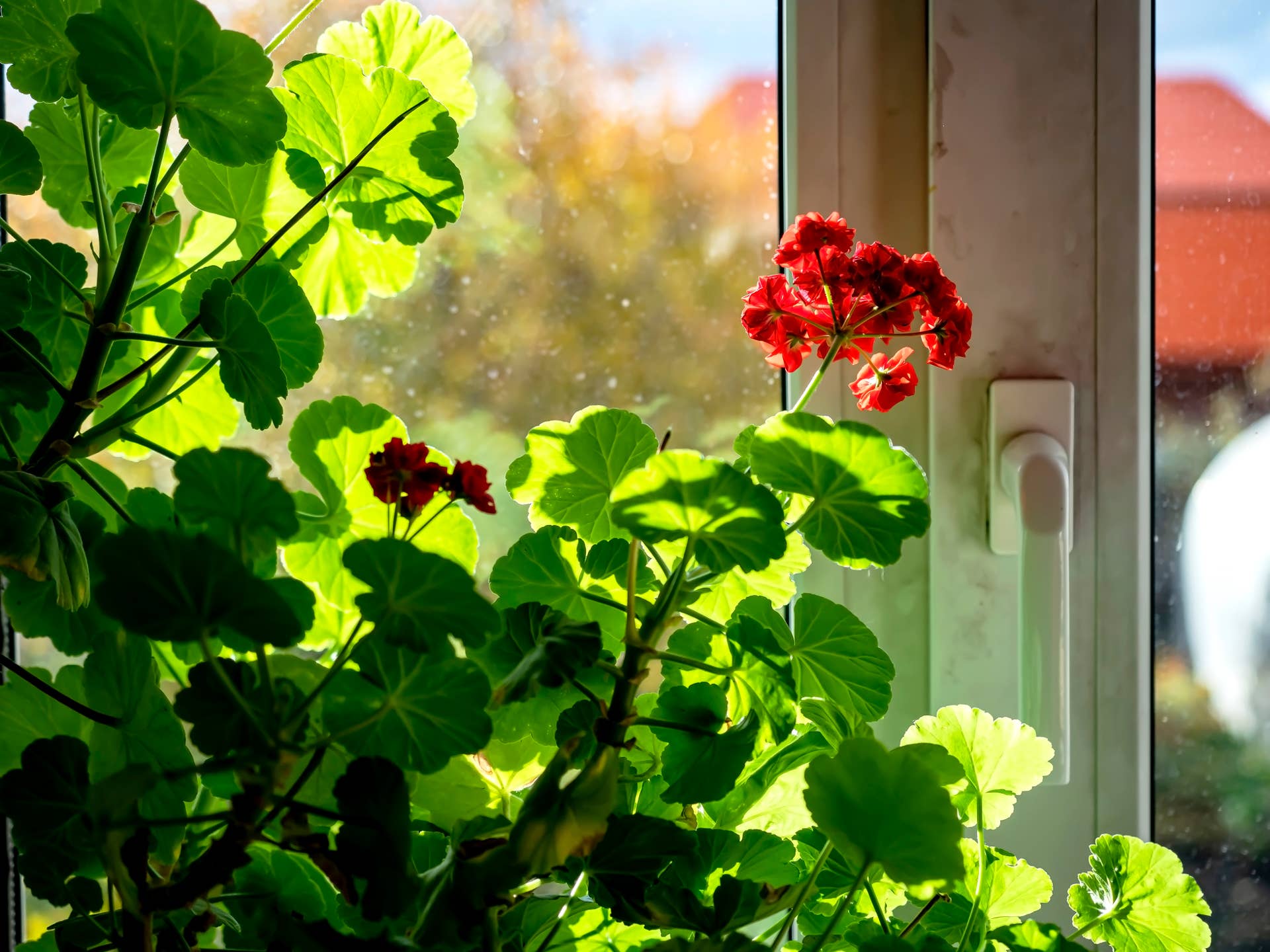
Bringing geraniums indoors as houseplants is arguably the easiest way to winterize them.
As you would before storing them dormant using the bare-root method, gently dig up geraniums before the first hard frost (or bring potted geraniums indoors). Cut geraniums back by about one-third to reduce stress and redirect their energy growth, focusing on pruning dead or unhealthy areas.
You will need an eight-inch pot with drainage holes and a saucer to set underneath,” Kidd says. “You will also need some fresh potting soil that is free draining. Don’t use outside dirt inside. It can have insects in the dirt that may hatch in the indoor temperatures, causing a pest issue.”
Keep them warm and give them sun
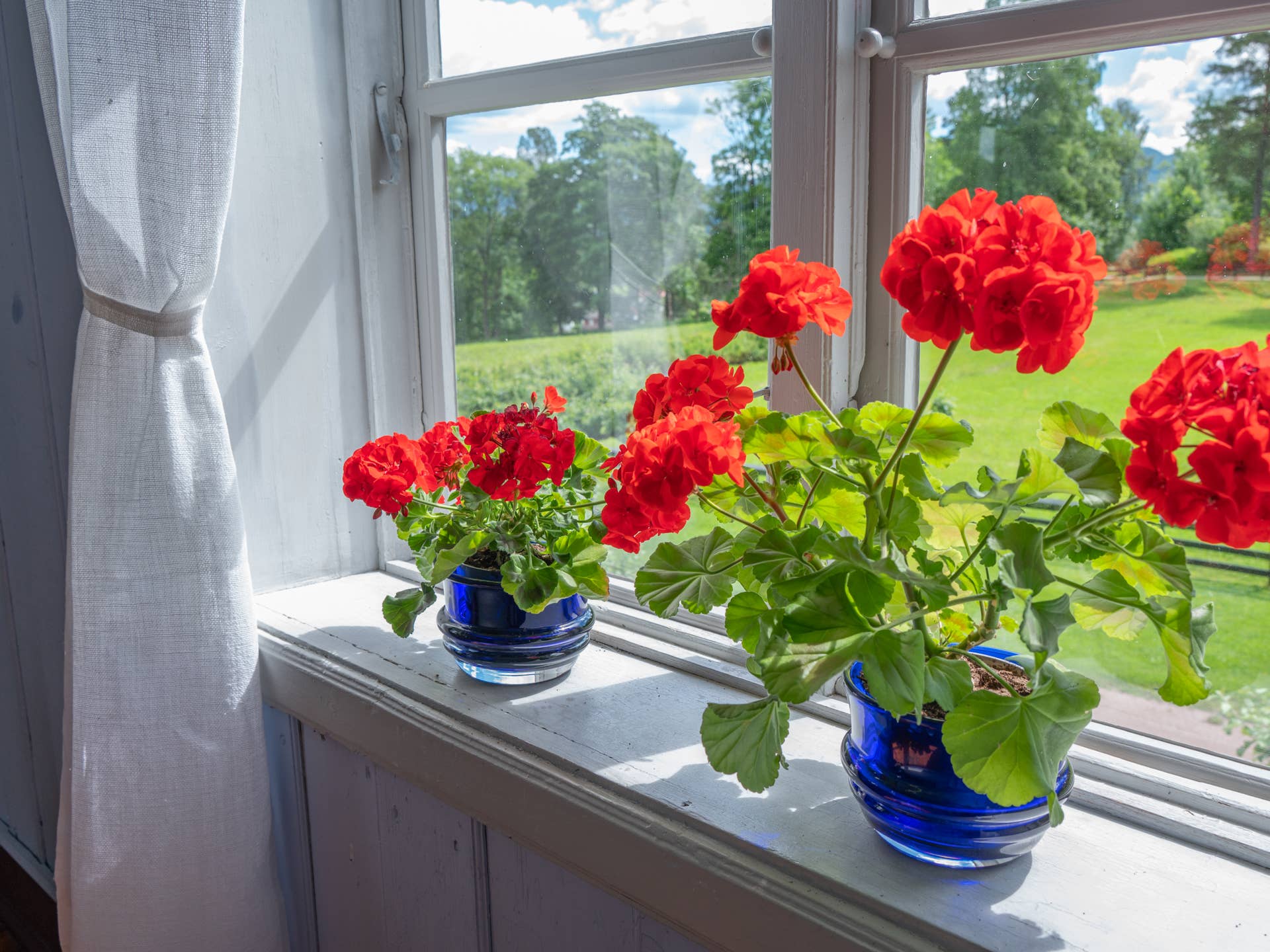
Geraniums brought indoors should be kept in a sunny windowsill or under grow lights. Many varieties will continue blooming through the winter if given adequate warmth and sunlight.
Their optimal temperature range is 65-75°F; don’t leave them in unheated rooms. A geranium that’s been exposed to cold weather will become stressed and may even die. A telltale sign of a cold-stressed geranium is leaves and stems. that are turning pink.
Water cautiously, letting the soil dry about an inch down before each watering session.
If geraniums get leggy (or grow long, spindly stems and sparse foliage), don’t panic: this is totally normal when plants stretch to find more light sources, which can happen indoors. Just try to find them a sunnier spot and they’ll stop overstretching.
Leggy geraniums can be pinched back in mid-March to stimulate full, bushy growth.
“March is the perfect time to revive your geraniums for spring planting,” Kidd says. “I suggest inspecting your overwintered plant for any damage and removing it as necessary. Once all threat of frost is gone, you may plant them directly into your outside garden or into larger pots.”
3. Pot and Store in a Cool Location
Another mostly hands-off method for overwintering geraniums is potting and storing them in a cool location, such as a basement or garage (again, the latter is climate-dependent).
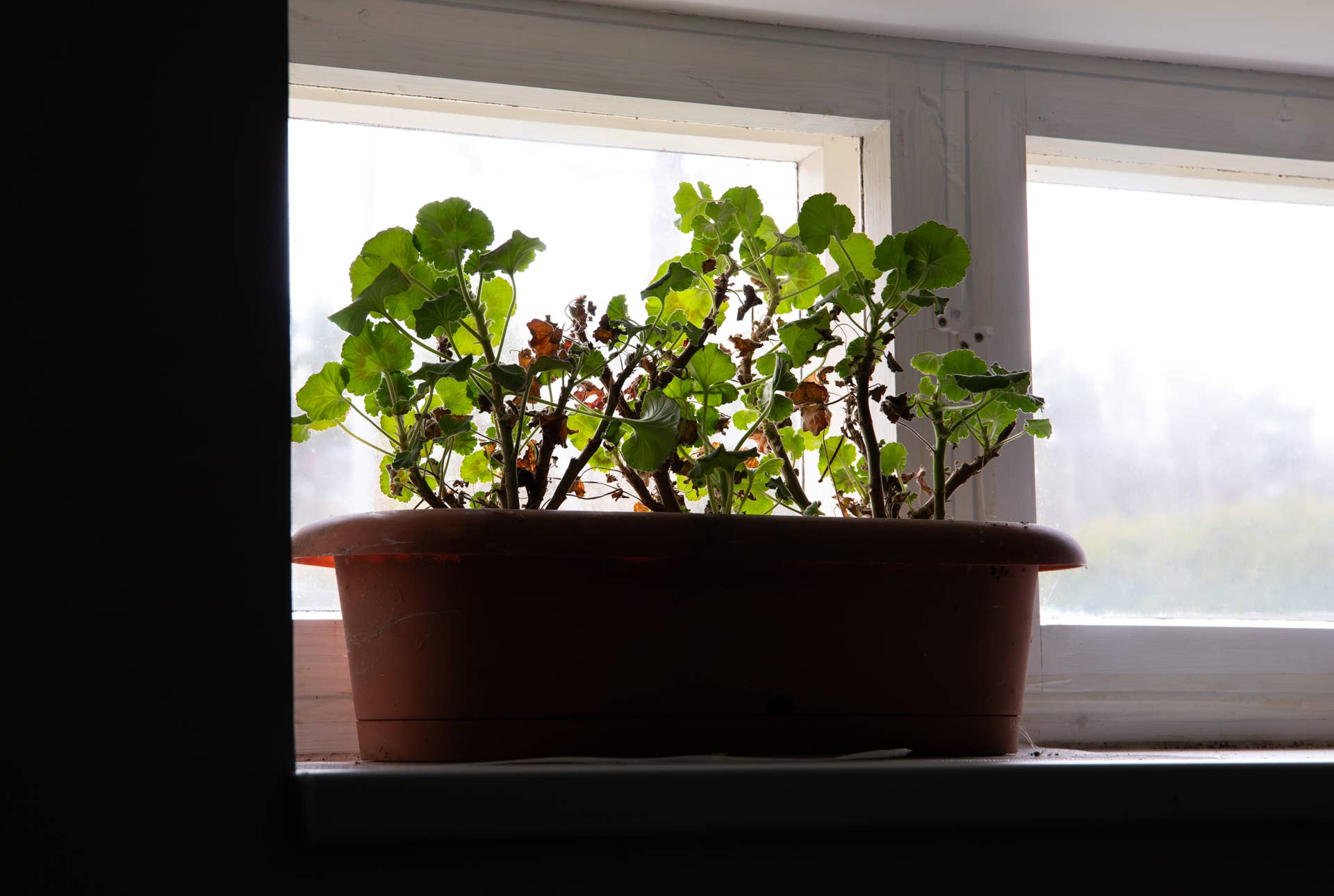
“One alternative is to take cuttings by rooting healthy shoots in small pots and keep them to grow inside during the winter,” Sons says. “When spring arrives, I replant them outside by hardening off the geraniums over a period of a week and then returning them to the garden.”
Any area used for storage should be above freezing, but below 55°F.
Water lightly once a month to prevent the soil from turning to dust. Potted geraniums can stay in storage until spring temperatures warm up and the threat of hard frost has totally passed.
No matter which winterization strategy you choose, all three methods can net the same result.
“There are a number of ways to overwinter geraniums,” Sons says. “It depends on how much time or space you want to use.” Whatever you do, don’t throw your pelargoniums away—especially if you have a rarer variety with variegated or scented leaves or unusual coloring. With proper care, your overwintered geraniums will continue delighting you for many years.
