
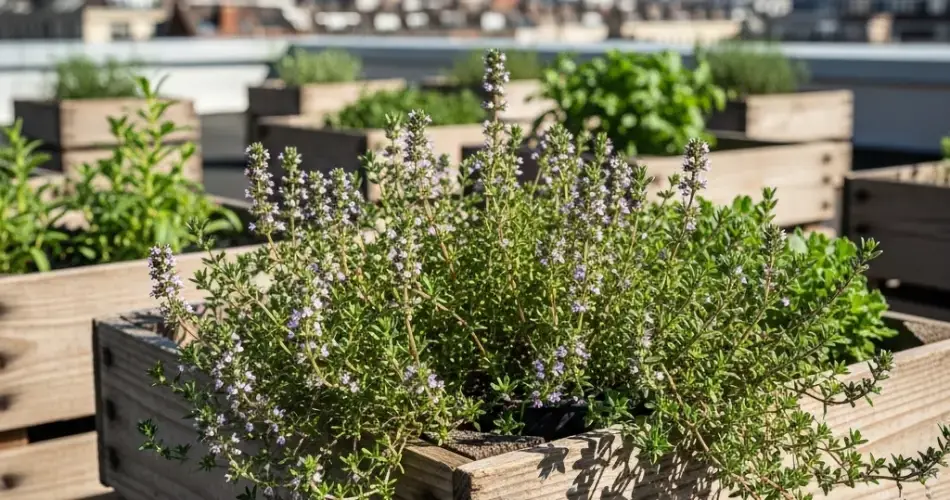
For urban gardeners or anyone with limited outdoor space, balcony herb gardens offer a practical way to grow fresh, aromatic herbs. Thyme, a versatile and hardy herb, is ideal for vertical gardening. By using crates to create a balcony herb wall, you can cultivate thyme efficiently, save space, and enjoy a lush, productive green wall that enhances both your cooking and your outdoor environment. This guide walks you through the steps to grow thyme in crates on your balcony.
Choosing the Right Crates
The foundation of a balcony herb wall is selecting appropriate crates. Wooden crates are particularly suitable due to their sturdiness, breathability, and natural aesthetic. Plastic crates can also work, though wooden crates tend to provide better insulation for plant roots. Ensure that each crate has drainage holes to prevent waterlogging, which can lead to root rot. Crates should be at least 15–20 cm (6–8 inches) deep to provide adequate space for thyme’s shallow root system.
Preparing the Crates
Proper crate preparation is essential for healthy plant growth. Begin by cleaning the crates thoroughly, especially if they were previously used. Place a layer of gravel or small stones at the bottom of each crate to enhance drainage. Fill the crates with a well-draining potting mix suitable for herbs. Thyme thrives in soil that is light, slightly sandy, and nutrient-rich, while heavy or compacted soil should be avoided to prevent root suffocation.
Selecting Thyme Varieties
Thyme comes in a variety of types, each offering unique flavors and growth habits. Common culinary options include English thyme (Thymus vulgaris), lemon thyme (Thymus citriodorus), and creeping thyme (Thymus serpyllum). English thyme is classic and versatile, perfect for cooking, while lemon thyme adds a citrusy aroma to dishes. Creeping thyme is excellent for decorative purposes as it spreads along the surface. Choose the variety that best suits your culinary needs and aesthetic preferences.
Planting Thyme
Thyme can be propagated from seeds, cuttings, or small plants. Seeds should be lightly pressed into the soil surface, keeping them moist until germination, which typically takes 10–14 days. If planting cuttings or seedlings, space them approximately 15 cm apart to allow for growth and airflow. Gently firm the soil around the roots and water lightly to help the plants establish. Thyme is a hardy herb and establishes quickly in well-prepared soil.
Designing the Balcony Herb Wall
The layout of your herb wall affects both its functionality and visual appeal. Arrange crates in a staggered, vertical pattern to maximize space and ensure that each plant receives sufficient sunlight. Secure the crates firmly to the balcony wall using brackets or hooks to prevent tipping. For aesthetic variety, alternate thyme with other compatible herbs such as rosemary, oregano, or sage. This not only creates a visually appealing herb wall but also enhances aromatic diversity.
Positioning and Sunlight
Thyme requires full sunlight to thrive, ideally 6–8 hours per day. Position your herb wall where it will receive ample light, such as a south-facing balcony or patio. Proper sunlight encourages robust growth, flavorful leaves, and vibrant green stems. If your balcony does not receive sufficient natural light, consider using grow lights to supplement the plants’ needs.
Watering and Fertilizing
Thyme prefers well-draining soil and tolerates dry conditions. Water the plants moderately, allowing the soil to dry slightly between watering sessions. Overwatering can cause root rot, so it is important to avoid soggy soil. Fertilize lightly with a balanced, slow-release fertilizer or organic compost every 4–6 weeks. Excessive fertilizer can reduce the intensity of thyme’s flavor, so moderation is key.
Pruning and Maintenance
Regular pruning maintains healthy, bushy thyme plants and encourages new growth. Trim the stems just above a leaf node to prevent legginess and flowering, which can reduce leaf quality. Remove any dead or yellowing leaves promptly. Inspect plants for pests such as aphids or spider mites, and treat organically if necessary. Creeping thyme varieties may require occasional trimming to keep them contained within their designated crates.
Harvesting Thyme
Thyme can be harvested once the plants are established and have several sets of stems. Cut the stems from the top down, leaving enough foliage for continued growth. Frequent harvesting encourages bushier plants and ensures a steady supply of fresh leaves. Thyme can be used fresh in cooking or dried for long-term storage, retaining its aromatic and flavorful qualities.
Benefits of a Crate Herb Wall
Creating a balcony herb wall using crates offers several advantages. It maximizes vertical space, making it ideal for small apartments or urban homes. Repurposing crates promotes sustainability by giving new life to materials that might otherwise be discarded. Additionally, a thyme wall garden enhances balcony aesthetics, improves air quality, and provides fresh herbs at your fingertips, adding both flavor and fragrance to your cooking.
By following these steps, you can create a thriving thyme herb wall using crates on your balcony. This eco-friendly and space-efficient gardening method provides year-round fresh herbs, transforming limited outdoor areas into a fragrant, green oasis. With proper care and consistent harvesting, your balcony herb wall will continue to flourish, combining beauty, utility, and sustainability.
