
Pickle juice has gone from a leftover liquid at the bottom of a jar to a surprising health trend. The image highlights bold claims—hydration, muscle cramp relief, digestion support, and more. But how much of this is true, and what’s the right way to actually drink it?
Let’s separate fact from hype and show you how to use pickle juice safely and effectively.
What Is Pickle Juice, Really?
Pickle juice is the brine used to preserve cucumbers—typically made from:
- Water
- Vinegar
- Salt
- Spices (like dill, garlic, mustard seeds)
Some varieties are fermented, meaning they contain beneficial bacteria (probiotics), while others are simply vinegar-based.
Why People Drink Pickle Juice
The main reason pickle juice gets attention is its electrolyte content, especially sodium.
Here’s what it may help with:
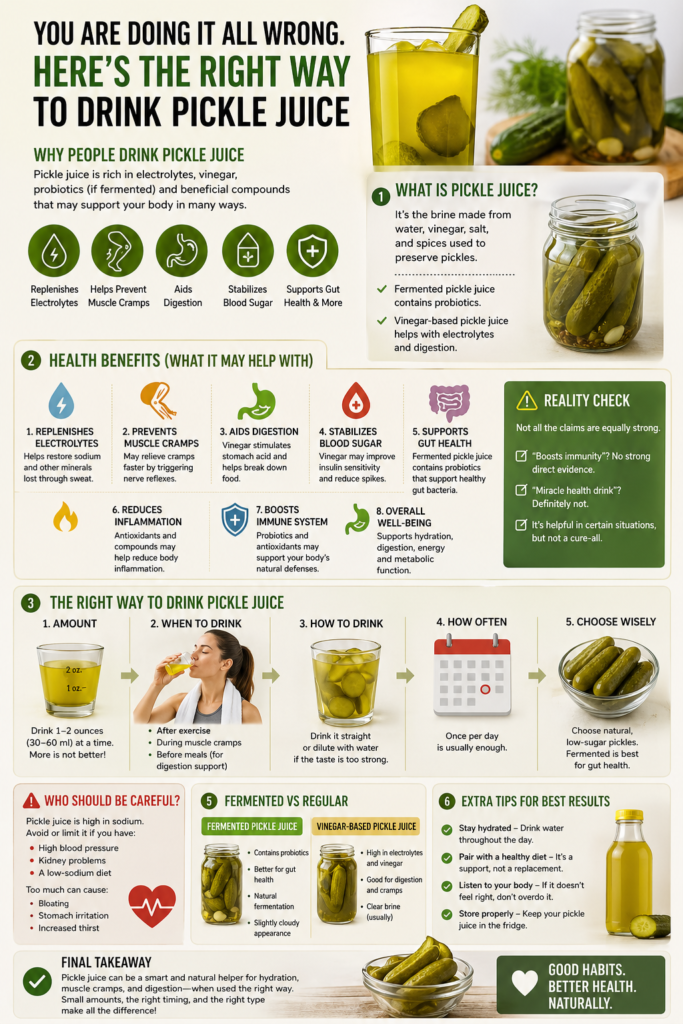
✔️ 1. Replenishes Electrolytes
After sweating (exercise, heat), your body loses sodium. Pickle juice can help restore that balance quickly.
👉 This is why athletes sometimes drink it
✔️ 2. May Help Prevent Muscle Cramps
Some studies suggest pickle juice can relieve cramps faster than water—possibly due to how it triggers reflexes in the nervous system.
✔️ 3. Aids Digestion
The vinegar in pickle juice can:
- Stimulate stomach acid
- Help break down food
Fermented versions may also support gut health.
✔️ 4. May Help Stabilize Blood Sugar
Vinegar has been linked to improved insulin sensitivity when consumed in small amounts.
✔️ 5. Supports Gut Health (Only if Fermented)
If the pickle juice is naturally fermented (not just vinegar-based), it may contain probiotics that benefit digestion.
Let’s Be Honest (Important Reality Check)
Not all the claims are equally strong.
- “Boosts immunity” → No strong direct evidence
- “Reduces inflammation” → Limited effect
- “Miracle health drink” → ❌ Not true
Pickle juice is helpful in certain situations—but it’s not a cure-all.
The RIGHT Way to Drink Pickle Juice
Here’s where most people go wrong—they drink too much.
✅ Recommended Amount:
- 1–2 ounces (30–60 ml) at a time
- Once per day if needed
🕒 Best Times to Drink It:
- After exercise (to replenish electrolytes)
- During muscle cramps
- Before meals (for digestion support)
🥤 How to Drink It:
- Drink it straight (small amount)
- Or dilute it with water if the taste is too strong
Who Should Be Careful?
Who Should Be Careful?
Pickle juice is very high in sodium, so it’s not for everyone.
Avoid or limit it if you have:
- High blood pressure
- Kidney issues
- A low-sodium diet
Also, too much can cause:
- Bloating
- Stomach irritation
- Increased thirst
Fermented vs Regular Pickle Juice (Important)
Not all pickle juice is equal:
- Fermented pickle juice → contains probiotics (better for gut health)
- Vinegar-based pickle juice → mainly helps with digestion and electrolytes
👉 Check labels if you’re drinking it for health reasons.
Final Verdict
Pickle juice can be useful—but only when used correctly.
✔️ It’s good for:
- Electrolytes
- Muscle cramps
- Mild digestion support
❌ It’s not:
- A miracle drink
- A daily health necessity
- A replacement for a balanced diet
Simple Takeaway
You’re not “doing it all wrong”—but you might be overdoing it.
A small amount of pickle juice can help in specific situations. Just don’t treat it like a magic potion.
