If you love creamy casseroles, comforting soups, slow-cooker meals, and quick weeknight recipes, having a jar of homemade Cream of Anything Soup Mix in your pantry can be incredibly useful.
The idea is simple: instead of keeping several cans of condensed cream soup on hand, prepare a dry homemade soup base and store it in an airtight jar. Whenever a recipe calls for cream of chicken, cream of mushroom, cream of celery, or another creamy soup, you can make the amount you need in just a few minutes.
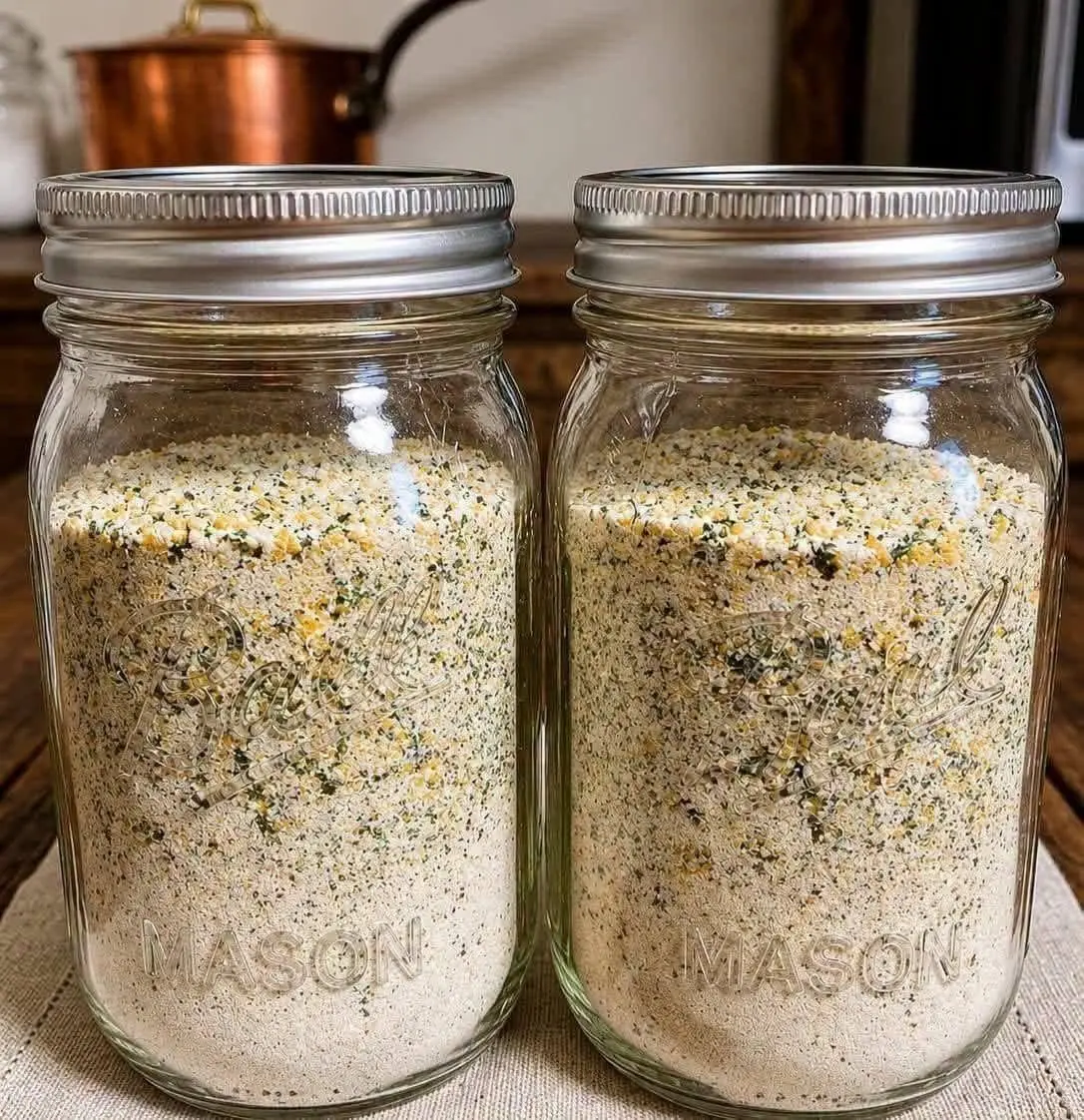
The jars shown in the image are a great example of how convenient this pantry mix can be.
What Is “Cream of Anything” Soup Mix?
“Cream of Anything” is not one particular soup flavor. It is a versatile creamy soup base that can be adapted depending on what you want to make.
The basic mixture generally combines ingredients that provide:
- Creaminess
- Thickening
- Seasoning
- Savory flavor
Once prepared with liquid, the dry mixture becomes a thick, creamy base that can be used in countless recipes.
Instead of buying separate cans of:
- Cream of chicken soup
- Cream of mushroom soup
- Cream of celery soup
- Cream of onion soup
- Cream of vegetable soup
you can keep one versatile dry mix in your cupboard and customize it when needed.
Why Make Your Own Soup Mix?
There are several reasons this simple homemade mix has become popular.
1. It saves pantry space
Rather than storing several cans of different condensed soups, you can keep one jar of dry mix.
A single basic mixture can be transformed into different flavors depending on the recipe.
2. It is convenient
When a recipe calls for condensed cream soup, you don’t necessarily need to make an entire soup from scratch.
Simply measure the required amount of dry mix, add liquid, heat it, and you have a creamy cooking base.
3. You control the ingredients
One of the biggest advantages of homemade mixes is that you know exactly what goes into them.
You can adjust:
- Salt
- Herbs
- Bouillon
- Pepper
- Onion
- Garlic
- Mushroom seasoning
You can also choose lower-sodium ingredients when appropriate.
4. It can be customized
This is where the “anything” part comes in.
The same basic mixture can become a chicken-flavored sauce one day and a mushroom-flavored sauce the next.
A Simple Homemade Cream of Anything Soup Mix
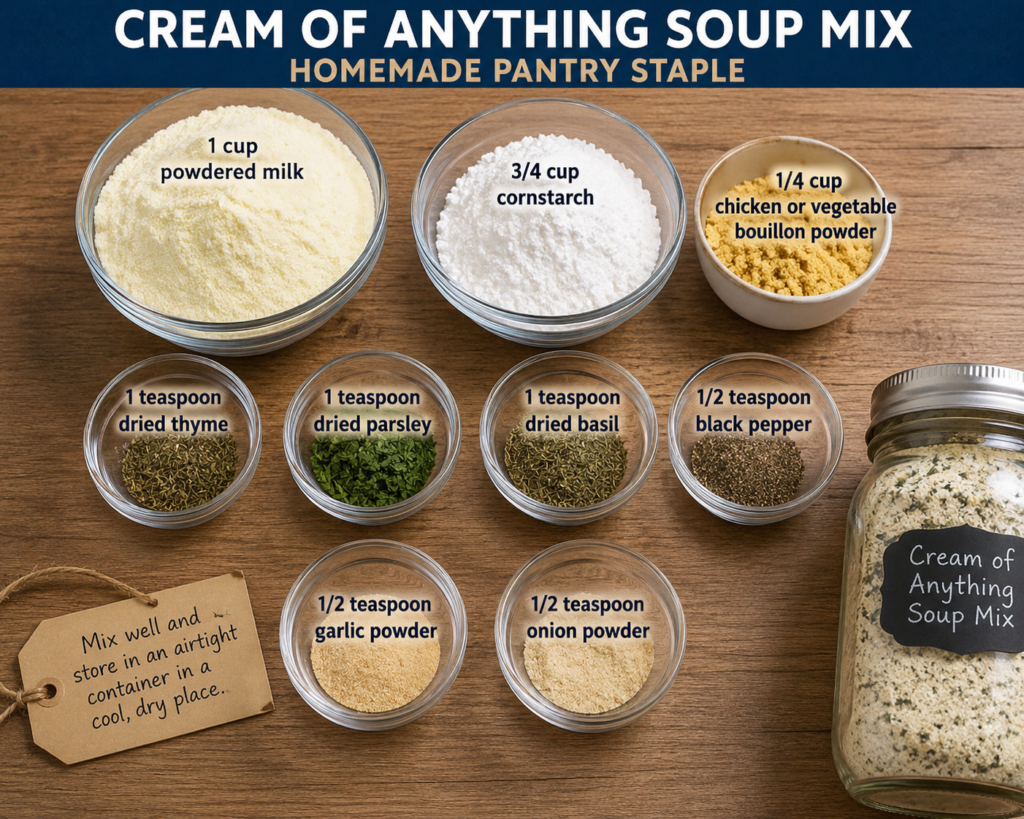
A practical version can be made with a combination of:
Dry ingredients
- 1 cup powdered milk
- ¾ cup cornstarch
- ¼ cup chicken or vegetable bouillon powder
- 1 teaspoon dried thyme
- 1 teaspoon dried parsley
- ½ teaspoon dried basil
- ½ teaspoon black pepper
- ½ teaspoon garlic powder
- ½ teaspoon onion powder
The exact proportions can be adjusted according to your taste and the ingredients you have available.
For a vegetarian version, simply use a vegetable bouillon rather than chicken bouillon.
If you’re using a commercially prepared bouillon, check its sodium content before adding additional salt.
How to Make the Dry Mix
Making the mix couldn’t be easier.
Step 1: Measure the ingredients
Measure all of your dry ingredients carefully.
For the best consistency, break up any lumps in the powdered milk or cornstarch before combining everything.
Step 2: Combine everything
Place the ingredients in a large bowl.
Whisk thoroughly until the herbs and seasonings are evenly distributed throughout the mixture.
This step is important because you want every spoonful of the finished mix to have approximately the same balance of thickener and seasoning.
Step 3: Transfer to a jar
Pour the mixture into a completely dry, airtight container.
A glass Mason-style jar, like the one shown in the image, works particularly well.
Label the jar with:
Cream of Anything Soup Mix
You can also write the date you prepared it.
Step 4: Store in a cool, dry place
Keep the container tightly sealed in a cool, dry pantry away from heat and moisture.
Because the mixture contains powdered ingredients, moisture is the enemy. Always use a clean, completely dry spoon when measuring it.
How to Turn the Dry Mix Into Cream Soup
TO CONTINUE READING THE ARTICLE PLEASE SEE PAGE 2
How to Turn the Dry Mix Into Cream Soup
When you’re ready to use the mixture, you simply combine a measured amount with liquid and heat it until thickened.
A common approach is to whisk the dry mix with cold water or milk first, then heat it gently while stirring.
Starting with cold liquid helps prevent the cornstarch from forming lumps.
Basic method
- Measure the amount of dry mix needed.
- Place it in a small saucepan.
- Gradually whisk in cold water, milk, or broth.
- Continue whisking until smooth.
- Heat over medium heat.
- Stir frequently.
- Once the mixture thickens, remove it from the heat.
The result should resemble the consistency of condensed cream soup.
Important: The exact amount of liquid depends on the formulation of your particular mix and how thick you want it. For a recipe intended to replace condensed soup, start with less liquid and add more gradually until you reach the desired consistency.
How to Turn It Into Different Flavors
This is the real advantage of the recipe.
Cream of Chicken
Use chicken bouillon as your primary seasoning.
You can also add:
- A little onion powder
- Garlic powder
- Black pepper
- Dried parsley
For an even richer chicken flavor, prepare the mixture with chicken broth instead of plain water.
Cream of Mushroom
Add finely chopped cooked mushrooms to the prepared soup.
You can sauté mushrooms with a little butter or oil first, then stir them into the creamy base.
For extra flavor, add:
- Black pepper
- Thyme
- Garlic
- Onion
This makes an excellent sauce for chicken, beef, pasta, or rice.
Cream of Celery
Finely chop celery and sauté it until tender.
Add it to the prepared cream base.
A little celery seed or dried parsley can also enhance the flavor.
Cream of Onion
Sauté finely chopped onion until soft and lightly caramelized.
Mix it into the prepared creamy base.
For a stronger flavor, a small amount of onion powder can be added to the dry mixture as well.
Cream of Vegetable
Add a mixture of cooked vegetables such as:
- Carrots
- Peas
- Corn
- Celery
- Mushrooms
- Green beans
This makes an easy base for casseroles and vegetable soups.
10 Ways to Use Cream of Anything Soup Mix
This pantry staple isn’t limited to making soup.
1. Chicken casserole
Combine cooked chicken, vegetables, rice, and the prepared creamy mixture.
Bake until bubbling and golden.
2. Creamy mushroom pasta
Prepare the mushroom version and toss it with cooked pasta.
Add sautéed mushrooms and Parmesan for an easy meal.
3. Slow-cooker chicken
Add chicken, vegetables, seasonings, and prepared cream soup to a slow cooker.
The creamy mixture helps create a rich sauce as the chicken cooks.
4. Green bean casserole
Use the creamy base instead of canned cream soup.
Add cooked green beans and a crunchy topping before baking.
5. Creamy potato soup
Thin the prepared mixture with additional broth and add diced potatoes.
Finish with herbs and your preferred toppings.
6. Chicken and rice
Mix cooked chicken and rice with the prepared cream base.
Bake until hot and creamy.
7. Tuna casserole
Combine tuna, pasta, vegetables, and cream sauce for a classic comfort-food meal.
8. Creamy vegetable soup
Add cooked vegetables and extra broth to transform the base into a complete soup.
9. Meatball sauce
A mushroom or onion version makes a delicious creamy sauce for meatballs.
10. Pork or chicken skillet
Brown your meat, add the prepared cream sauce, and simmer gently.
Serve with rice, mashed potatoes, or vegetables.
A Few Tips for the Best Results
Whisk before heating
Cornstarch can settle during storage, so give the dry mixture a good stir before measuring.
Start with cold liquid
Mixing cornstarch with cold liquid before heating helps create a smoother sauce.
Don’t stop stirring
Once the mixture starts heating, stir regularly to prevent sticking and lumps.
Don’t overheat it
A gentle simmer is generally sufficient. Excessive boiling can affect the texture.
Adjust the consistency
Too thick? Add a little more liquid.
Too thin? Continue cooking gently for a little longer, or adjust the thickener in your next batch.
Can You Make It Dairy-Free?
Yes, depending on the recipe.
Traditional versions often contain powdered milk, but you can experiment with a suitable dairy-free powdered milk alternative.
Keep in mind that different alternatives behave differently when heated, so the consistency may need some adjustment.
For anyone with food allergies, always check the labels of every ingredient, particularly bouillon powders and powdered milk substitutes.
How Long Does Homemade Soup Mix Last?
Because homemade mixes contain dry ingredients, their storage life depends heavily on the freshness of the ingredients used.
Store the mixture:
- In an airtight container
- Away from heat
- Away from humidity
- Away from direct sunlight
- Using clean, dry utensils
Rather than relying on a single universal expiration date, follow the shortest “best by” date of the ingredients you used and discard the mixture if it develops an unusual smell, discoloration, moisture, mold, or signs of insects.
For best flavor and quality, making reasonably sized batches that you can use within a few months is a sensible approach.
Why This Old-Fashioned Pantry Idea Is Worth Bringing Back
There is something particularly useful about recipes like this.
A homemade dry soup mix turns several ordinary pantry ingredients into a multi-purpose cooking shortcut.
You don’t need to buy a different can for every recipe. You can prepare exactly what you need, customize the flavor, and keep the remaining dry mixture ready for another meal.
It’s especially useful during busy weeks when you want homemade food without spending hours in the kitchen.
Final Thoughts
Cream of Anything Soup Mix is one of those simple homemade pantry staples that can become surprisingly useful.
With one jar of dry mix, you can create the foundation for creamy chicken dishes, mushroom sauces, vegetable soups, casseroles, pasta dishes, slow-cooker meals, and much more.
The key is to think of it not as a single recipe, but as a versatile creamy base. Keep the seasoning relatively neutral, then customize each batch with chicken, mushrooms, celery, onions, vegetables, herbs, or broth.
And, as always with homemade pantry mixes, use clean, dry equipment, airtight storage, and sensible ingredient dates for the best quality and safety.
