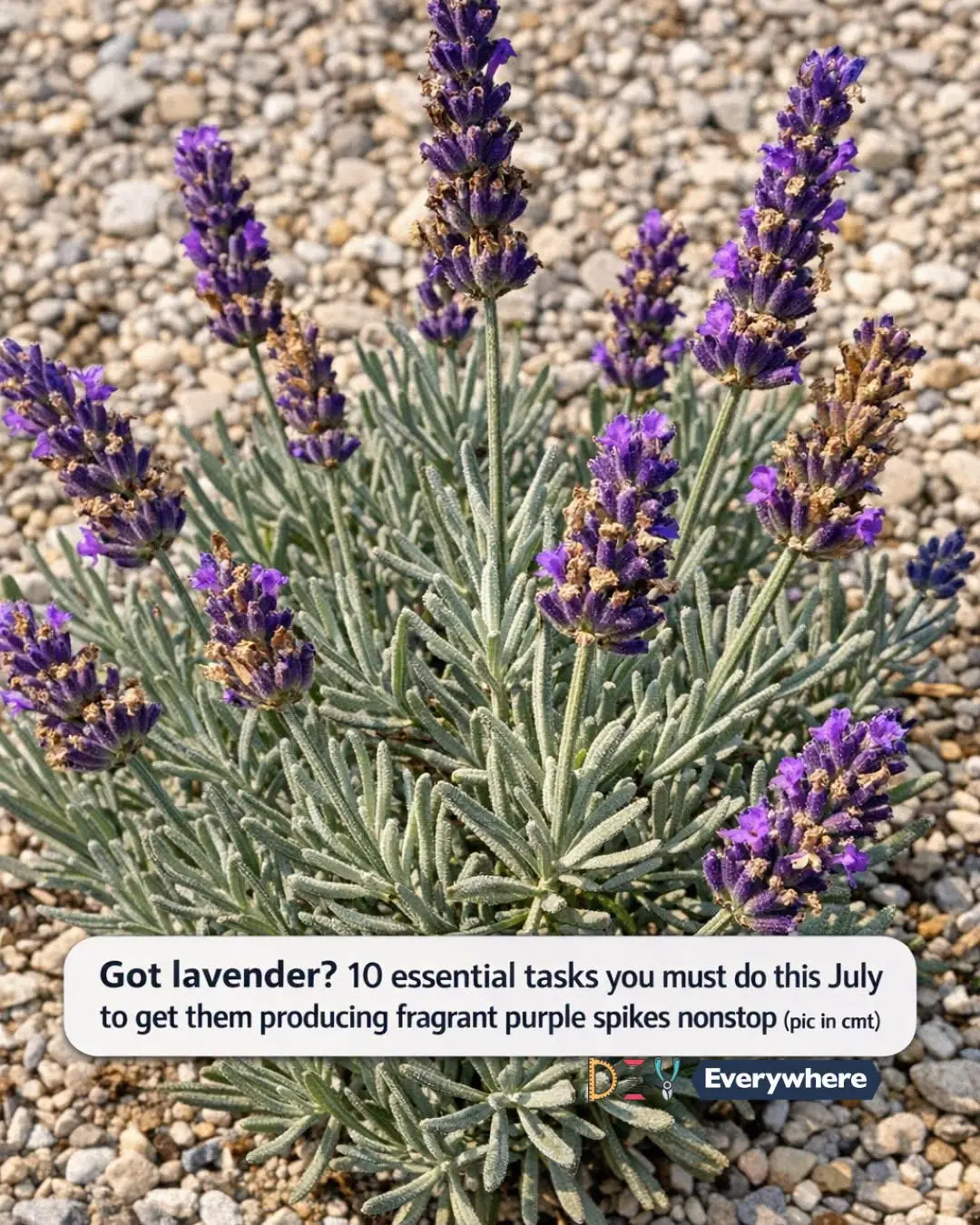
If your lavender is looking a little tired by July, don’t worry—you are right on time to help it. Mid-summer is when I do the little jobs that make the biggest difference in my garden. A few careful cuts, a little cleanup, and a close look at water and airflow can mean the difference between a lanky plant with a few faded blooms and one that keeps pushing out those beautiful purple spikes that smell wonderful every time you brush past them.
I grow lavender because I love a plant that works hard for me. It looks pretty by the walkway, perfumes the yard in the evening, and gives me armfuls to dry for sachets and small bouquets around the house. In July, I treat lavender a bit differently than I do spring flowers, because this is the month when heat, humidity, and old blooms can either slow it down or keep it going strong. Here are the tasks I always focus on this month to keep lavender healthy, tidy, and producing as long as possible.
1. Deadhead every spent flower stem promptly
If you do only one thing in July, make it deadheading. Once a flower spike has faded from rich purple to a dull grayish-lilac or tan, the plant starts putting energy into seed instead of fresh blooms. I walk through my lavender patch every 5 to 7 days with a small pair of clean snips and remove spent stems before seeds begin forming.
Cut each flower stem down to just above a set of leafy side shoots, usually 2 to 4 inches below the faded bloom. Do not shear straight into old, leafless wood. Lavender often struggles to regrow from bare woody stems, especially older plants that are 3 years old or more. If a plant has a mix of fresh and spent spikes, I snip only the faded ones and leave the newer purple stems for another round of color and fragrance.
2. Harvest blooming stems at the right stage
July is prime harvest time for many lavender varieties, and harvesting counts as pruning. For the strongest fragrance, I cut stems when about one-third to one-half of the tiny florets on each spike have opened. That is the sweet spot for drying bundles, making drawer sachets, or tucking stems into a simple centerpiece on the kitchen table.
I usually harvest in the morning after the dew has dried but before the hottest part of the day, around 9 to 11 a.m. Use sharp scissors and gather stems in handfuls about 1 inch thick. Cut long enough stems for your purpose, but always leave plenty of green leafy growth on the plant. For drying, I tie bundles with string and hang them upside down in a dim, dry room with good airflow for 10 to 14 days. The bonus is that regular harvesting encourages many varieties to send up more flower stems.
3. Give plants a light midsummer trim, not a hard prune
In July, lavender benefits from a shaping trim, but not a severe cutback. I think of it as a tidy haircut rather than a major chop. After the first flush of flowering starts to fade, remove the spent stems and lightly mound the plant so it keeps a rounded shape. A neat dome helps prevent the center from splitting open later in the season.
As a general rule, trim back no more than one-third of the current season’s soft green growth. Never cut deeply into thick brown wood unless you are removing clearly dead material. A 12-inch-tall plant might only need 2 to 3 inches removed from the soft top growth. This small trim often stimulates another lighter bloom cycle, especially on English lavender types like Hidcote and Munstead.
4. Water deeply but very sparingly
Lavender does not want pampering with frequent sips of water in July. In fact, too much water is one of the quickest ways to shorten its life. Established plants usually do best with a deep watering every 10 to 14 days during dry spells, rather than daily or every-other-day watering. In my yard, I aim for the equivalent of about 1 inch of water when the weather has been hot and rainless.
Check the soil before you water. Push your finger down 2 to 3 inches. If it still feels cool and slightly moist, wait. If it is dry, water at the base early in the day so the foliage stays dry. New lavender planted this year needs more attention—usually a deep watering every 5 to 7 days for the first several weeks, depending on heat and soil drainage. If you are gardening in heavy clay, err on the dry side. Lavender would much rather be a little thirsty than sit wet.
5. Improve airflow around the plants
July heat plus crowded growth is a bad combination for lavender, especially in humid parts of the Midwest like mine. Good airflow helps prevent mildew, fungal problems, and that sad, floppy look that can happen after summer storms. I keep at least 18 to 24 inches between smaller varieties and 24 to 36 inches between larger mounding types.
If nearby annuals, sprawling petunias, or overenthusiastic oregano are creeping into your lavender’s space, pull them back now. I also remove a few weak interior stems if the center looks crowded. You don’t need to strip the plant; just open it enough that a light breeze can move through. If lavender is planted near a fence or wall, make sure it still has breathing room on at least one side.
6. Pull weeds and clear away damp debris
Weeds compete for water and light, but the bigger issue in July is trapped moisture around the crown of the plant. Lavender likes its base dry and exposed. I make a point of pulling any grass, chickweed, or volunteer seedlings within a 6-inch ring around each plant, and I remove fallen petals, soggy mulch, and any yellow leaves that have collected underneath.
This task is especially important after heavy rain. Wet debris hugging the crown can invite rot, and once lavender starts rotting at the base, it is hard to save. I use my hands for most weeding rather than a hoe because lavender roots can be shallow and wide-spreading near the surface. It is a 10-minute job that protects the whole plant.
7. Skip rich fertilizer and keep soil lean
This surprises a lot of people, but lavender is not a heavy feeder. If you pour on high-nitrogen fertilizer in July, you often get soft, floppy green growth with fewer flowers and weaker fragrance. I do not fertilize established lavender in midsummer at all. The plant naturally performs best in lean, well-drained soil.
If your lavender truly looks pale and stalled, the problem is more likely drainage, too much shade, or overwatering than hunger. For plants in containers, I might top-dress very lightly with a tablespoon or two of a low-nitrogen, slow-release fertilizer, but only if they have been in the same potting mix for a long time. In the ground, less is more. Lavender earns its keep by thriving where fussier plants struggle.
8. Refresh mulch the right way—or remove the wrong kind
Lavender and thick, moisture-holding mulch do not get along well in July. If you have wood chips or shredded bark piled up against the stems, pull it back so there is a bare 2- to 3-inch space around the crown. Damp mulch pressed against the base can cause rot, especially during muggy weather.
If you want mulch for weed control or to keep stems clean, use a thin 1-inch layer of pea gravel, crushed stone, or coarse sand instead. Mineral mulches reflect heat, improve drainage at the surface, and keep the plant’s neck drier. I switched one bed from bark mulch to light gravel a few summers ago, and the difference in plant health was noticeable by August.
9. Inspect for root rot, fungal stress, and storm damage
Lavender is not usually a pest magnet, but July can expose hidden problems fast. After a stretch of heat and humidity or a hard summer storm, I inspect every plant. Look for blackened stems, gray fuzzy growth, collapsing sections, or leaves that are browning from the base upward. Those signs often point to excess moisture or poor airflow rather than insects.
If one branch looks damaged, prune it back to healthy green growth with sanitized snips. If an entire section feels mushy at the base, remove it promptly so the problem does not spread. For storm-flattened plants, gently reshape and trim broken stems. If a plant repeatedly struggles in one spot, that is a site problem. In the fall, I would move it to a sunnier, better-drained place rather than keep fighting the same issue.
10. Make sure your lavender is getting full sun
By July, the trees and surrounding perennials are at their fullest, and sometimes a lavender plant that had enough sun in May is suddenly getting too much shade. Lavender needs at least 6 hours of direct sun a day, and 8 or more is even better for strong blooming and concentrated oils. If flower production has slowed, pay attention to how much direct light the plant actually gets between morning and late afternoon.
I had one plant near the corner of our garage that looked fine in spring but gave me sparse spikes by midsummer. Once I realized it was losing nearly 3 hours of afternoon sun, everything made sense. For now, trim back shading annuals or nearby stems if possible. If the location is the real problem, make a note to transplant in early fall or next spring.
11. Support second blooms by timing your cuts well
Not every lavender will bloom “nonstop” in the literal sense, but many will produce repeated flushes if you stay ahead of fading stems. The trick is timing. Don’t wait until the whole plant looks brown and spent. Start deadheading as soon as the first wave begins to dull, and continue in rounds. In my garden, that often means one cleanup in early July, another in mid-July, and a lighter pass in early August.
English lavender is usually the best rebloomer, while some French and Spanish lavenders bloom in cycles if the weather stays warm and dry. Keep your cuts targeted and your plant healthy, and you are much more likely to see fresh stems coming from the sides. Think of July maintenance as gentle coaching, not punishment.
12. Give container lavender extra attention
Potted lavender can be gorgeous on a porch or patio, but in July it dries out faster and heats up more than plants in the ground. Check containers every 2 to 3 days during hot weather, especially if they are in terra-cotta pots or dark containers that absorb heat. Water deeply only when the top 2 inches of potting mix are dry, and always let excess water drain away fully.
Make sure the pot has at least one drainage hole, though I prefer several. A container 12 to 16 inches wide is a good starting size for one plant. Use a gritty potting mix amended with coarse sand or fine gravel, not a moisture-retentive mix meant for thirsty annuals. I also rotate potted lavender every week or so if one side is leaning toward the sun, which helps keep the plant mounded and even.
13. Cut a few stems for the house to keep plants productive
One of my favorite July habits is clipping a small bunch for indoors every few days. It makes the kitchen smell lovely, and it also keeps me from leaving too many spikes to age on the plant. I tuck 8 to 12 stems into a mason jar, sometimes on their own and sometimes mixed with yarrow or a few white daisies from the yard.
If you have picky family members who are not sold on strong floral scents, keep arrangements small and place them in an entryway, bathroom, or on a porch table instead of the dining table. That way everyone can enjoy it without feeling overwhelmed. And from the plant’s point of view, those little harvests are productive pruning.
14. Plan for long-term shape while the plant is still manageable
July is when I can really see the personality of each lavender plant. Some stay naturally tidy, while others sprawl or open in the center. Make notes now about which plants may need a more careful shaping after their main bloom cycle is done. A lavender that starts as a 14-inch mound can easily spread to 24 inches or more in a few seasons.
If a plant is splitting badly or has a thick woody center with only a little green growth around the edges, it may be nearing the point where replacement is smarter than rescue. Most lavenders look and bloom best in their first 5 to 7 years, though that varies by variety and drainage. There is no shame in planning a fresh plant for next season. I do it the same way I refresh a tired basil pot—grateful for what it gave me and ready for the next round.
15. Keep a simple July lavender checklist
This may sound fussy, but a quick garden note saves me from forgetting what I did and when. I jot down the date of deadheading, whether a plant got watered during a dry week, which varieties rebloomed fastest, and any trouble spots like storm damage or mildew. It takes maybe 2 minutes, and it helps me garden more confidently instead of guessing.
If you have several types—say Munstead in the front border, Phenomenal along a path, and a potted Spanish lavender by the back steps—you will notice they do not all behave the same way in July. That little record helps you fine-tune care. By next summer, you will know exactly which plants need earlier trimming, which can handle a dry stretch, and which reward you with the most fragrant purple spikes for the least work.
Lavender really does reward steady, simple care in July. You do not need fancy products or a complicated schedule—just timely snipping, careful watering, sun, airflow, and the good sense not to smother it with too much attention. That balance is what keeps my plants blooming better through the heart of summer.
And if your lavender is not perfect this year, please don’t be discouraged. Gardening has a way of teaching us plant by plant and season by season. Start with these July tasks, enjoy every fragrant stem you can harvest, and you will be well on your way to fuller, healthier plants with many more purple spikes to come.
