
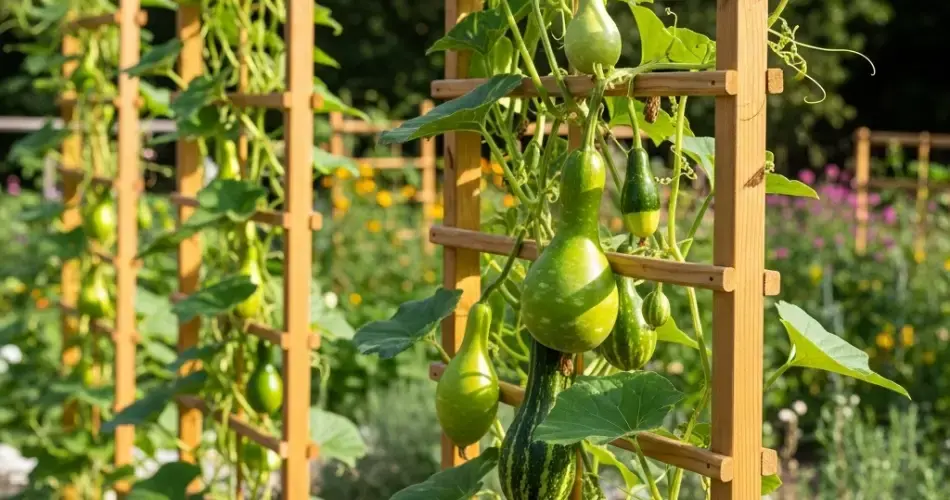
Bottle gourds are versatile and hardy climbing plants, prized for their edible fruits and ornamental potential. However, these vigorous vines require structural support to grow properly. Without support, bottle gourd plants sprawl across the ground, making them susceptible to pests, diseases, and damaged fruits. Wooden trellises are an excellent solution, providing stability, improving air circulation, and creating a visually appealing garden structure.
The Importance of Supporting Bottle Gourds
Bottle gourds are climbing vines that can grow several feet in length, producing heavy fruits that weigh several pounds each. When left unsupported, the vines often tangle on the ground, resulting in:
- Damaged fruits: Fruits lying on soil are prone to rotting, pest attacks, and deformation.
- Disease risk: Poor air circulation around ground-level leaves promotes fungal infections.
- Harvest difficulty: Tangled vines make it harder to locate and pick mature fruits.
Supporting bottle gourds with a trellis encourages vertical growth, keeping fruits off the ground, reducing disease risk, and simplifying maintenance and harvest.
Why Choose Wooden Trellises
Wooden trellises are one of the most popular support systems for bottle gourds for several reasons:
- Strength and Durability: Sturdy wood can handle the weight of fully grown vines and heavy gourds.
- Ease of Construction: Wooden trellises can be built at home with basic tools and materials, making them cost-effective.
- Customizable Design: Trellises can be tailored to fit garden size, vine growth patterns, and aesthetic preferences.
- Plant-Friendly: Unlike metal, wood is gentle on vines, reducing the risk of stem damage.
Designing and Building a Wooden Trellis
A successful trellis design combines stability with sufficient space for vine growth. Here’s a step-by-step guide:
- Selecting Materials: Use untreated, rot-resistant wood like cedar, pine, or teak. Avoid chemically treated wood that could leach toxins into the soil.
- Cutting the Components: A simple trellis can consist of vertical posts and horizontal slats or a lattice framework. For larger plants, create an A-frame or rectangular trellis with a height of 6 to 8 feet.
- Assembling the Trellis: Join the vertical posts with horizontal crossbars or a lattice grid using screws or nails. Ensure the structure is stable and can bear the weight of heavy gourds.
- Positioning in the Garden: Place the trellis near the base of the plant, ensuring enough space for vine spread. For optimal sunlight exposure, orient the trellis so vines receive full morning and afternoon sun.
Training Vines on the Trellis
Training bottle gourd vines is crucial for maximizing support and ensuring healthy growth:
- Initial Guidance: When seedlings have a few sets of leaves, gently direct the main vine toward the trellis.
- Securing Vines: Use soft garden twine, cloth strips, or plant ties to attach vines loosely to the trellis. Avoid tight knots that could constrict growth.
- Supporting Fruits: As gourds develop, they can become heavy. Consider using slings made from fabric, netting, or old stockings to cradle each fruit and prevent stress on the vine.
- Pruning: Remove weak or overcrowded shoots to focus energy on main stems and fruit production, improving yield and air circulation.
Benefits Beyond Vertical Growth
Using wooden trellises for bottle gourds provides several additional advantages:
- Disease Prevention: Elevating vines and fruits off the ground reduces exposure to soil-borne diseases.
- Pest Management: Better airflow and visibility make it easier to spot and control pests like aphids or beetles.
- Efficient Harvesting: Fruits are easier to see and pick, saving time and reducing accidental damage.
- Garden Aesthetics: A well-maintained trellis adds a vertical dimension to the garden, creating a beautiful and organized growing space.
Maintenance Tips
To ensure a long-lasting and effective trellis:
- Inspect the structure regularly for loose nails, screws, or damaged wood.
- Re-tie vines periodically as they grow to maintain support.
- Clean the trellis at the end of the season to remove plant debris and prevent disease carryover.
- Apply natural, plant-safe wood sealant to extend the trellis’s lifespan if needed.
Conclusion
Wooden trellises provide a practical and aesthetically pleasing solution for supporting bottle gourd plants. By encouraging vertical growth, reducing disease and pest risk, and simplifying harvest, these structures help gardeners maximize both the health and yield of their plants. With thoughtful design, proper installation, and consistent maintenance, wooden trellises transform sprawling bottle gourd vines into strong, productive, and visually striking garden features.
