
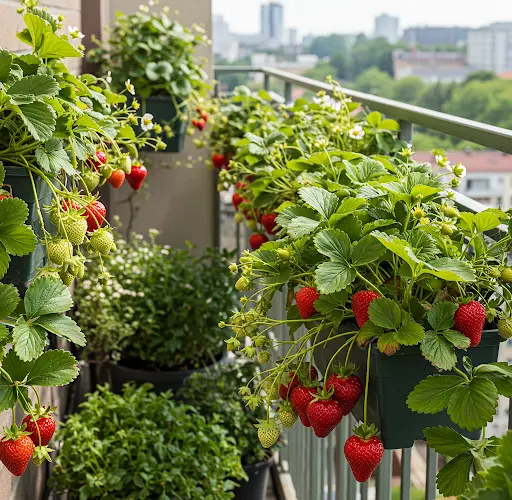
Strawberries are among the most delightful and rewarding fruits to grow at home. Their juicy, sweet flavor and vibrant color make them a favorite in desserts, salads, and snacks. While many assume strawberries require a garden, they actually thrive in small spaces like balconies, patios, or terraces. With the right techniques, even urban dwellers can enjoy a continuous harvest of fresh, homegrown strawberries. This guide provides practical steps for growing strawberries successfully in containers, ensuring high yields and healthy plants.
Why Grow Strawberries on a Balcony?
Growing strawberries on a balcony comes with numerous benefits:
- Space-Saving: Perfect for apartments or homes without a garden. Strawberries grow well in pots, hanging baskets, vertical planters, or window boxes.
- Easy Maintenance: Strawberries require minimal care compared to other fruits. Once established, they produce abundant crops with simple watering and feeding routines.
- High Yield in Small Spaces: Properly maintained plants can deliver a surprising amount of fruit, even in limited areas.
- Reduced Pest Problems: Keeping plants off the ground reduces the risk of soil-borne pests and diseases.
- Fresh, Organic Produce: Enjoy strawberries free from pesticides and chemicals, harvested right from your own home.
This combination of convenience, productivity, and health makes balcony strawberry gardening an ideal choice for urban gardeners.
Choosing the Right Strawberry Variety
Selecting the right strawberry variety is crucial for successful balcony gardening. Strawberries come in three main types:
- June-Bearing: Produces a single, large harvest each year, ideal for gardeners who want a seasonal abundance.
- Ever-Bearing: Yields two to three smaller harvests throughout the growing season, providing fruit over a longer period.
- Day-Neutral: Continuously produces fruit regardless of day length, ideal for a constant supply of berries.
For container or balcony gardening, ever-bearing and day-neutral varieties are preferred, as they extend the fruiting season and make the most of small spaces.
Selecting Containers for Strawberries
Strawberries are highly adaptable and grow well in a variety of containers:
- Hanging Baskets: Allow plants to cascade naturally while keeping them off the ground.
- Vertical Planters: Maximize vertical space and increase planting density.
- Window Boxes: Ideal for balcony railings, combining accessibility with aesthetic appeal.
- Plastic or Clay Pots: Ensure they have adequate drainage to prevent root rot.
- Grow Bags: Lightweight, portable, and perfect for urban gardening.
Each plant needs a soil depth of 6–8 inches to support healthy root growth, so choose containers that provide enough space.
Preparing the Soil
Healthy soil is key to high-yielding strawberries. Prepare a nutrient-rich, well-draining mix:
- Use loamy or sandy soil to ensure proper drainage.
- Incorporate organic compost or well-rotted manure for essential nutrients.
- Maintain a slightly acidic pH of 5.5–6.5.
- Add perlite or coconut coir to improve aeration and water retention.
Well-prepared soil supports vigorous growth, strong roots, and abundant fruit production.
Planting Strawberries
Follow these steps for successful planting:
- Select healthy seedlings or runners.
- Fill your container with the prepared soil, leaving space for planting.
- Plant each strawberry so the crown (where leaves meet roots) remains above the soil line.
- Space plants 8–12 inches apart for proper air circulation and growth.
- Water thoroughly after planting to help roots establish.
Providing Optimal Growing Conditions
Sunlight: Strawberries need 6–8 hours of direct sunlight per day. Place containers in the sunniest part of your balcony.
Watering: Keep soil consistently moist but not soggy. Water early in the morning to allow leaves to dry before evening, reducing fungal risks.
Fertilizing: Apply balanced organic fertilizer every 2–3 weeks. Natural options like liquid seaweed, fish emulsion, or compost tea nourish plants without overpromoting leaf growth at the expense of fruit.
Supporting and Protecting Your Plants
Mulching: Use straw, dried leaves, or coconut husks to retain moisture, reduce weeds, and keep berries clean.
Pest and Disease Control: Watch for aphids, slugs, and spider mites. Use neem oil or insecticidal soap as a natural solution, and maintain good air circulation to prevent powdery mildew.
Pollination: On balconies, fewer pollinators may reduce fruit set. Encourage pollination by:
- Gently hand-pollinating flowers with a soft brush.
- Planting companion flowers like marigolds or lavender to attract bees.
Harvesting Strawberries
Strawberries are ready to harvest when they are fully red, firm, and slightly glossy:
- Pick berries by gently twisting with the stem attached.
- Morning harvests often yield the sweetest, juiciest fruit.
- Frequent harvesting encourages continuous flowering and fruit production.
Extending the Growing Season
To enjoy strawberries year-round:
- Grow indoors during colder months using LED grow lights.
- Protect plants from frost with fabric covers or mini-greenhouses.
- Propagate new plants from runners to maintain a continuous planting cycle.
Conclusion
Growing strawberries on a balcony transforms any small space into a fruitful urban garden. With the right variety, containers, soil, and care, you can enjoy a steady supply of sweet, juicy strawberries throughout the growing season. Whether you’re a beginner or an experienced gardener, balcony strawberries provide the joy of fresh fruit, sustainable gardening, and a vibrant touch to your home.
Start your DIY balcony strawberry garden today and savor the taste of homegrown sweetness every season.
