
If you are an orchid newbie, I highly recommend that you read up on the types of orchids and their care before taking the plunge. Growing happy and healthy orchids is not hard, just different.
Once you understand the conditions that orchids need, they aren’t much harder to grow than other houseplants.
The Orchid: A Misunderstood Houseplant
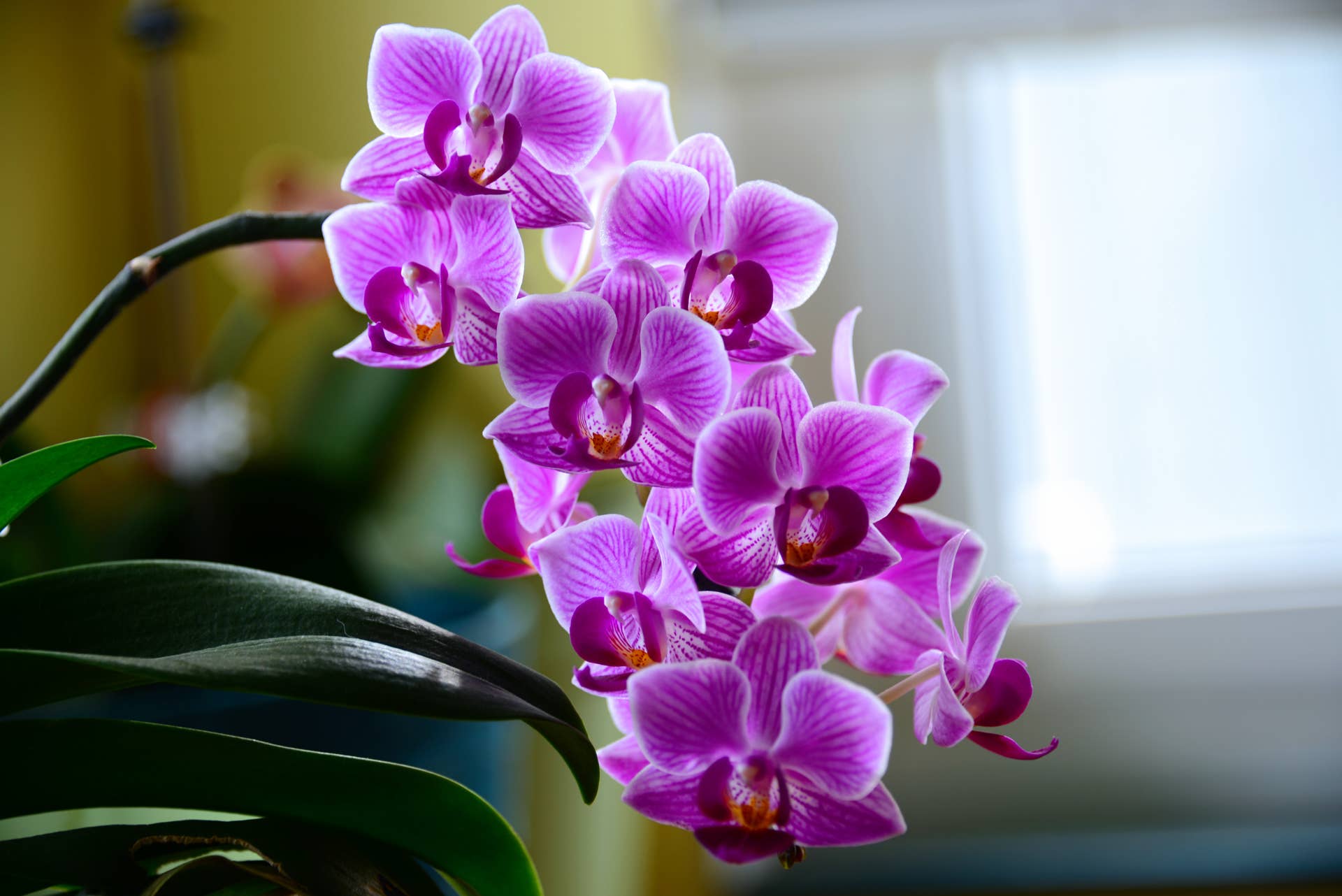
These beautiful plants are often misunderstood; they can be very simple and easy to grow if provided with the proper water, light, humidity, temperature, and fertilizer for their specific variety.
Growing orchids can be a deeply satisfying hobby. Here are some beginners’ tips for selecting and growing orchids.
Orchid Care Tips
- Watering: The most important factor in growing orchids is providing the right amount of water. They should be watered periodically, normally once a week. Many times, orchids are watered more than necessary. Most orchids have a very effective root system to store water and hence, do not need as much water as other plants. Two points should be considered while watering orchids. First, the water needs of the particular species should be taken into account. Secondly, watering should be done only when the soil is dry. Rainwater (if available) is the best choice.
- Humidity: Providing humidity for your orchid will help to make it feel at home in your indoor environment, a task that can be accomplished with a humidifier or by placing a dish of moist gravel under its pot. Just be sure that the plant is not left in standing water, as soggy conditions can promote fungus, disease, or root rot.
- Temperature: Maintaining proper temperature is essential for growing orchids. Normally, orchids grow well in typical home temperatures. However, in order to bloom, orchids need variations in temperature. Almost all orchid species grow well in temperatures ranging between 60°F and 80°F.
- Lighting: Providing the right lighting is another important factor for successfully growing orchids. Orchids normally require a medium, filtered light to grow. Placing these plants near a window to get at least four hours of sunlight a day is ideal. The color of the leaves indicates if sufficient light is being provided to the plant. When the leaves on the plants are dark green, they are not getting sufficient light; and if they are reddish green, they are receiving too much light. The ideal color of the leaves should be bright green.
- Fertilizer: Your orchids need to be fed fertilizer to get the essential nutrients they need to survive. I give my orchids specially formulated orchid fertilizer once a month.
- Air Flow: Air flow is extremely important for growing all types of orchids. Be sure there is always good air exchange. Indoor air circulation can be provided with various types of fans. It helps cool leaves in high-light situations and keeps molds and fungus spores from settling on delicate plant parts and causing rot.
- Potting Mix: Never ever pot an orchid in soil. In the wild, orchids attach themselves to trees and rocks to grow. They need aeration around the roots, or they will suffocate. Use a growing medium such as peat moss, fir bark, sphagnum moss, dried fern roots, perlite, stones or coconut fiber.
Which Orchids Are Recommended for Beginners?
Below, we’ll take a look at the following low-fuss orchids that are good for novices:
- Phalaenopsis or Moth Orchids
- Oncidium Orchids (Dancing Ladies)
- Dendrobium Orchids
- Cattleya Orchids
- Lady’s Slipper Orchids or Paphiopedium Orchids
1. Phalaenopsis or Moth Orchids
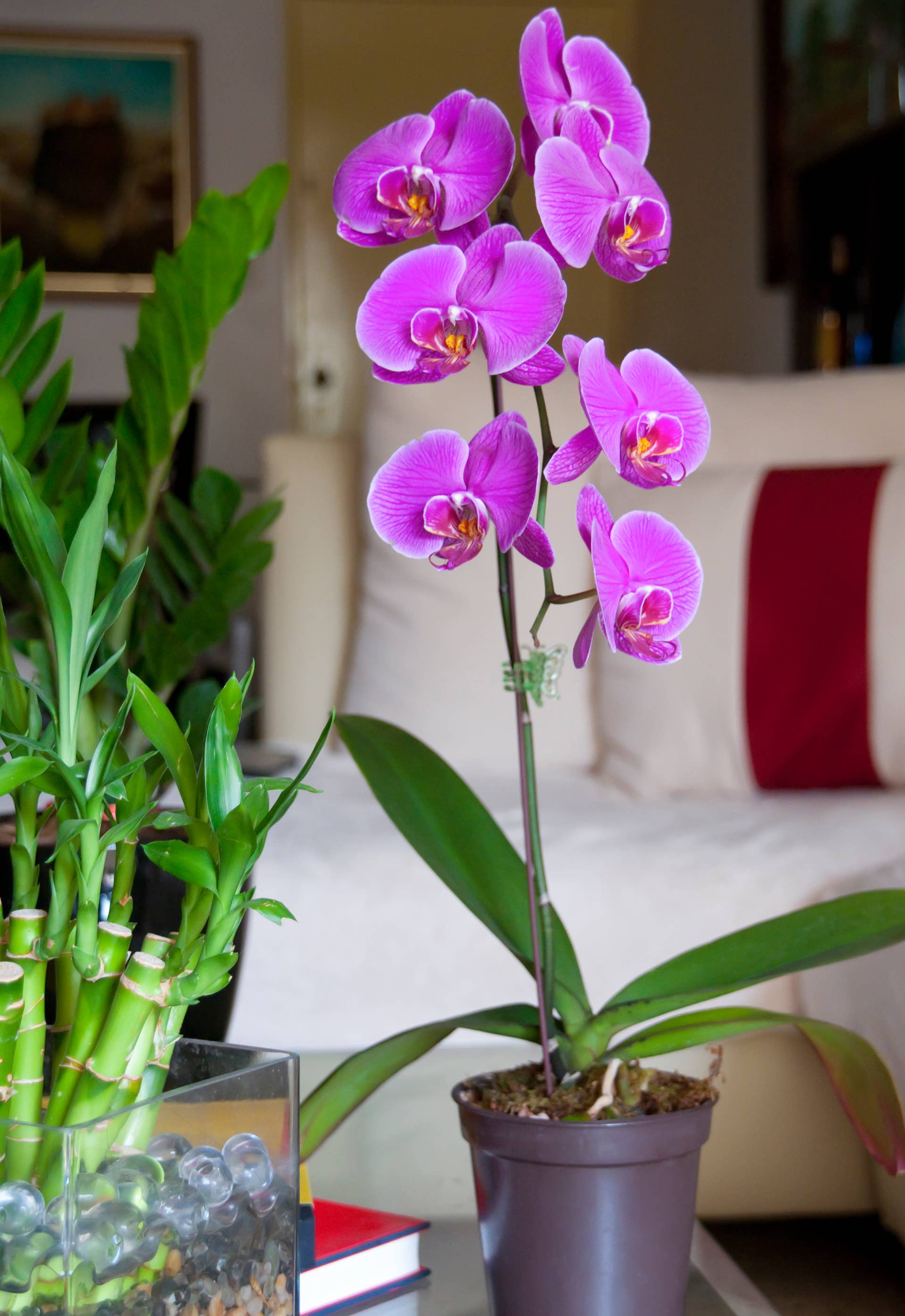
The Phalaenopsis (moth orchids) are the most common type of orchid recommended for beginners. Pronounced “fail-eh-NOP-sis” (don’t be put off by the exotic name), these are some of the most accessible, affordable, and easy-care orchids available.
Their blooms are long-lasting, too; in fact, one bloom spike can look great for four months or more. The flowers come in shades of white, pink, red, green, yellow, orange, and purple.
Care Requirements
Moth orchids require lower light levels than many other types—about the same as for African violets—and will adapt to the humidity levels present in most houses. However, they are easily killed by overwatering and from getting water in their crowns.
That’s probably why I get along with this type—I’ll never be guilty of overwatering my plants. I’m more prone to the opposite. Watering once a week is fine by the moth orchids.
Promote more and larger blooms by feeding your moth orchids monthly with a fertilizer formulated for orchids. The plants do best in temperatures from 50 to 75F. A drop in temperature helps encourage them to bloom.
2. Oncidium Orchids (Dancing Ladies)
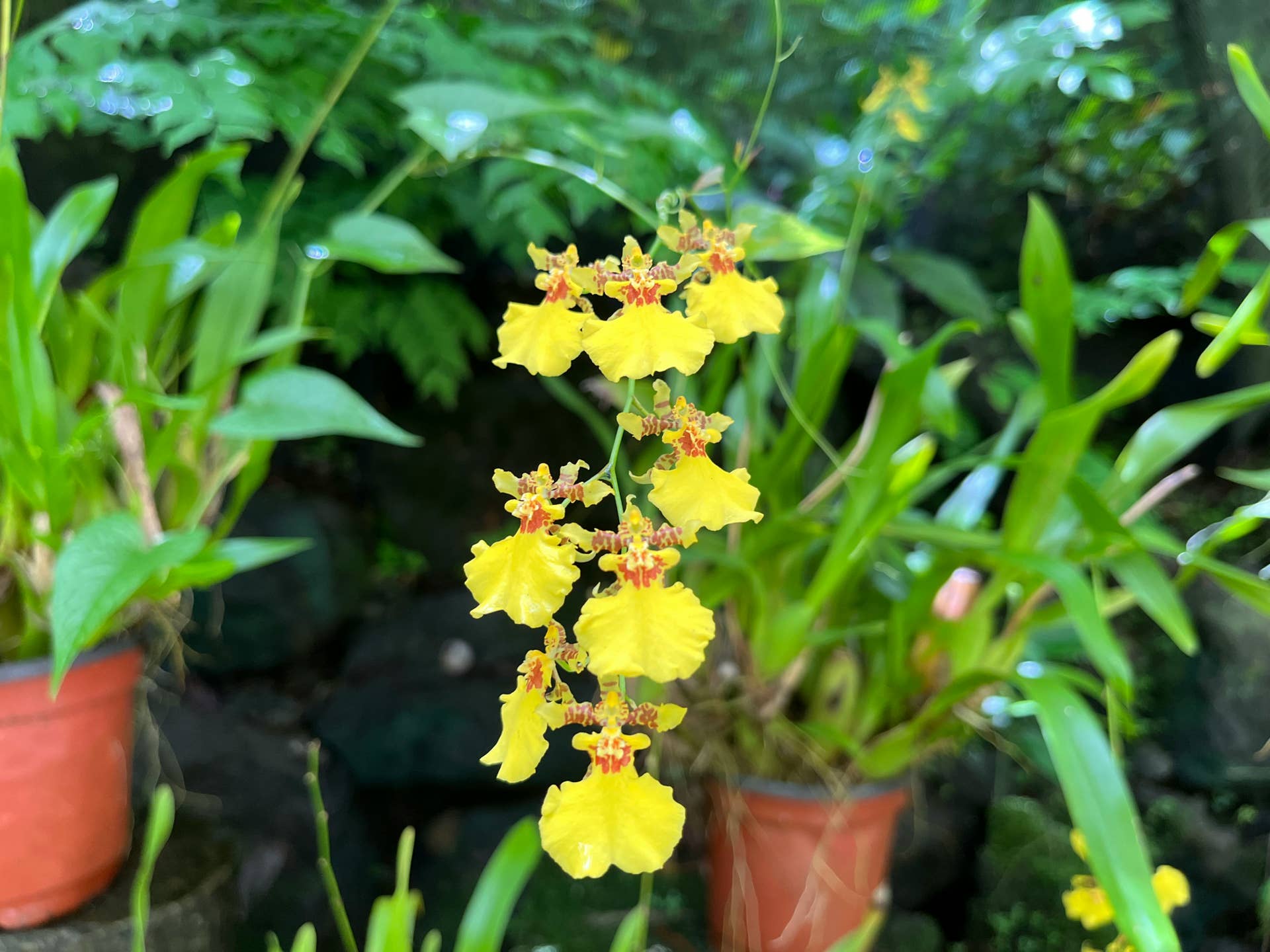
Sometimes called “dancing lady orchids”, Oncidiums offer lots of colorful, smallish flowers in clusters of 50 or more. They commonly appear in shades of yellow, purple, red, pink, and white, often with flamboyant, contrasting markings.
Care Requirements
This is another type of low-fuss orchid that I recommend for beginners. Oncidium selections do best in medium to bright light. Water them weekly or every other week and feed them monthly in spring and summer with an orchid fertilizer. They do best in temperatures from 50 to 75F.
Recommended Varieties
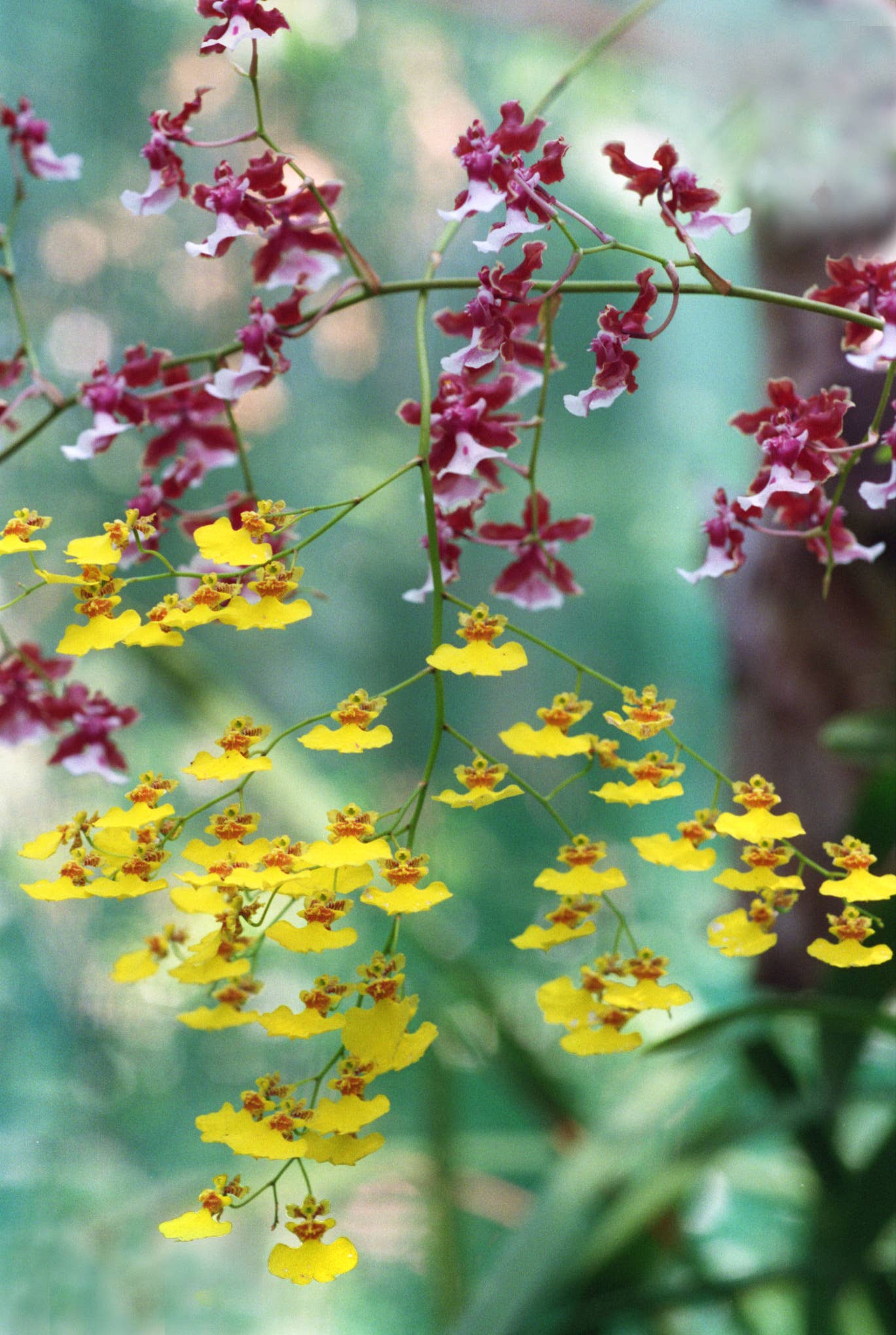
Many Oncidiums are fragrant, and most of them bloom twice a year if given enough light and the right culture. One of my favorites is the popular ‘Sharry Baby’, which has a luscious chocolate scent. Another good one is ‘Sweet Sugar’, which is also very easy to grow.
3. Dendrobium Orchids
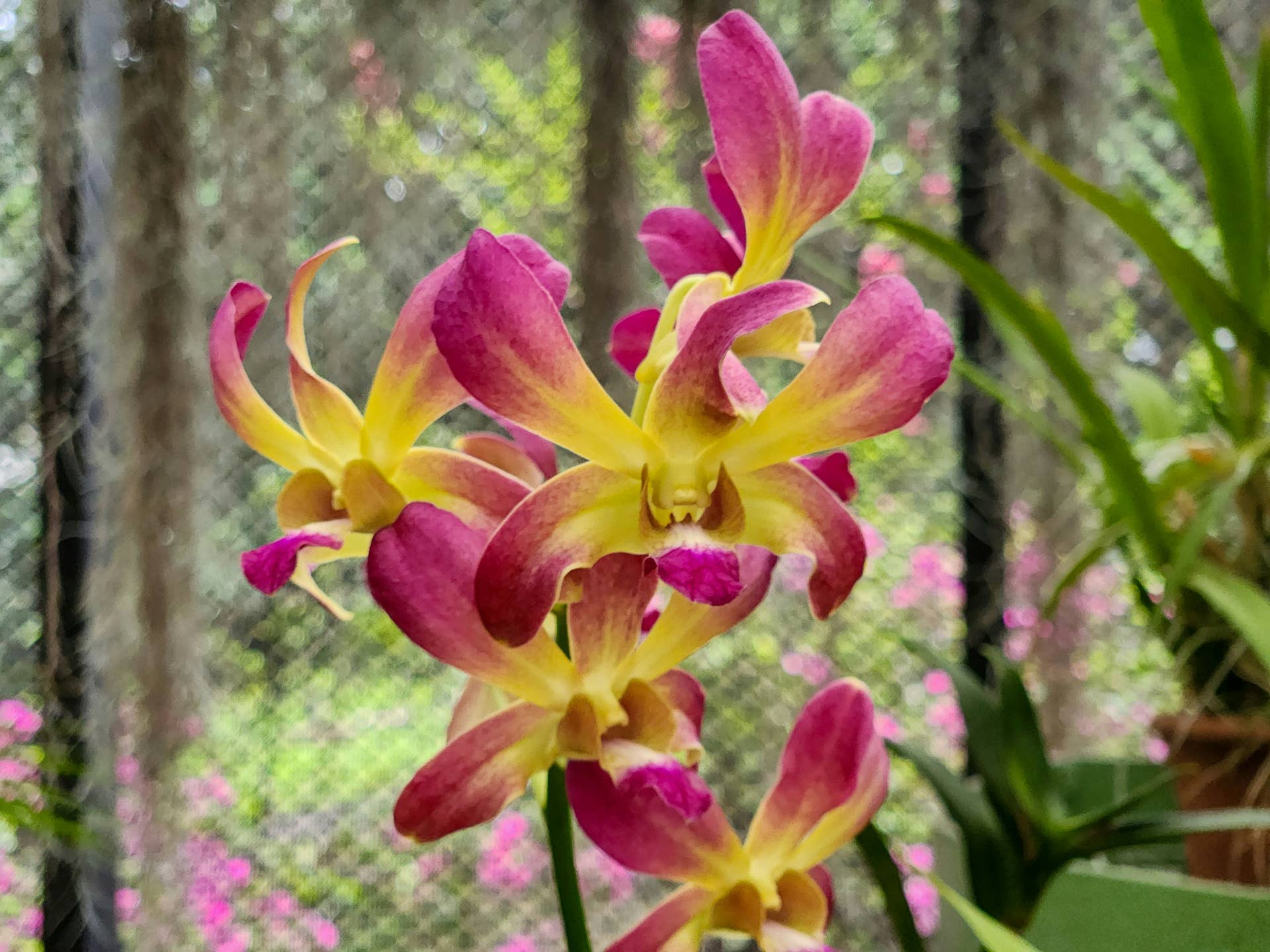
Dendrobium orchids are often seen at florists in bouquets since they offer long-lasting blooms (they stay looking good for a month or more) in a wonderful array of colors from white to purple, pink, and even green. Dendrobiums are a good beginners’ orchid since they are not really fussy. They thrive in bark and rock mixes.
Care Requirements
Dendrobium selections prefer a spot in medium to bright light. Water them weekly or every other week; they like to be watered and allowed to dry out. Fertilize them monthly with a plant food formulated for orchids.
They do best in temperatures from 50 to 70F. Hundreds of dendrobiums are available; the most common types keep their foliage all year and bloom on new stems.
4. Cattleya Orchids
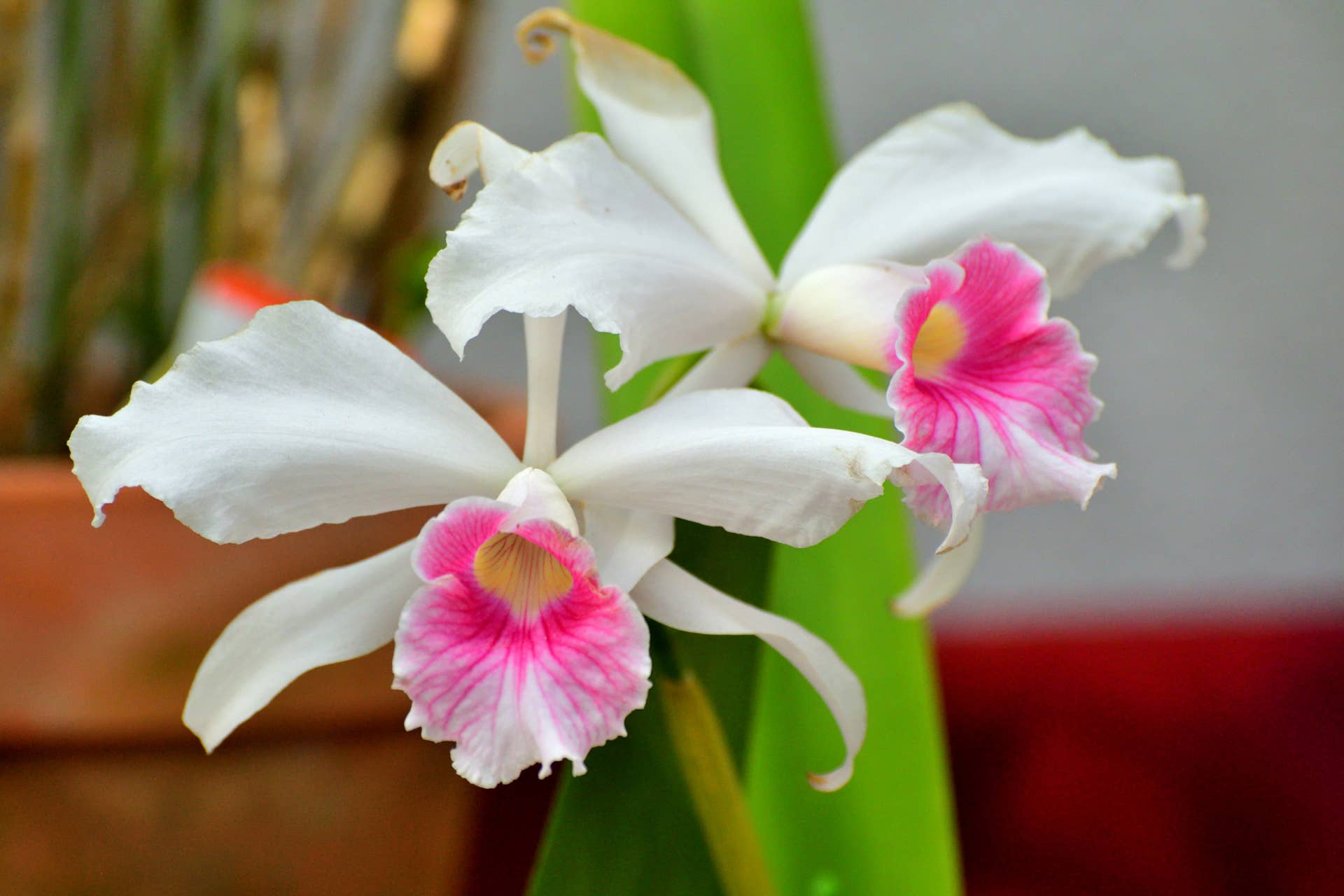
Cattleyas are frequently thought of as corsage orchids, but they make wonderful indoor plants, as well as cut flowers. The blooms are often fragrant and appear in a wide range of colors, from red to pink, white, purple, yellow, and orange.
Some selections feature eye-catching markings in other colors. These plants are both hardy and beautiful.
Care Requirements
Cattleya orchids do best in medium or bright light. Water them once a week or two, and feed them monthly in spring and summer with an orchid fertilizer to get the biggest blooms.
They do best in temperatures from 50 to 70F. Cattleya orchids can bloom twice a year, and the flowers last for weeks. Give them plenty of light so they rebloom quickly.
Cattleyas require 50 to 60% humidity. If grown in your home, place plants near a sunny window on trays with moistened pebbles. This will help to create the necessary humidity for your plant.
5. Lady’s Slipper Orchids or Paphiopedilum Orchids
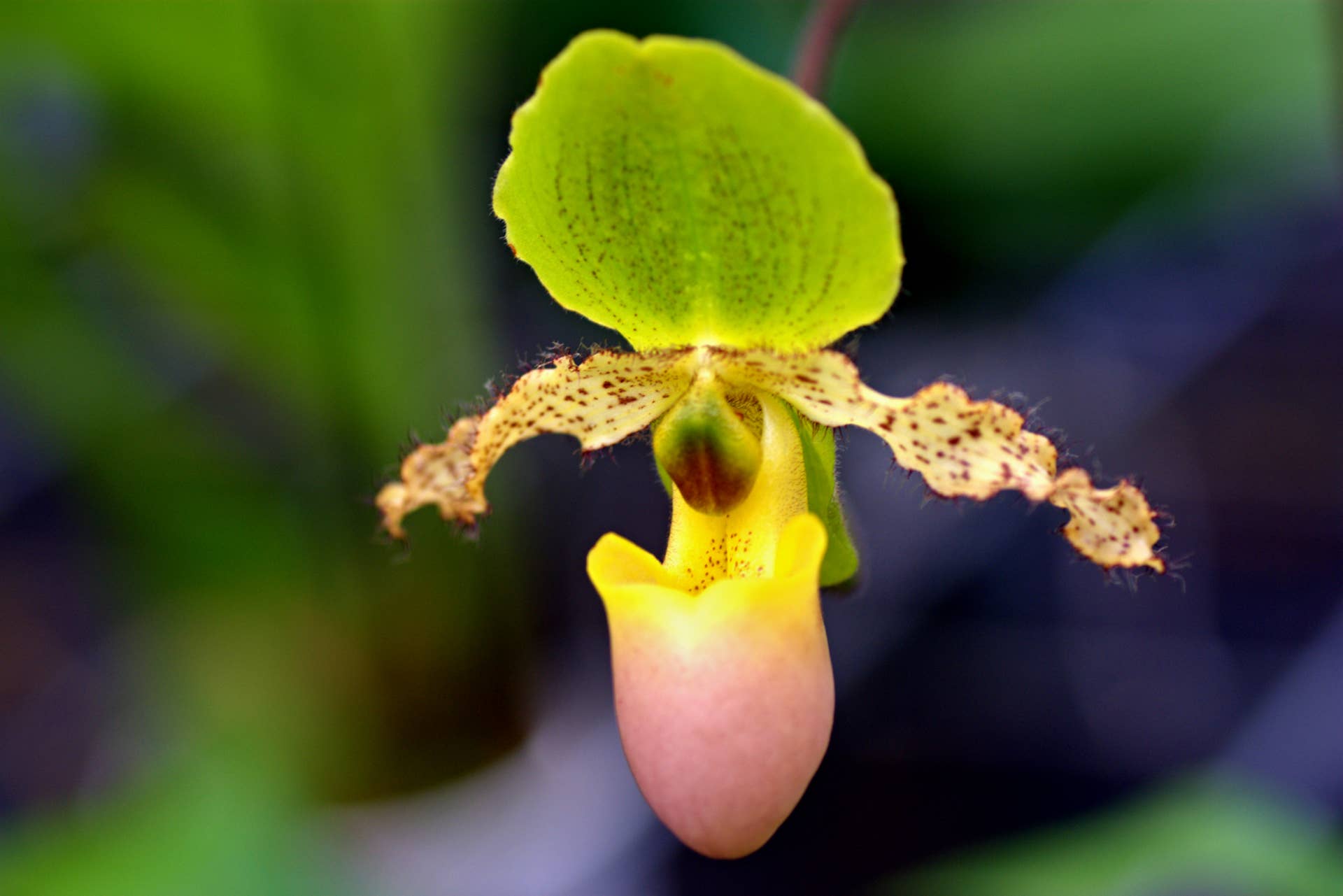
Paphiopedilum (paff-ee-oh-PED-ih-lum) or Lady’s Slipper Orchids offer big blooms composed of a hollow “pouch” backed by a sepal and two petals.
Many Lady’s Slipper Orchids bear variegated foliage, so they look beautiful even when they’re not flowering. The flowers are usually shades or sometimes striking combinations of green, white, maroon, brown, or yellow.
Care Requirements
They are very tolerant of light conditions in a house and, with proper handling, will re-bloom fairly easily. The main problem for most indoor growers is keeping humidity around the plant so that the leaves do not dry out and the buds do not fail to open.
Lady’s Slipper Orchids like filtered light, good air circulation, and excellent drainage. Keep them evenly moist while they are growing, and give them less water while they are resting. Keep water off the leaves to avoid rot. These orchids grow well in a window or under lights as long as the temperature is not above 85 F.
When Your Orchid Arrives
If your orchid has been purchased in a store and has cellophane wrap and moss around the plants, remove the moss immediately. The roots of the plant need to dry out, and the moss won‘t allow it to do that. If it just has cellophane around the plant, remove it right away.
Repotting Orchids
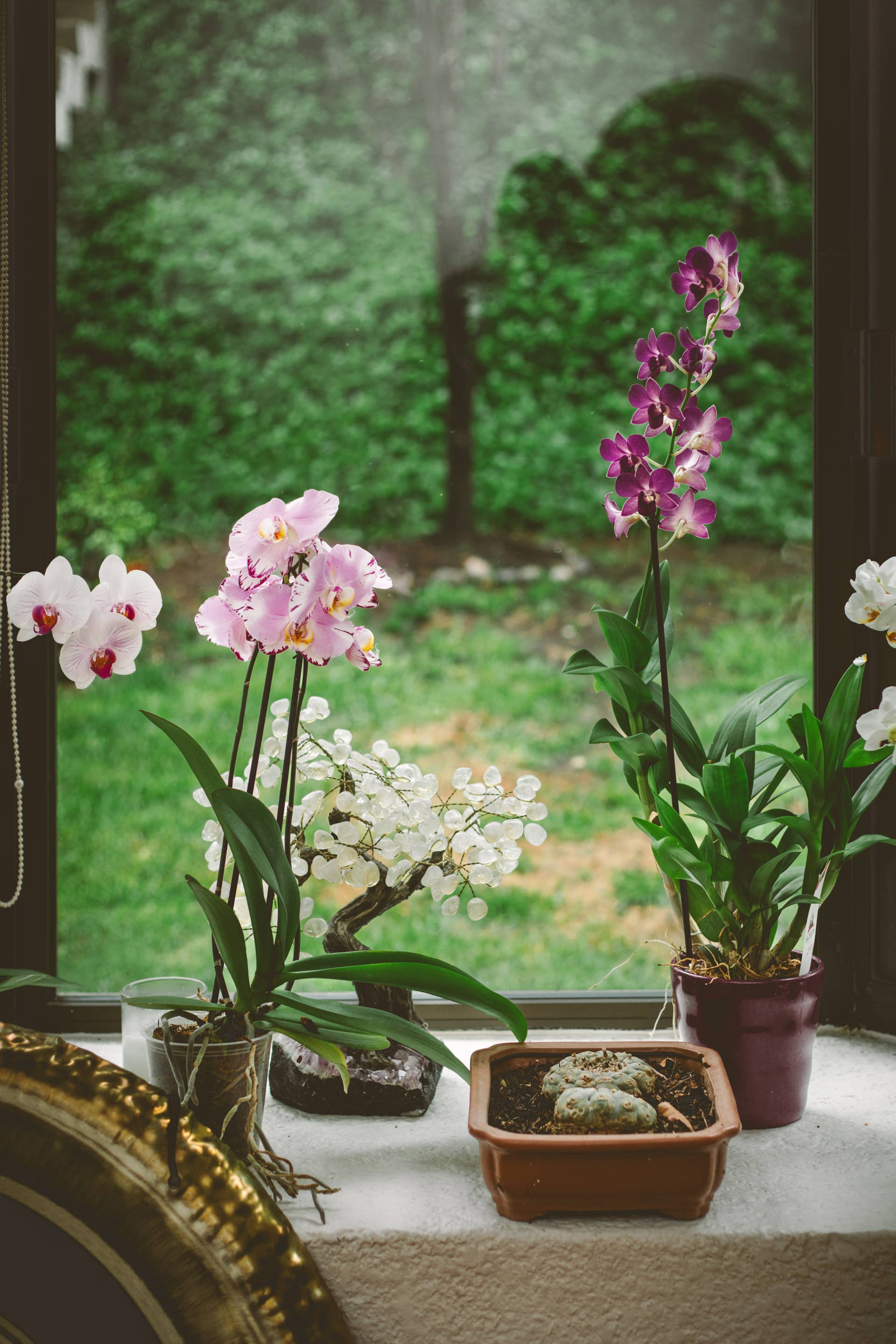
First, a word of caution should be given. Never repot an orchid when it is in bloom. This may damage the plant. Orchids only need to be repotted about every other year.
When transplanting an orchid, you should plant it in just a slightly larger pot that has good drainage. Use the soil that is specially formulated for orchids. Fill the pot about two-thirds full of soil. Place your orchid in the pot and tamp dirt around the other third.
