
Some recipes are more than instructions printed on a piece of paper. They become part of a family’s history.
A recipe written in a magazine decades ago can turn into the dish everyone remembers: the meal that appeared on the table during summer gatherings, the smell that filled the kitchen, and the food that somehow tasted even better because someone you loved had made it so many times.
This baked chicken recipe is exactly that kind of dish.
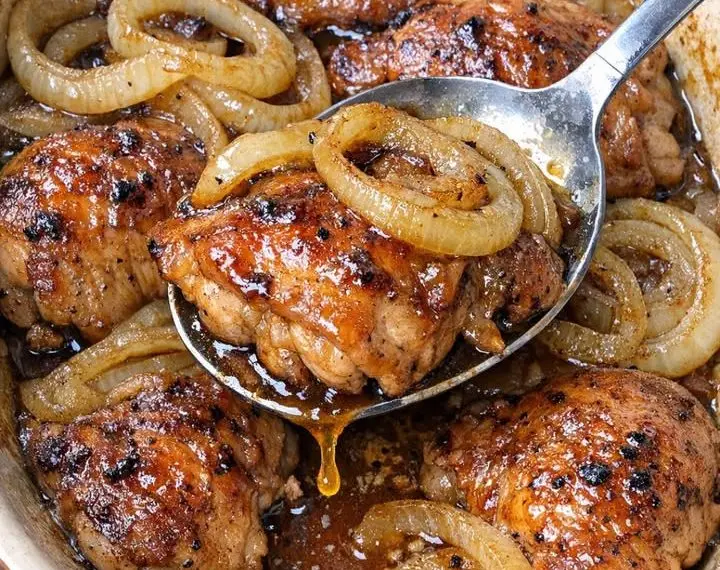
The image shows tender, golden-brown chicken thighs surrounded by soft, caramelized onion rings and coated in a glossy, savory-sweet sauce. It is simple, old-fashioned comfort food—the kind of meal that doesn’t require an elaborate list of ingredients or complicated cooking techniques.
A version of this recipe currently circulated as 3-Ingredient Chicken Charleston uses chicken thighs, sweet onion and Russian dressing, with the chicken baked until tender and the onions become soft and caramelized.
And perhaps that’s part of its charm: simple ingredients, familiar flavors, and a recipe worth remembering.
Why Old Family Recipes Feel So Special
Modern cooking often focuses on new ingredients, complicated techniques and beautiful presentation.
But some of the most memorable meals are incredibly simple.
Recipes from the 1960s and 1970s often relied on inexpensive ingredients that were easy to find at the grocery store. Chicken, onions, bottled dressings, canned ingredients and pantry staples could be transformed into a satisfying dinner without spending hours in the kitchen.
There are numerous surviving examples of vintage chicken recipes from the 1970s that follow this same philosophy—brown the chicken, add onions and a flavorful sauce, then let the oven do most of the work.
That practicality is probably one reason these recipes survived.
But the real reason families continue making them is usually emotional.
One person makes the dish.
Someone else learns it.
Years later, another generation takes over.
And suddenly, a simple chicken dinner becomes a family tradition.
The Chicken: Golden on the Outside, Tender Inside
For this recipe, bone-in, skin-on chicken thighs are ideal.
Chicken thighs have more natural fat than chicken breast, which helps them remain juicy during baking. The skin also develops a beautiful golden-brown surface as the chicken cooks.
The goal is to get the outside deeply browned while allowing the inside to become tender and succulent.
The chicken should be arranged in a single layer in the baking dish so the pieces cook evenly and have room for the sauce to circulate around them.
A similar principle is used in many classic baked chicken recipes: browning and roasting create deeper flavor while the sauce keeps the meat moist.
The Secret Is Really the Onions
Look closely at the photograph and you’ll notice something important.
The onions aren’t just sitting beside the chicken.
They are one of the stars of the dish.
Large onion rings soften as they bake, absorbing the juices and sauce released by the chicken. Their sharp raw flavor gradually disappears, leaving behind something sweeter, softer and much richer.
By the end of cooking, the onions should be tender enough to cut easily with a fork.
They also help create the wonderful sauce that collects at the bottom of the baking dish.
And if you’ve ever eaten a piece of crusty bread, mashed potatoes or rice with a spoonful of those onions and pan juices, you know why people remember recipes like this.
The Classic Recipe
Ingredients
For approximately 4–6 servings:
- 6 bone-in, skin-on chicken thighs
- 1 large sweet onion
- 1 cup Russian dressing
- Black pepper, optional
- A little oil or cooking spray for the baking dish
The original-style version is remarkably simple, using only chicken, onion and Russian dressing as its main ingredients.
If Russian dressing isn’t available where you live, you can make a homemade approximation with mayonnaise or a creamy base combined with ketchup, sweet relish and a little vinegar. The flavor won’t be identical, but it can provide a similar sweet-tangy character.
Step-by-Step Instructions
TO CONTINUE READING THE ARTICLE PLEASE SEE PAGE 2
Step-by-Step Instructions
1. Prepare the Oven
Preheat your oven to 350°F (175°C).
Lightly grease a large baking dish, preferably one that allows the chicken pieces to sit in a single layer.
A 9-by-13-inch baking dish works well.
2. Slice the Onion
Peel the onion and cut it into thick rings.
Separate some of the rings with your fingers, but don’t worry about making every piece perfect.
Place the onion rings across the bottom of the baking dish.
As the chicken cooks, the onions will soften and absorb the flavorful juices.
3. Add the Chicken
Pat the chicken thighs dry with paper towels.
Arrange them skin-side up over the onions.
Try not to overcrowd the dish.
Leaving a little space between the pieces helps the hot air circulate and allows the skin to brown more effectively.
4. Add the Sauce
Spoon the Russian dressing generously over the chicken.
Try to cover the tops of the thighs as evenly as possible.
The dressing will gradually melt and combine with the chicken juices during baking, creating the glossy sauce visible in the photograph.
If your dressing is particularly thick, a tablespoon or two of water can make it easier to spread.
5. Cover and Bake
Cover the baking dish tightly with aluminum foil.
Bake for approximately 45 minutes.
This covered stage allows the chicken to cook gently while the onions become soft and tender.
6. Finish Uncovered
Remove the foil carefully because hot steam will escape.
Spoon some of the sauce from the bottom of the dish over the chicken.
Return the dish to the oven uncovered.
Continue baking for approximately 25–35 minutes, or until the chicken is completely cooked and the sauce has become darker and thicker.
The uncovered cooking time is important because it allows the chicken skin to brown and gives the sauce a chance to concentrate.
For food safety, chicken should reach at least 165°F (74°C) in the thickest part.
7. Let It Rest
Once the chicken is finished, take the dish from the oven and allow it to rest for about 5 minutes.
This gives the juices a chance to settle.
Then spoon plenty of those beautiful onions and pan juices over the chicken before serving.
What Makes the Sauce So Good?
The magic happens as several flavors come together.
The dressing provides sweetness, acidity and seasoning.
The chicken contributes savory juices and rendered fat.
The onions add natural sweetness as they slowly soften.
The oven then reduces everything into a concentrated sauce.
This sweet-and-savory combination is one reason similar chicken recipes have remained popular for decades. Modern recipes still use combinations such as brown sugar, soy sauce, vinegar and garlic to create a glossy glaze for chicken thighs.
The technique may be simple, but the result tastes much more complicated.
What to Serve With This Chicken
This is the kind of recipe that practically demands something that can soak up the sauce.
Mashed Potatoes
Creamy mashed potatoes are probably one of the best choices.
Spoon the chicken juices and onions over the potatoes and let the sauce run into all the little valleys.
White Rice
Plain steamed rice is another excellent option.
Its mild flavor allows the chicken and onion sauce to take center stage.
Egg Noodles
Buttered egg noodles make the meal feel especially nostalgic.
Toss the noodles with a little butter, then spoon the chicken sauce over the top.
Green Beans
For something lighter, serve the chicken with steamed or roasted green beans.
The freshness and slight crunch provide a nice contrast to the rich sauce.
A Simple Salad
A crisp salad with lettuce, cucumber and a lightly acidic dressing can also balance the richness of the chicken.
How to Make It Taste Even More Like a Family Recipe
The beauty of recipes like this is that they don’t have to be followed with laboratory precision.
Once you’ve made it a few times, you can adapt it to your family’s preferences.
Add a little freshly ground black pepper.
Try a small amount of garlic powder.
Add a pinch of paprika for extra color.
Use extra onions if your family loves them.
You can even add a few sliced mushrooms for another layer of flavor.
The important thing is not to lose the character of the original recipe.
It should remain easy.
It should remain comforting.
And most importantly, it should remain something you actually want to make again.
Can You Use Chicken Breasts?
Yes, but thighs are generally better suited to this style of slow baking.
Chicken breasts are leaner and can become dry if cooked too long.
If you decide to use breasts, keep a closer eye on them and begin checking their internal temperature earlier.
Bone-in chicken pieces are particularly forgiving because they retain moisture well during longer cooking.
Can You Prepare It Ahead of Time?
Yes.
You can slice the onions and arrange the chicken in the baking dish several hours ahead.
Cover everything and refrigerate until you’re ready to cook.
If you’ve assembled the dish in advance, remember that the chicken is starting cold from the refrigerator, so cooking time may vary slightly.
For best results, avoid leaving raw chicken at room temperature for extended periods.
Why This Recipe Belongs in a Family Recipe Box
There are thousands of chicken recipes online today.
You can find recipes involving dozens of ingredients, complicated marinades and specialized cooking equipment.
But sometimes the recipe you remember most isn’t the most sophisticated one.
It’s the one your family made repeatedly.
The one associated with a particular season.
The one you could smell before you even entered the kitchen.
The one someone clipped from a magazine and carefully saved because it was good enough to make again.
That is what makes a recipe like this special.
The chicken itself is delicious, but the story behind it makes the meal mean something more.
A Recipe That Keeps Going
The most beautiful part of this story isn’t necessarily the magazine clipping from 1971.
It’s what happened afterward.
A mother-in-law made the recipe year after year.
Eventually, she couldn’t cook anymore.
But instead of allowing the recipe to disappear, someone else picked it up and continued making it.
That’s how family recipes survive.
Not because they’re written perfectly.
Not because they’re famous.
But because someone decides:
“I’m going to make this again.”
And then they do.
August after August, year after year, the same golden chicken can appear on the table, surrounded by sweet onions and rich sauce.
The people around the table may change.
The kitchen may change.
The magazine clipping may become old and fragile.
But the recipe remains.
And sometimes, that simple act of cooking the same meal your family has loved for generations is one of the sweetest ways to keep a memory alive.
