Every gardener knows the feeling — after a growing season ends, pots are left filled with tired, dry soil that seems completely useless. Most people simply throw it away and buy fresh potting mix every year. But what many gardeners don’t realize is that old potting soil can often be revived and reused successfully with just a few simple steps.
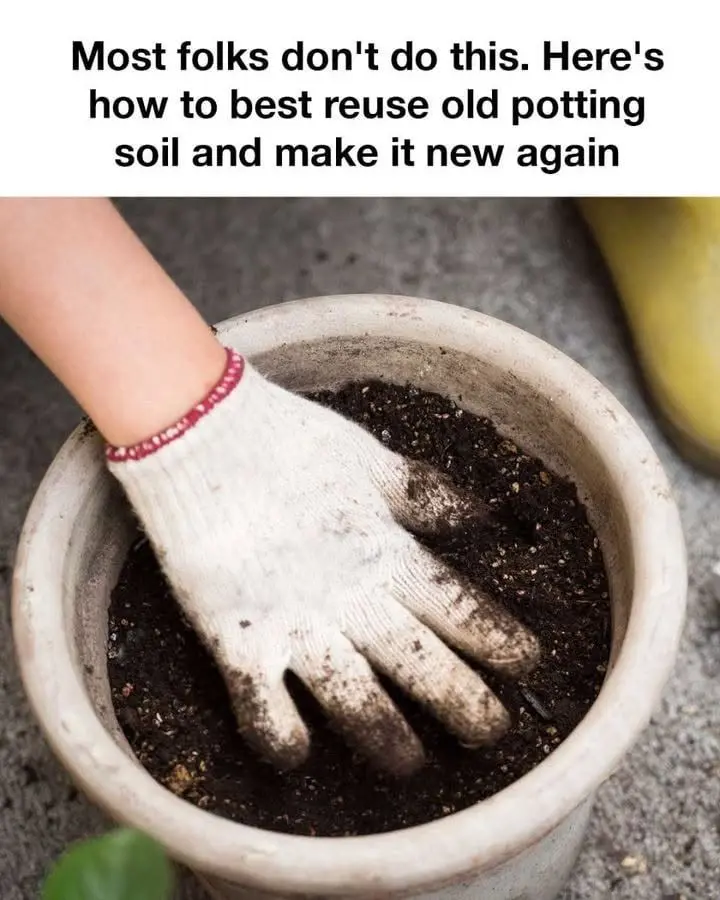
The image shows a gardener’s gloved hand mixing dark soil inside a flower pot, perfectly illustrating the process of refreshing and restoring used potting soil. Instead of wasting money and creating unnecessary waste, you can transform old soil into nutrient-rich growing material once again.
Reusing potting soil is not only economical but also environmentally friendly. With the right methods, you can give your plants a healthy foundation while reducing garden waste at the same time.
Why Potting Soil Becomes “Old”
Over time, potting soil loses many of the qualities that help plants thrive. After months of watering and plant growth, the soil often becomes:
- Compacted
- Nutrient-depleted
- Poorly drained
- Contaminated with roots or debris
- Less able to hold moisture properly
Plants continuously absorb nutrients from the soil, leaving it exhausted after a season of growth.
In some cases, old soil may also contain fungi, pests, or disease organisms, especially if unhealthy plants were previously growing in it.
Can You Really Reuse Old Potting Soil?
Yes — in many cases, absolutely.
As long as the soil is not heavily infected with disease, mold, or pests, it can often be refreshed and safely reused. Many experienced gardeners reuse potting soil every year as part of a sustainable gardening routine.
The key is knowing how to restore its structure and nutrients properly.
Step 1: Remove Old Roots and Debris
The first step is cleaning the soil thoroughly.
Use your hands or a small garden tool to remove:
- Dead roots
- Plant stems
- Leaves
- Rocks or large clumps
Old roots left behind can decay and create problems for future plants.
Breaking up compacted chunks also improves airflow and texture.
Step 2: Check for Signs of Disease
Before reusing soil, inspect it carefully.
Avoid reusing soil if you notice:
- White mold
- Fungus gnats
- Bad odors
- Rotten roots
- Persistent plant diseases
If diseased plants previously grew in the pot, it’s often safer to discard the soil or sterilize it before reuse.
Healthy soil should smell earthy and fresh, not sour or rotten.
Step 3: Sterilize the Soil (Optional but Helpful)
Many gardeners sterilize old potting soil to kill hidden pests, fungi, or weed seeds.
One common method is baking the soil in the oven:
One common method is baking the soil in the oven:
- Spread soil on a baking tray
- Heat at about 180°F (82°C)
- Bake for 30 minutes
- Allow it to cool completely
This process helps eliminate harmful organisms while preparing the soil for fresh nutrients.
Some gardeners also solarize soil by leaving it in sealed black plastic bags under strong sunlight for several days.
Step 4: Add Fresh Organic Matter
Old soil alone usually lacks nutrients, so enrichment is essential.
To revive it, mix in:
- Compost
- Worm castings
- Peat moss
- Coconut coir
- Well-rotted manure
These materials restore organic matter and improve moisture retention.
Fresh compost is especially valuable because it introduces beneficial microbes back into the soil.
Step 5: Improve Drainage and Texture
Over time, potting soil becomes dense and compact.
To loosen it, add materials such as:
- Perlite
- Vermiculite
- Coarse sand
- Pine bark fines
This improves:
- Air circulation
- Root growth
- Drainage
- Water retention balance
Healthy roots need oxygen just as much as they need water.
Step 6: Replenish Nutrients
Plants quickly consume nutrients like nitrogen, phosphorus, and potassium.
Before planting again, enrich the soil with:
- Slow-release fertilizer
- Organic plant food
- Bone meal
- Fish emulsion
- Balanced garden fertilizer
This gives new plants the nutrients they need for strong growth.
Which Plants Can Grow in Reused Soil?
Refreshed potting soil works especially well for:
- Flowers
- Herbs
- Indoor plants
- Decorative containers
- Seed starting (if sterilized)
However, nutrient-hungry vegetables like tomatoes or peppers may perform better in heavily enriched or partially fresh soil.
The Environmental Benefits of Reusing Soil
Throwing away potting soil every season creates unnecessary waste. Reusing it helps:
- Reduce landfill waste
- Save money
- Lower peat consumption
- Support sustainable gardening
Small gardening habits can make a surprisingly big environmental difference over time.
Common Mistakes to Avoid
Many people fail when reusing potting soil because they skip important steps.
Avoid:
- Reusing diseased soil
- Ignoring compaction
- Forgetting fertilizer
- Overwatering refreshed soil
- Using exhausted soil without amendments
Simply reusing old dirt without restoring it rarely gives good results.
A Smart Gardening Habit That Saves Money
The truth is, most old potting soil still has plenty of potential. With a little care and a few inexpensive ingredients, you can transform tired soil into rich, productive growing material once again.
The next time you finish a planting season, don’t rush to throw your old potting mix away. That “used” soil may be only a few simple steps away from becoming healthy, fertile, and ready for another beautiful season of growth.
