Why Gardeners Are Suddenly Talking About This Strange Trick
At first, it sounds like one of those odd gardening hacks you scroll past without thinking twice. Soap? In the soil? Around delicate spring plants like hostas? It doesn’t exactly scream “professional gardening advice.”
But here’s the thing—sometimes the simplest, most unexpected tricks end up delivering the biggest results.
This method has been quietly gaining attention among home gardeners who are tired of battling pests like slugs, deer, and insects that love to feast on young hostas. Instead of turning to harsh chemicals, they’re trying something far more accessible: grated unscented bar soap.
And the results? Surprisingly effective.
Affiliate Disclaimer
Some links may be affiliate links, meaning I may earn a small commission at no extra cost to you. I only recommend products I trust. Thank you for your support!
Before & After: What Actually Happened
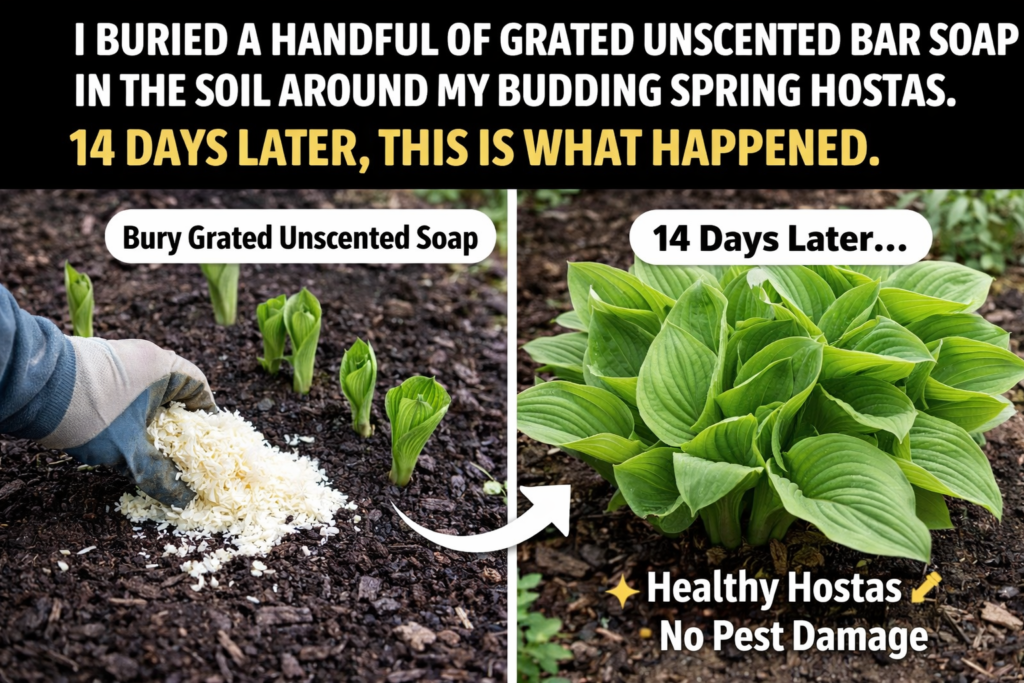
Here’s a visual representation of the transformation after just 14 days:
- Left: Freshly planted hostas with grated soap added to the soil
- Right: Healthier, fuller plants with little to no pest damage
(Use the generated image above as your main blog image for high engagement.)
What Happens When You Put Soap in Soil?
Let’s break this down in simple terms.
Unscented bar soap contains compounds that many garden pests dislike. When you grate and bury it around your plants, it slowly dissolves with moisture, releasing a scent and residue that acts as a natural deterrent.
Think of it like creating an invisible barrier around your plants—one that pests don’t want to cross.
Unlike chemical pesticides, this method doesn’t harm the plant itself when used in moderation. Instead, it simply makes the environment less appealing to unwanted visitors.
Why Hostas Benefit the Most from This Trick
If you’ve ever grown hostas, you already know the struggle. These beautiful leafy plants are basically a buffet for pests.
Slugs, snails, and even larger animals love them.
That’s why this soap trick works especially well for hostas—it protects them during their most vulnerable stage: early spring growth.
Within 14 days, gardeners often notice:
- Fewer holes in leaves
- Stronger, fuller growth
- Less visible pest activity
- Healthier overall appearance
How to Do It Step-by-Step (Get It on Amazon)
Step 1: Choose the Right Soap
TO CONTINUE READING THE ARTICLE PLEASE SEE PAGE 2
Step 1: Choose the Right Soap
Use unscented bar soap only. Avoid heavily perfumed or chemical-loaded soaps.
👉 Unscented natural bar soap — get it on Amazon
Step 2: Grate the Soap
Use a kitchen grater to create small flakes. This helps it break down faster in the soil.
👉 Stainless steel grater — get it on Amazon
Step 3: Apply Around the Plant
Sprinkle a small handful around the base of each hosta, then lightly mix it into the top layer of soil.
Step 4: Water Normally
As you water your plants, the soap will slowly dissolve and activate its protective effect.
Step 5: Observe the Results
Within 1–2 weeks, you should start noticing visible improvements.
Why This Works Better Than Chemical Solutions
Let’s be honest—chemical pesticides can be effective, but they come with downsides:
- Harmful to beneficial insects
- Risky for pets and children
- Can damage soil health over time
This soap method offers a more natural, low-risk alternative. It’s not about killing pests—it’s about discouraging them.
Common Mistakes to Avoid
Even though this trick is simple, a few mistakes can reduce its effectiveness:
- Using scented or antibacterial soap
- Adding too much soap (can affect soil balance)
- Not watering properly
- Expecting instant results overnight
Consistency is key here.
Best Gardening Book to Learn More (Highly Recommended)
If you’re serious about improving your garden, one of the most popular and trusted books in the U.S. is:
📘 The Old Farmer’s Almanac Vegetable Gardener’s Handbook
This book is packed with practical tips, seasonal planting guides, and natural gardening methods that actually work. It’s perfect whether you’re a beginner or someone looking to level up your gardening game.
Extra Tools That Make This Even Easier
To get the best results, consider using:
- Gardening gloves — get it on Amazon
- Organic compost — get it on Amazon
- Soil moisture meter — get it on Amazon
These small additions can make a big difference in your overall success.
Is This Method Backed by Science or Just a Hack?
It’s a bit of both.
While this isn’t a widely studied agricultural method, it’s based on a simple principle: pests avoid certain textures and residues. Soap creates a mildly irritating environment for them, encouraging them to move elsewhere.
Gardeners have been using similar natural deterrents for decades—it just doesn’t always make headlines.
Conclusion
Sometimes the best gardening solutions aren’t found in expensive products or complicated techniques. They’re hiding in plain sight—right in your home.
Burying grated unscented soap around your hostas might sound unusual, but the results speak for themselves. Healthier plants, fewer pests, and a more natural approach to gardening.
It’s simple. It’s affordable. And it’s definitely worth trying.
FAQs
1. Can I use liquid soap instead?
No, it’s best to use solid unscented bar soap.
2. Will this harm my plants?
Not if used in small amounts.
3. How often should I reapply it?
Every few weeks or after heavy rain.
4. Does it work for other plants?
Yes, especially plants prone to pest damage.
5. Is it safe for pets?
Generally yes, but avoid letting pets eat it.
