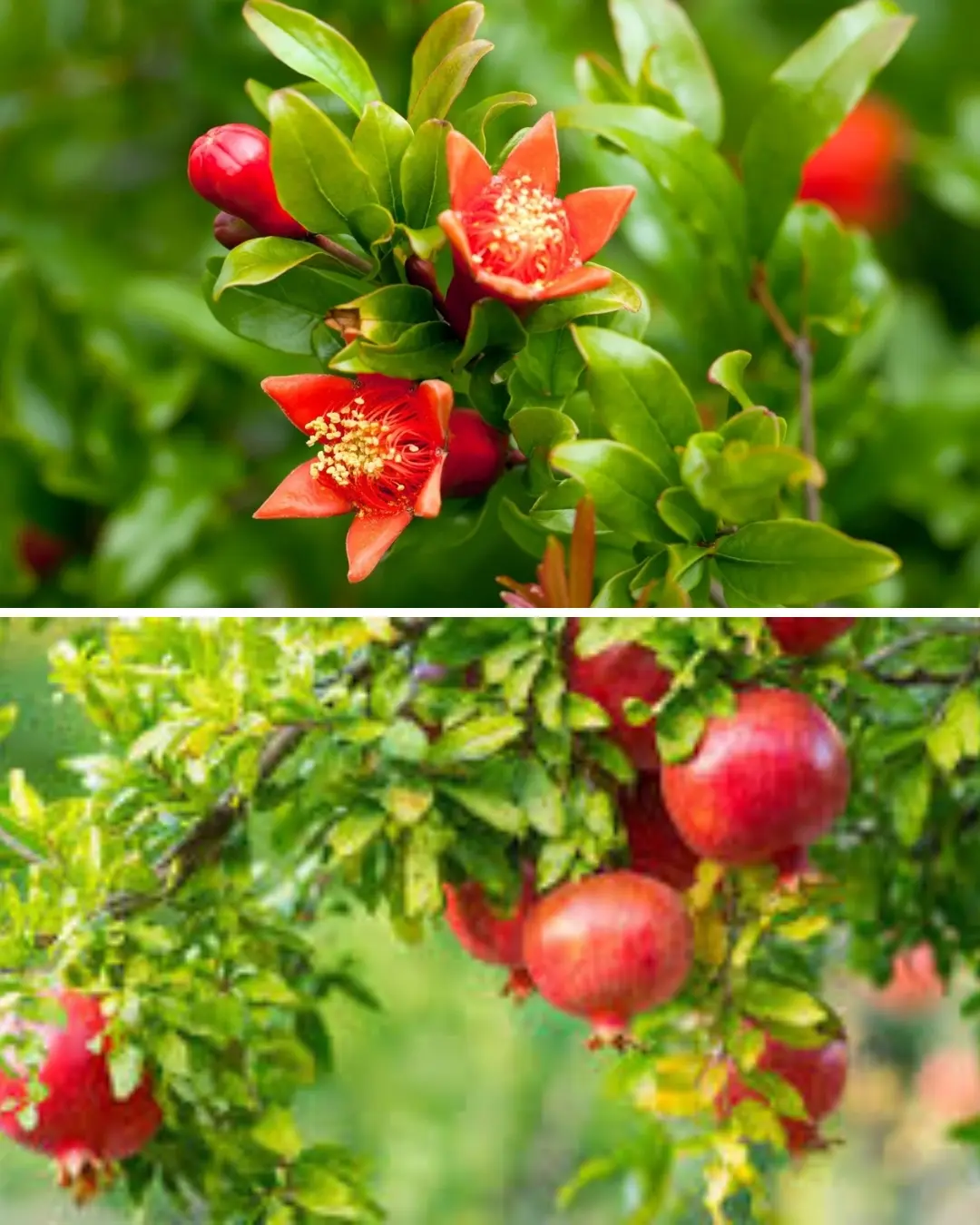
Pomegranate trees (Punica granatum) produce delicious fruit, and if you have the right warm climate, they are easy to maintain. The trees usually take between three to six years to mature enough to bear their signature red, leathery fruit filled with sweet, edible seeds.
The pomegranate can range from a dwarf shrub of 3 feet to a tree of 30 feet. In most places, they are deciduous, but in warmer climates, they may be evergreen. They are also attractive ornamentally, with glossy leaves and scarlet red, tube-shaped flowers that are attract hummingbirds and other pollinators.
| Common Name | Pomegranate |
| Botanical Name | Punica granatum |
| Family | Punicaceae |
| Plant Type | Shrub, tree |
| Size | 10-12 ft. tall, 8-10 ft wide |
| Sun Exposure | Full sun |
| Soil Type | Well-drained |
| Soil pH | Acidic, neutral, alkaline |
| Bloom time | Spring |
| Hardiness Zones | 7-10 (USDA) |
| Native Area | Asia |
How to Plant Pomegranate Trees
When to Plant
Young trees should be planted in the spring after any danger of late frost has passed.
Selecting a Planting Site
Somewhat drought tolerant, a pomegranate tree is perfect for the sunniest and warmest locations in the yard that might scorch other plants. When planting, make sure the soil is loose and not too wet.
Spacing, Depth, and Support
The spacing will depend on how you plan to use your pomegranate tree. Some growers use them as a spreading shrub hedge, and they can be spaced around 6 to 9 feet apart. For those being used for fruit production, it is better to space them around 15 feet apart.
The hole in the ground should be as deep as the nursery pot or root ball and twice as wide. If you choose, you can plant pomegranate trees so that they grow up a supportive trellis or wall.
:max_bytes(150000):strip_icc():format(webp)/pomegranate-growing-tips-3269232-03-6d5e7c71e235486d95f19343f77f2281.jpg)
:max_bytes(150000):strip_icc():format(webp)/pomegranate-growing-tips-3269232-04-486bb88091ad445b98bfd08ca2e2ebd1.jpg)
:max_bytes(150000):strip_icc():format(webp)/pomegranate-growing-tips-3269232-05-6cff7c9c1f0f45a2bdbc0fc0787ab104.jpg)
Pomegranate Tree Care
Light
Pomegranate shrubs may be grown in partial shade but ideally should be placed somewhere with as much sun and warmth as possible. For a good harvest, your tree should get at least six hours of full sun per day.
Soil
The pomegranate tree needs well-drained soil, though it can thrive in a wide variety of soils from acid loam (preferred) to poor-quality alkaline types.
Water
Pomegranate trees are drought tolerant, though irrigation is needed for proper fruit production. Water deeply every two to four weeks during the dry season when you are establishing new trees.
Be careful, however, not to overwater. Excess water and soggy conditions can lead to a poor harvest. The fruit will also be more prone to splitting, increasing the chances of problems with pests and fungal diseases.
Temperature and Humidity
The optimal growing areas for this fruit are USDA plant hardiness zones 7 to 10. They appreciate cool winters and hot, dry summers. They thrive when growing season temperatures are above 85 degrees.
Pomegranate trees are more cold tolerant than citrus trees, but their tolerance varies depending on the cultivar. Most pomegranate trees do not require winter chill hours to bloom or fruit.
Fertilizer
Fertilize in November and March for the first two years. Otherwise, not much fertilizer is needed in subsequent years. In fact, over-fertilization can result in a poor harvest.
Pollination
Pomegranate trees are usually self-pollinating. However, if you want to increase your fruit production, plant the trees in pairs for extra cross-pollination. If the tree is flowering but not fruiting, you may also need to plant a second tree nearby for cross-pollination.
Types of Pomegranates
There are many cultivars to choose from, including some that are more cold-hardy. Some of the popular types include:
- ‘Nana’: A dwarf form that is cold hardy to zone 7 and typically grows to just 4 feet tall.
- ‘Sweet’: Produces fruit earlier than some cultivars and, as the name suggests, has a very sweet flavor and usually provides a prolific harvest.
- ‘Wonderful’: The most popular cultivar grown in the United States; produces large, flavorful, red fruits in abundance late in the season.
Harvesting Pomegranate Trees
It takes around three to six years for a pomegranate tree to produce a proper harvest. The following signs indicate that a fruit is ready to pick:
- Their red color has developed.
- They have a matte rather than glossy sheen.
- They change from a round to a more hexagonal shape.
- They make a metallic sound when tapped.
Use a pair of pruning shears to cut the stem above the fruit instead of pulling it off. They can be stored for a long time if kept between 32 and 40 degrees.
How to Grow Pomegranate Trees in Pots
Though it is easier to grow a dwarf pomegranate tree in a pot, you can grow any size pomegranate plant in a container.
Pomegranate trees in pots may produce less fruit because their roots will be more restricted, but they will thrive when watered and fertilized consistently. Use at least a 10-gallon container with plenty of drainage holes. Plant the tree in a standard potting mix.
Pruning
Pomegranates are prone to producing suckers, so remove them as they appear. Otherwise, it will develop a wider spreading bushy, shrub-like form. Regular pruning of branches in the first few years will help to encourage healthy new shoot development and a more abundant harvest.
After the tree is established, it may be enough only to prune away any dead, crossing, damaged, or diseased branches. It is a good idea to thin out the fruits growing on the branches. This will ensure the pomegranates can grow to full size and reduce the chance of a limb breaking.
Propagating Pomegranate Trees
Propagating pomegranate trees can be tricky and it is best left to nurseries. However, if you are up for the challenge, it is best done through hardwood cuttings taken in winter. To propagate from cuttings, take these steps:
- Take pencil diameter cutting of 8 to 10 inches long in the winter from the previous season’s growth.
- Dip the cutting in rooting hormone (containing IBA, a rooting chemical).
- Insert half the length of the cutting into a pot filled with well-draining soilless mix.
- Put a clear plastic bag over the pot with holes for air circulation.
- Place the pot outdoors in a shady but bright spot. It should root in about eight weeks.
- Rooted cuttings may be transplanted the following year.
How to Grow Pomegranate Trees From Seed
If you choose to grow pomegranate tree seedlings, the seeds may not stay true to type. Take these steps to start a pomegranate tree from seed.
- Remove the aril (fleshy part) from the seed by rolling it in a paper towel, which will absorb the fluid. Rinse and dry the seeds for a couple of hours.
- Refrigerate the seeds in a paper towel and bag for a few weeks before sowing.
- Put seeds about 1/2 inch to an inch deep in a moistened potting medium.
- Keep the soil temperature warm (75 to 85 degrees) to aid germination. Do this by either putting the pot under a plastic baggie tent, surrounding it with foil, or putting the pot in direct sunlight.
- Transplant the seedlings to a pot or outdoors in a protected area when they reach 4 to 6 inches in height.
Overwintering
Some types of pomegranate trees can cope with winter temperatures as low as 10 degrees. However, if you live in an area where the temperatures dip this low, it would be prudent to grow the trees in containers.
In containers, they can be moved into a garage or other sheltered location to minimize the chance of frost damage occurring.
Common Pests & Plant Diseases
Pomegranate shrubs are not usually affected by many pests or diseases. Possible occasional pests include pomegranate butterflies, thrips, scale, mealybugs, and whiteflies.
Diseases are rare in well-maintained trees but can include leaf spot, fruit spot, twig dieback, dry rot, and soft rot.
