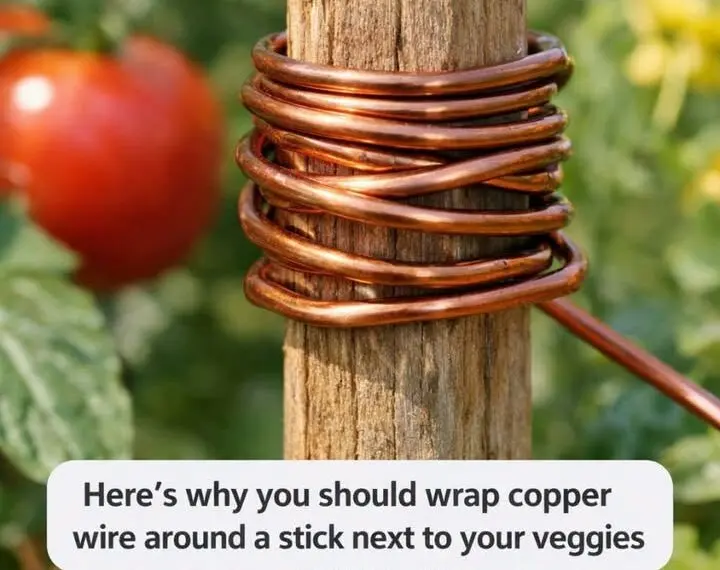
Gardening enthusiasts are always searching for simple, natural ways to help their plants thrive. One unusual trick that has recently gained attention online involves wrapping copper wire around a wooden stick and placing it in the garden near vegetables. While it may look strange at first, many gardeners swear by this inexpensive hack and claim it offers several surprising benefits.
But does it really work? Let’s explore why copper has become a popular addition to vegetable gardens.
The Science Behind Copper
Copper is an essential micronutrient that plants need in very small amounts. It plays an important role in various plant processes, including photosynthesis, enzyme activity, and overall growth. Although most soils already contain some copper, gardeners have long used copper-based products to protect plants from certain diseases.
This has led to creative gardening techniques that use copper in different ways, including the copper wire-on-a-stick method.
A Natural Deterrent for Slugs and Snails
One of the main reasons gardeners place copper near their vegetables is to discourage slugs and snails.
When these pests come into contact with copper, a mild reaction occurs between the metal and the slime on their bodies. Many gardeners believe this creates an unpleasant sensation that encourages the pests to turn away rather than continue toward the plants.
As a result, vegetables such as lettuce, cabbage, spinach, and strawberries may experience less damage from these common garden invaders.
Supporting Plant Health
Some gardeners believe that small amounts of copper released through weathering may contribute to healthier growing conditions. Copper is already widely used in agriculture as a component of fungicides designed to combat certain plant diseases.
While simply wrapping copper wire around a stick is not a substitute for proper plant care, many gardeners consider it an additional tool for maintaining a healthy garden environment.
An Eco-Friendly Gardening Trick
Unlike chemical pesticides, copper wire requires no spraying, mixing, or repeated applications. Once installed, it can remain in place for months or even years.
This makes it appealing to gardeners who prefer natural or low-maintenance solutions and want to reduce their reliance on synthetic products.
Easy and Inexpensive to Try
Another reason this trick has become popular is its simplicity.
All you need is:
- A wooden stick or garden stake
- Copper wire
- A few minutes of setup time
Simply wrap the copper wire around the stake and place it near your vegetable plants or along garden rows.
Many gardeners use recycled copper wire from old projects, making the method even more affordable.
What Experts Say
While copper barriers are commonly used against slugs and snails, scientific evidence for some of the broader claims circulating online is limited. The effectiveness can vary depending on weather conditions, pest pressure, and garden layout.
For best results, copper should be viewed as part of a complete gardening strategy that includes healthy soil, proper watering, good spacing, and regular pest monitoring.
Is It Worth Trying?
For many gardeners, the answer is yes. The method is inexpensive, easy to implement, and generally safe when used responsibly. Even if the benefits are modest, the low cost and minimal effort make it an attractive experiment for anyone looking to protect their vegetables naturally.
Whether you’re growing tomatoes, peppers, lettuce, cucumbers, or beans, a simple copper-wrapped stake may become one of the most interesting additions to your garden this season.
Final Thoughts
The copper wire garden trick is a great example of how traditional gardening wisdom continues to inspire modern growers. While it may not be a miracle solution, it offers a simple, eco-friendly way to potentially reduce pest problems and support a healthier garden environment.
Sometimes the most effective garden hacks are also the simplest—and a little copper wire wrapped around a stick might be worth testing in your own vegetable patch.
