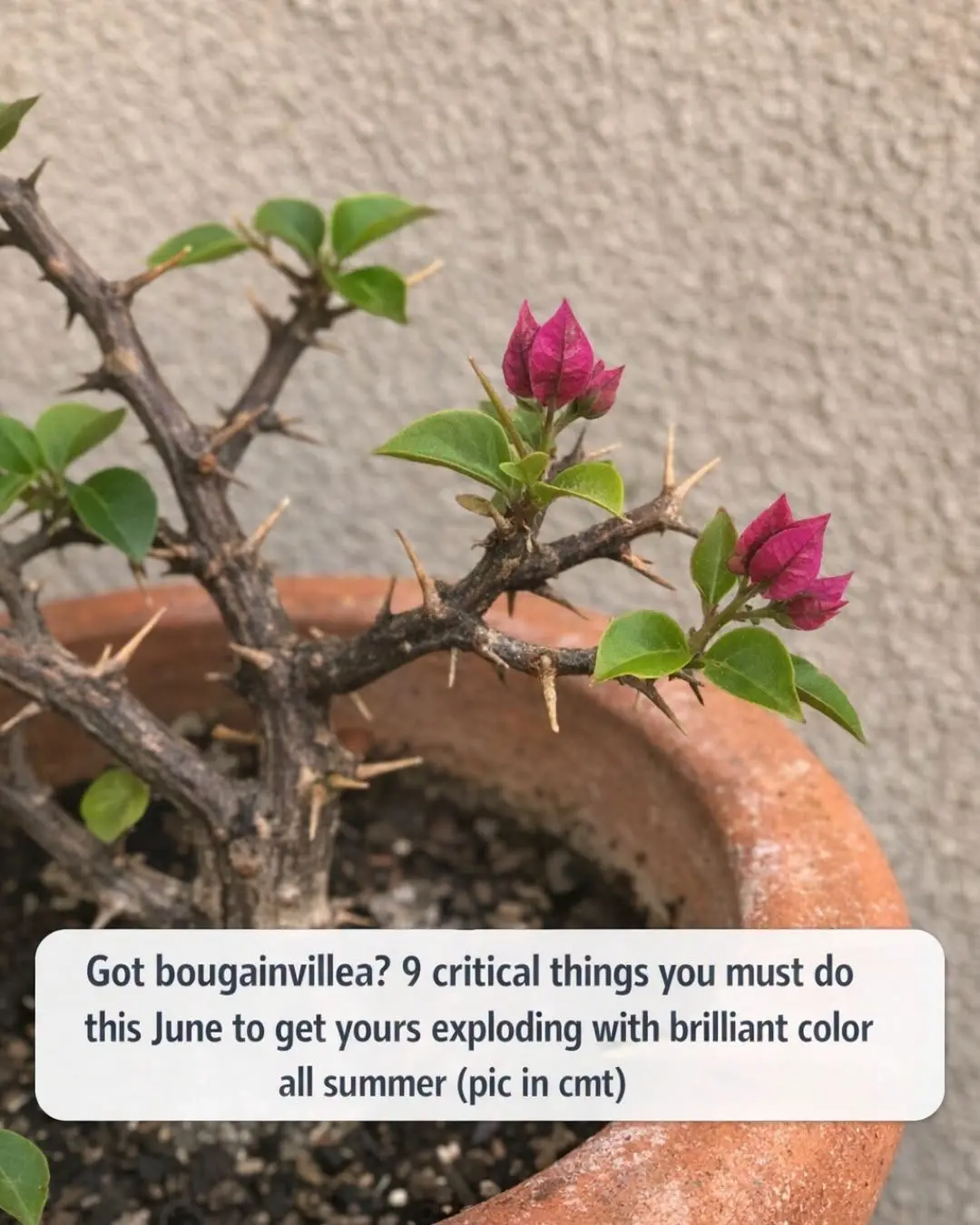
By the time June rolls around, bougainvillea has usually made up its mind about the season. It is either getting ready to put on a grand show, or it is sitting there all leaves and attitude, testing your patience. I have always admired plants like that. They remind me of a few strong-willed relatives of mine from back here in the rural Midwest: beautiful, memorable, and not especially interested in being fussed over the wrong way. If you want bougainvillea covered in those papery magenta, coral, purple, red, orange, or white bracts all summer long, June is the month to get your care just right.
Now, I will say this plainly: bougainvillea does not bloom best because we love on it constantly. It blooms best when we understand what it wants. In this article, I am going to walk you through the June jobs that matter most, from watering and fertilizer to pruning, sun, pots, pests, and a few mistakes I see gardeners make every year. And because this headline promised 9 must-do steps, I am giving you a little extra, the way my mother always added one more biscuit “for luck.”
1. Put it in full, blazing sun
If your bougainvillea is not getting enough light, no amount of fertilizer, pruning, or hopeful staring is going to make it bloom the way you want. In June, bougainvillea should be getting at least 6 hours of direct sun a day, and 8 to 10 hours is even better. Morning sun plus afternoon sun is ideal. Bright shade is not enough. Dappled light is not enough. A porch corner that “gets a little light” is definitely not enough.
I have seen gardeners baby these plants under eaves or on covered patios because they are afraid of heat, but bougainvillea loves heat. It is happiest in temperatures between about 65 and 95 degrees Fahrenheit. If you are growing it in a container, June is the time to drag that pot to the sunniest spot you have, preferably a south- or west-facing area where reflected heat from brick, stone, or concrete helps push blooming along.
2. Water deeply, then let the soil dry down
This is the part that trips up a lot of folks. Bougainvillea is not a swamp plant. It does far better with a soak-and-dry rhythm than with daily sips. In June, water deeply until moisture runs out the drainage holes or until the root zone is wetted 8 to 12 inches down in the ground. Then wait until the top 2 to 3 inches of soil are dry before watering again.
For plants in the ground, that may mean watering every 5 to 7 days in hot weather if the soil drains well. For large pots in summer heat, it may be every 2 to 4 days, depending on wind, pot size, and how root-bound the plant is. Smaller containers dry faster. A 12-inch pot may need water twice as often as a 20-inch one.
One little trick I use, whether I am checking tomatoes or flowers, is the old finger test. Push your finger down into the soil to the second knuckle. If it still feels cool and damp, wait. Overwatering gives you lots of leafy green growth and very few blooms, and sometimes yellowing leaves besides.
3. Stop feeding it high-nitrogen fertilizer
If you have been using a lush green lawn-type fertilizer, June is the time to stop. High nitrogen pushes foliage, not flowers. Bougainvillea blooms best when it gets a fertilizer that supports blooming rather than soft leafy growth. Look for a balanced or bloom-leaning fertilizer, something in the range of 5-5-5, 6-8-10, or 10-10-10 used lightly, or a slow-release fertilizer made for flowering shrubs.
For a potted bougainvillea in active growth, I would use a diluted liquid feed every 2 to 3 weeks in June, mixed at half strength unless the label says otherwise. If you prefer granular fertilizer, apply according to package directions and water it in well. As a rough example, a medium shrub in a container might get 2 to 4 tablespoons of granular fertilizer, depending on product strength and pot size. Always read the label, because fertilizer formulations vary widely.
I learned long ago in my vegetable patch that more is not better with plant food. Too much fertilizer can burn roots, especially in pots, and a stressed bougainvillea will pout instead of bloom.
4. Keep it slightly root-bound if it is in a pot
This surprises people, but bougainvillea often blooms better when its roots are a bit snug. If you move it into an oversized container with lots of extra soil, it may spend weeks or months growing roots and leaves rather than setting blooms. In June, unless the plant is truly suffering, resist the urge to pot it up just because it looks “tight.”
A good rule is to repot only if roots are circling heavily, coming thickly out of the drainage holes, or the plant dries out within a single hot day again and again. When you do repot, go up just 1 pot size, usually 2 inches wider in diameter. So if it is in a 14-inch pot, move to a 16-inch one, not a great big tub all at once.
Use a fast-draining mix. A good container blend might be 2 parts potting mix, 1 part pine bark fines, and 1 part coarse perlite or sharp sand. Heavy, waterlogged potting soil is a recipe for root trouble.
5. Prune lightly in early June, not heavily
June is a good time for shaping, tip-pruning, and removing dead or awkward stems, but not for a hard haircut if you want flowers all summer. Bougainvillea blooms on new growth, so a light trim can encourage branching and more flowering points. A severe cutback, though, can delay blooming for weeks while the plant recovers and regrows.
Use clean pruners and wear gloves. Those thorns are no joke. Trim back long whippy stems by 3 to 6 inches, and cut off dead wood right to healthy tissue. If one branch is shooting wildly beyond the rest, shorten it to keep the plant balanced. On a vine trained against a wall or fence, tie in new growth and remove only what is crossing, broken, or badly misplaced.
When I was younger, I made the mistake of pruning one too enthusiastically in the first spell of June heat because I wanted it “tidied up.” It stayed neat, all right, but I gave up a good month of color. Bougainvillea forgives, but it does not forget right away.
6. Let it experience a little stress to trigger bloom
Bougainvillea is one of those plants that often flowers hardest when conditions are a touch lean. Not neglect, mind you, but restraint. Once the plant is healthy and established, allowing the soil to dry modestly between waterings can encourage blooming. Constantly pampered plants often stay comfortably leafy.
In practical terms, that means if your plant is vigorously green but not blooming in June, and you know it gets enough sun, back off the water slightly. Do not let it wilt to the point of damage, but do let the top few inches dry. This mild stress, especially combined with strong light, often nudges the plant toward blooming.
It is a little like old-fashioned farm wisdom: some crops do best when they have to work just a bit. Bougainvillea is very much in that camp.
7. Check drainage before summer storms settle in
June can bring heavy rain in many places, and bougainvillea hates sitting in soggy roots. If yours is in the ground, inspect the planting site after a storm. If puddles stand around the base for more than 12 to 24 hours, drainage is too slow. Long wet spells can lead to root stress, leaf drop, and poor flowering.
For container plants, make sure every drainage hole is open. Lift the pot after watering. If it feels impossibly heavy for too long, or water trickles out very slowly, you may have compacted soil or blocked holes. Raise the pot on feet or bricks so water can escape freely. Never leave bougainvillea standing in a saucer full of water.
If you need to improve an in-ground planting, build up the root zone with a low mound 4 to 6 inches high and wide enough to spread water outward. In very wet climates, many gardeners have better luck growing bougainvillea in large terra-cotta or nursery pots where moisture is easier to control.
8. Watch for pests on the undersides of leaves
June warmth can bring aphids, caterpillars, mealybugs, and spider mites, especially on stressed or overcrowded plants. Turn leaves over and inspect them once a week. Aphids cluster on tender new growth. Mealybugs look like tiny bits of cotton tucked into leaf joints. Spider mites leave fine stippling and sometimes delicate webbing. Caterpillars chew obvious holes.
If the problem is light, a strong spray of water in the morning can knock off aphids and mites. For mealybugs, dab them with a cotton swab dipped in 70% isopropyl alcohol. If you need a broader treatment, insecticidal soap or neem can help, but apply early in the day and follow label directions exactly, especially in hot weather. Spraying in intense afternoon sun can damage foliage.
I always favor catching trouble early. A five-minute look-over each Saturday morning saves a lot of heartache by July.
9. Tie and train new growth before it gets unruly
Bougainvillea can go from tidy to wild in what feels like a week once June heat arrives. If you are growing it on a trellis, arbor, fence, or wall, guide new shoots while they are still flexible. Young stems are much easier to direct than older woody ones.
Use soft plant ties, stretch tape, or strips of old cloth, and secure stems loosely every 8 to 12 inches. Do not cinch them tight. You want support, not strangling. Spread stems horizontally or in a fan shape where possible. Horizontal training often encourages more side shoots and more blooming points than letting every stem shoot straight up.
This is one of those jobs that takes 10 minutes now or an hour later. I have learned that with vines, beans, and grandchildren alike, gentle guidance early saves a lot of wrangling down the line.
10. Remove spent bracts and weak interior growth
Deadheading bougainvillea is not as formal as deadheading petunias, but cleaning it up in June can keep it looking fresh and push energy into stronger growth. Pinch or snip off faded flower clusters and papery bracts when they begin to brown and lose color. Also remove thin, weak stems in the crowded interior where light and air barely reach.
This improves airflow, which matters in humid weather, and helps the plant direct energy toward healthier shoots. Do not strip it bare. Just tidy selectively. I usually step back every few cuts and make sure I am improving the shape rather than fussing for fussing’s sake.
11. Protect it from late cold snaps and wild temperature swings
In some regions, especially where weather has become downright contrary, early June can still surprise you with a cool night. Bougainvillea begins to sulk when temperatures drop below about 50 degrees Fahrenheit, and growth can stall below 60. If a chilly spell is forecast, move potted plants against a warm wall or indoors overnight if possible.
For large containers too heavy to move, wrap the pot with burlap or an old blanket to protect roots, and cover the top growth with frost cloth if temperatures threaten to dip into the 40s. Remove covers in the morning once temperatures rise. Cold stress in June can set blooming back just when the plant ought to be gearing up for its best show.
12. Do not pile mulch against the crown
I am a great believer in mulch in the right place. In my garden, mulch saves moisture, softens weeds, and keeps roots steadier in summer heat. But with bougainvillea, especially in the ground, keep mulch 2 to 3 inches away from the base of the main stem. Piling mulch against the crown can trap excess moisture and invite rot.
If you mulch, use a light 1- to 2-inch layer of bark, pine straw, or gravel over the root area, but not right up on the trunk. In very dry regions, this helps moderate moisture swings. In humid regions, go especially light so the root zone still breathes.
13. Give container plants a mid-month soil check
By mid to late June, potted bougainvillea can become hydrophobic, meaning the soil gets so dry it starts shedding water rather than absorbing it. You pour, and the water runs down the sides and out the bottom while the root ball stays dry in the middle. That leads to stress, leaf drop, and bud drop.
Once in June, test this by watering slowly. If water channels through too fast, set the pot in a tub or deep tray with 2 to 3 inches of water for 20 to 30 minutes, then let it drain thoroughly. This rehydrates the root ball evenly. Do not make a habit of leaving it soaking, but one corrective soak can make a big difference.
14. Match your care to your variety and climate
Not all bougainvillea behave exactly alike. Dwarf kinds in hanging baskets dry out much faster than large vigorous climbers on a wall. Purple Queen, Barbara Karst, California Gold, Torch Glow, and other common varieties all have slightly different growth habits and bloom rhythms. June care should reflect that.
If you live in a hot, arid climate, your main June task is balancing intense sun with proper deep watering. If you live in a humid coastal or subtropical area, your focus may be drainage, airflow, and not overfeeding. If you are growing bougainvillea as a seasonal patio plant in a cooler zone, getting every bit of sun and warmth you can is half the battle.
I always tell folks to pay attention to the plant in front of them, not just the tag it came with. Gardening wisdom starts with advice, but it matures with observation.
15. Avoid the three June mistakes that ruin summer color
If I had to narrow it down, the biggest June mistakes are these: too much water, too much nitrogen, and too little sun. Those three together will give you a handsome green plant that never quite performs. Runner-up mistakes include repotting into an enormous container, hard pruning at the wrong time, and ignoring drainage after heavy rain.
So if your bougainvillea is disappointing you, do not start by adding more products. Start by checking the basics. Count the hours of direct sun. Probe the soil before watering. Read the fertilizer label. Inspect the pot drainage holes. Those simple checks solve more bougainvillea problems than fancy remedies ever will.
16. Make a simple June routine and stick to it
The easiest way to get brilliant color all summer is to turn bougainvillea care into a small, regular habit. In my own garden notebook, a June bougainvillea routine would look like this: check soil moisture every 2 to 3 days, fertilize lightly every 2 to 3 weeks if blooming is active, inspect for pests once a week, tie new shoots as needed, and do a light tidy-up after each flush of color.
That is not a burdensome routine, and that is part of the beauty of this plant. Once you understand it, bougainvillea asks less of you than many summer bloomers. It wants sunshine, restraint, and a little respect. Give it those things in June, and by July and August it can reward you with the kind of color that stops neighbors at the gate and makes you feel, for a moment, like you have done something downright magical.
