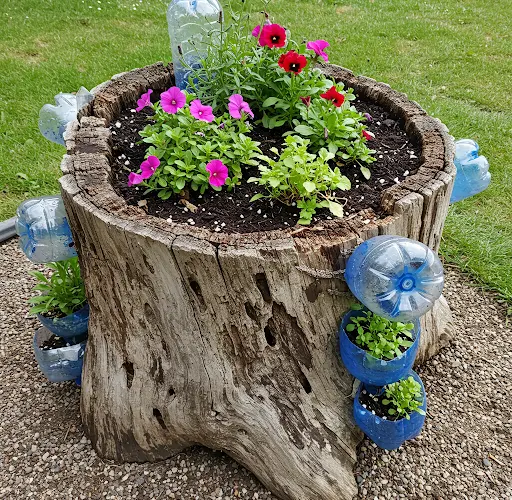
Creating a garden doesn’t always mean starting with a blank plot of soil. Sometimes, the most stunning gardens grow from the most unexpected places—like an old tree stump and a few discarded plastic bottles. With a little imagination and some basic tools, you can turn what looks like waste into a functional and eye-catching vertical garden that’s perfect for small spaces, balconies, or yards in need of a makeover.
This DIY garden idea is not only environmentally friendly but also incredibly practical, especially for those looking to grow herbs, flowers, or small vegetables at home with minimal cost.
Why Use a Dry Stump and Plastic Bottles?
A dry tree stump is often considered dead weight in a garden—literally. But rather than digging it out or letting it rot, you can repurpose it into a rustic centerpiece for your garden. Pairing it with plastic bottles allows for the creation of vertical planting space, giving you more room to grow in a compact area.
Plastic bottles, on the other hand, are widely available and perfect for creating low-cost plant containers. This not only reduces plastic waste but also adds functionality and charm to your gardening setup.
Materials You’ll Need
- A dry tree stump (any size, preferably with a flat or wide base)
- Clean, empty plastic bottles (1.5–2 liter size works best)
- A utility knife or scissors
- A drill or heated nail for making holes
- Soil or potting mix
- Seeds or seedlings of your choice (herbs, flowers, leafy greens)
- Paint, rope, or twine (optional, for decoration)
- Screws, zip ties, or nails (if attaching bottles to the stump)
Step-by-Step Instructions
1. Prepare the Tree Stump
First, clean the stump of any remaining bark or debris. If it’s not already level on top, use a saw to flatten it so it can act as a stable base for your garden. You can leave the wood natural for a rustic look, or paint or seal it for added protection against the elements.
2. Create the Bottle Planters
Cut out a wide opening on the side of each plastic bottle, just large enough to hold soil and plant roots. Leave the bottom intact. Drill or poke a few drainage holes in the bottom to prevent water buildup.
You can either leave the cap on and poke a small drainage hole through it, or remove the cap entirely and add mesh to prevent soil from falling out.
3. Attach Bottles to the Stump
There are a few creative ways to attach bottles:
- Nail or screw the bottles directly onto the sides of the stump.
- Hang them with rope or twine wrapped around the stump, allowing them to dangle at different heights.
- Stack vertically using a central support like a pole or rebar driven through the stump if it’s hollow or cracked.
Distribute the bottles evenly to create a cascading effect that covers the stump and maximizes growing space.
4. Add Soil and Plants
Fill each bottle planter with potting soil or compost. If you’re growing herbs or small vegetables, make sure the soil is nutrient-rich and well-draining.
Great plant choices for this setup include:
- Herbs: mint, basil, parsley, thyme
- Leafy greens: lettuce, spinach, arugula
- Flowers: marigold, petunia, nasturtium
- Strawberries or cherry tomatoes for a splash of color and fruit
Plant seeds or seedlings, water them lightly, and make sure the area gets sufficient sunlight.
5. Customize and Beautify
Use this opportunity to get creative! Paint the plastic bottles in bright colors to make your garden pop, or decorate the stump with moss, stones, or mini garden ornaments for a whimsical touch.
You can also place decorative stones or flowering plants around the base of the stump to enhance the look and create a more complete garden corner.
Care and Maintenance
- Water the plants regularly, especially those in upper bottles, as they tend to dry out faster.
- Trim herbs and harvest greens frequently to encourage new growth.
- Fertilize lightly once a month if you’re growing vegetables or fruiting plants.
- Check the structure occasionally to ensure everything remains securely fastened, especially during wind or rain.
Why This DIY Garden Works
- Eco-friendly: Reuses natural and synthetic waste in a creative way.
- Space-saving: Perfect for small gardens, balconies, or patios.
- Budget-friendly: No need for expensive pots or containers.
- Attractive: Adds vertical interest and beauty to your garden.
- Flexible: Can be adapted to grow various plants based on your needs.
Final Thoughts
A dry stump and a few plastic bottles might seem like scrap at first glance, but with a little effort, they can become the foundation of a thriving and decorative garden. This project is not just about growing plants—it’s about reimagining space and resources creatively and sustainably.
Whether you’re new to gardening or a seasoned green thumb, this idea adds charm, function, and a bit of rustic beauty to any space. Try it out, and you might be surprised at just how much life can grow from what was once thought to be waste.
