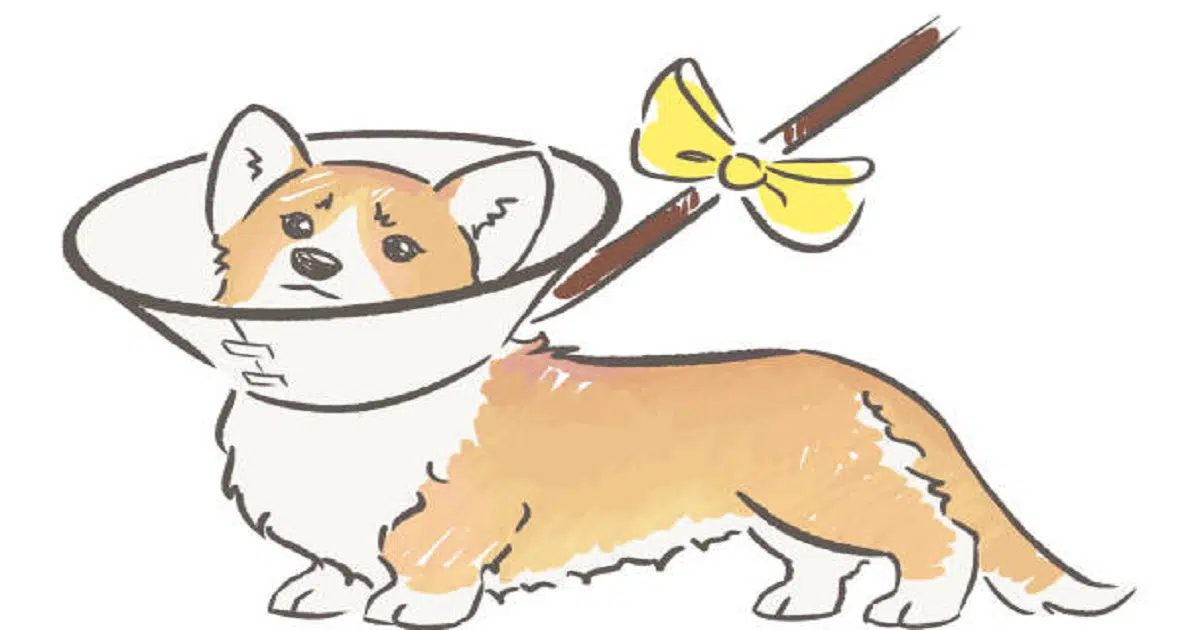
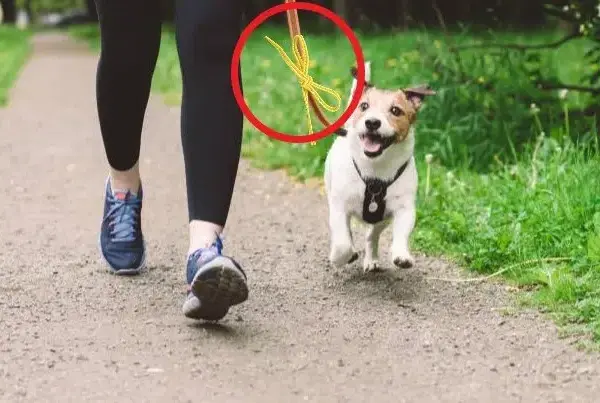
You’re out enjoying a walk. You’re minding your own business, maybe heading to the park or taking the long way home, and you see a dog with a yellow ribbon tied to its collar. Not a bow you would get for a holiday or an accessory. Just a yellow ribbon. You might stop for a second and think, is that supposed to mean something?
It does!
That yellow ribbon is just one part of a quiet movement in the dog owner community called the Yellow Dog Project. It is really a simple way for owners to express something without yelling it across a trail, or telling the same stranger every two seconds. If you see a dog with a yellow ribbon, it is a signal the dog needs space. Maybe a lot, maybe just a little. Definitely more than your average, “Hey, can I pet your dog?” moment.
It’s not unfriendliness, or anything more than just that’s not going to happen, it’s also not that the dog is mean or broken. This means… not right now. Please don’t come barreling up to the dog and say hi. Give us some room.
Why Some Dogs Need That Space
There are a million reasons why a dog has a yellow ribbon on its collar, and none of those reasons make the dog (or owner) a problem. Some dogs are just nervous. They may be shy with strangers or loud noises, reactive to other dogs, or are just rescue dogs that are still adjusting to their new world. Others may be in training and need to concentrate, or recovering from surgery, or maybe they’re older and are a little stiff and cranky about being touched unexpectedly. Some dogs don’t like being petted by strangers — and that’s okay. The yellow ribbon is just the dog’s (okay, the owner’s) way of saying, “Hey, I’m not feeling social right now, but thanks for checking.”
What to Do if You See One
So you’re out walking with your dog, or your kids, and you come across a dog that is wearing a yellow ribbon. Here are the steps you take to nail that encounter:
Ask First. Always.
This should be a given even if there isn’t a yellow ribbon, but if you see one, definitely check with the owner before approaching. Some owners may say it is OK, others may ask you to keep your distance. Just be respectful of what they tell you.
Stay Calm.
If the owner does say ‘yes’ and gives permission for you or your child to pet their dog, then walk up to the dog slowly. No abrupt movements. No loud “HELLO PUPPY!” excitement. Calm, quiet, and non-threatening energy. Remember, it’s not about you, it’s about allowing the dog to feel safe with the interaction.
Watch the Dog and Not Just the Owner.
Even if the human acknowledges it’s okay, your job is to pay attention to the dog’s body language. If the tail drops, ears come back, they do the back-away thing, or they stiffen up, just stop. Generally, the body of the dog will communicate things better than words can.
Respect the Boundaries.
If someone says “Sorry, we’re training” or “He’s nervous,” don’t take it personally. It’s not a reflection on you; it’s simply part of the work of helping that dog have a better, calmer life.
Teach the Kids.
This one is important. Kids are curious and love dogs (for good reason), and a yellow ribbon is a great opportunity to teach them, “Not every dog is ready to play” — which they should know already! Tell them it means, “Not today,” and praise them for respecting it.
Yellow Ribbon is Important
The reason behind the Yellow Dog Project is lovely and simple: more awareness, fewer misunderstandings. It allows people to avoid situations that are awkward or even unsafe without having to constantly explain, correct, or apologize. You do not know what a dog has experienced, or what work the owner is doing to keep the dog feeling safe.
It isn’t about shaming the dog or labeling it. It’s about communication. It is a small piece of fabric to prevent a lot of unneeded stress for dogs and people.
And here’s the catch: it only works if people understand what it means. That is why you are reading this. Now you know.
Do You Want to Use One for Your Dog?
If your dog is nervous, in training, recovering from something, or is easily overwhelmed, you may want to give it a shot. You do not have to buy anything special. A simple yellow ribbon, bandana, or even a yellow leash or tag will do.
Tie it to their collar or harness and be ready to politely educate anybody who asks. Most people just want to do the right thing; they just don’t always know what it is until somebody tells them.
At first glance, a yellow ribbon on a dog collar may look like decoration. But now that you know better, it is a little flag of communication. A quiet “please and thank you” in a world that is mostly loud and fast.
So, the next time you spot one, take a beat. Slow your roll. Give the dog a little space. Maybe smile at the owner to let them know you get it.
It is a little gesture, but means more than anyone would know — to the dog, to the person walking them, and to anyone who has been trying to keep a reactive or sensitive pup safe in a world that is not necessarily designed for that.
And while I have you — ever wonder why dogs have a little blue tattoo line on their belly? That is another one of those subtle signals with its own story behind it. But we can save that for next time.
