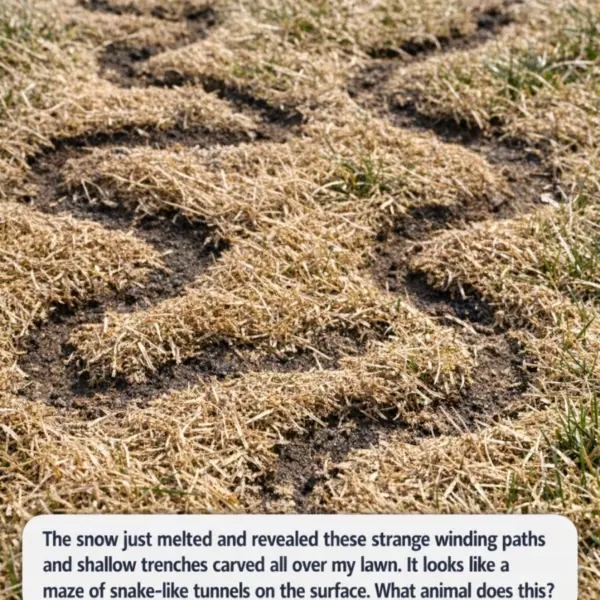
As the winter frost begins to thaw and the snow melts away, homeowners are often greeted with unexpected surprises hidden beneath the once pristine blanket of white. For many, this revelation comes in the form of strange, winding paths and shallow trenches carved across their lawns. These snake-like tunnels, meandering through the grass, can leave even the most seasoned gardener puzzled and concerned.
While the initial sight of these intricate patterns may spark curiosity, they also raise questions about their origin and the potential damage they might indicate. In this article, we will delve into the mystery of these lawn mazes, identify the culprits behind them, and explore effective strategies to address and prevent further damage.
1. The Mystery Of The Melting-Snow Maze In Your Lawn
As the snow retreats, it reveals a network of tunnels that seem to crisscross your lawn with no apparent pattern or purpose. Typically, these paths are 1 to 2 inches wide and shallow, just barely disturbing the surface of the grass. The intricate network often resembles a maze, with winding paths that sometimes connect and at other times diverge.
These patterns are not random but are the result of the activities of small creatures that have been busy beneath the snow during the winter months. The seemingly chaotic design of these tunnels serves a purpose, providing the animals with routes to travel, forage for food, and escape predators while remaining hidden from sight.
2. Meet The Culprit: Voles, The Tiny Rodents Behind The Tunnels
The primary architect of these surface-level tunnels is the vole, a small rodent that often goes unnoticed until its handiwork is revealed in the spring. Voles, also known as field mice or meadow mice, are small, typically measuring about 4 to 6 inches in length, with stocky bodies, short legs, and small ears.
Unlike moles, which burrow deep underground, voles create runways or surface tunnels that are visible when the snow melts. Their diet consists mainly of grasses, roots, and bulbs, making your lawn and garden prime real estate for these industrious little creatures.
3. How Vole Runways Form Under Winter Snow Cover
During the winter, a blanket of snow provides voles with the perfect cover to go about their daily activities without fear of predators. This snow cover acts as an insulating layer, allowing voles to remain active throughout the cold months. As they search for food, voles create runways just beneath the snow, wearing down the grass and soil to form the visible paths you see come spring.
These runways are not just for travel; they also serve as feeding sites where voles gnaw on grass blades and plant roots. The snow provides both protection from predators and a warmer microenvironment, enabling voles to thrive beneath its cover.
4. Tunnels Vs. Runways: Why These Paths Stay On The Surface
It’s important to distinguish between the sub-surface tunnels of moles and the surface runways of voles. Moles are known for creating raised ridges and mounds of soil, as they tunnel deeper underground in search of insects and worms. In contrast, voles create shallow, surface-level runways that are often confused with tunnels.
Vole runways are the result of their constant movement and feeding habits. These pathways are worn down by the repeated passage of voles as they scurry back and forth, creating a visible maze on the lawn’s surface once the snow melts away.
5. How To Tell Vole Damage From Moles, Mice, And Other Pests
Identifying the difference between vole damage and other common lawn pests is crucial for implementing the right control measures. While moles create noticeable mounds and raised ridges, voles leave behind flattened paths and small, round burrow holes, often near the base of trees or in garden beds.
Unlike house mice, which tend to invade indoor spaces, voles are primarily outdoor creatures and rarely enter homes. Their damage is usually confined to lawns and gardens, where they can cause significant harm to plants and grass roots.
6. Visual Clues: What Fresh Vole Runways And Burrow Holes Look Like
Fresh vole runways appear as narrow, shallow grooves in the grass, typically 1 to 2 inches wide. The grass in these paths may be slightly nibbled or completely dead due to the voles’ feeding habits. In addition to these runways, look for small burrow holes, about 1 to 2 inches in diameter, which serve as entry and exit points for voles.
These visual clues are often accompanied by droppings and bits of grass or plant debris left behind by the voles. Identifying these signs early can help you take swift action to mitigate damage.
7. Why Voles Love Your Yard: Grass, Mulch, And Hidden Shelter
Voles are particularly attracted to areas where they can find ample food and shelter. Yards with thick grass, abundant mulch, and overgrown vegetation provide the perfect environment for voles to thrive. The dense cover offers protection from predators and harsh weather, making your lawn an ideal habitat.
Gardens with a variety of plants, especially those with bulbous roots, also attract voles. The availability of food sources, combined with protective cover, encourages voles to establish their runways and burrows in these areas.
8. The Hidden Damage: Roots, Bulbs, And Plants Voles Destroy
While the surface runways are a visible sign of vole activity, the real damage often occurs below ground. Voles have a voracious appetite for plant roots, bulbs, and bark, which can lead to significant harm to your garden and ornamental plants. They can girdle trees and shrubs by chewing on the bark, leading to plant stress and potentially death.
Voles also target garden plants, feeding on the roots and bulbs of flowers and vegetables. This hidden damage can result in poor plant growth, wilting, and even plant death, significantly impacting the health and aesthetics of your garden.
9. What To Do Right Now: First Steps After The Snow Reveals Runways
Once you discover vole runways in your lawn, it’s important to act quickly to prevent further damage. Begin by repairing the visible damage to your lawn. Rake over the runways to break up compacted soil and encourage new grass growth. Over-seeding the damaged areas can help restore your lawn to its former glory.
Next, assess the extent of the vole population in your yard. This may involve setting up traps or consulting with a pest control professional to determine the best course of action. Addressing the problem early can help prevent additional damage as the growing season progresses.
10. Long-Term Vole Control: Habitat Changes, Barriers, And Traps
For long-term vole control, consider making changes to your yard that make it less inviting to these rodents. Remove dense vegetation, keep grass trimmed short, and eliminate piles of mulch or debris where voles can hide. Installing underground barriers around garden beds and trees can also deter voles from accessing these areas.
Trapping is another effective method for controlling vole populations. Use mouse traps baited with peanut butter or apple slices, placing them near active runways and burrow entrances. Regular monitoring and maintenance of these traps can help reduce vole numbers and protect your lawn and garden.
11. Helping Your Lawn Recover From A Winter Of Vole Activity
Restoring your lawn after vole damage involves several steps to encourage healthy grass growth. Begin by lightly raking over the affected areas to remove dead grass and loosen the soil. This will help new grass seeds make contact with the soil and germinate more effectively.
Over-seed the damaged areas with a high-quality grass seed that matches your existing lawn. Water the area consistently to promote seed germination and root establishment. Applying a balanced fertilizer can also support new growth and help your lawn recover more quickly. With proper care and attention, your lawn can bounce back from a winter of vole activity.
