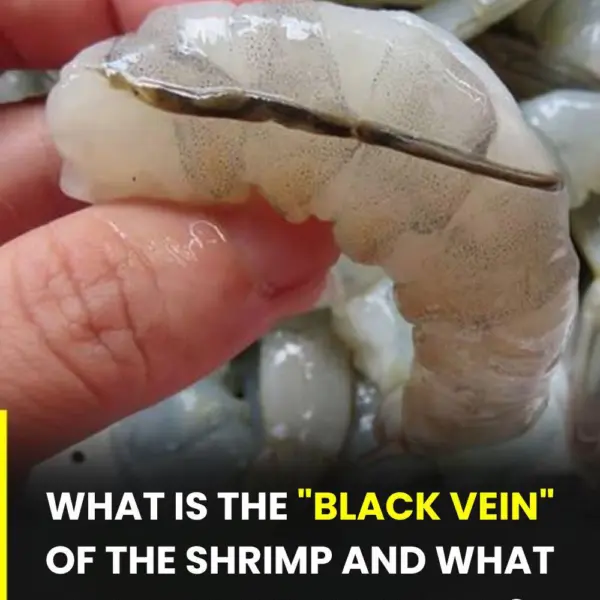
Shrimp has earned its place as a staple in kitchens around the world. Light yet satisfying, subtle but unmistakable in flavor, it adapts effortlessly to everything from quick weeknight stir-fries to elaborate, celebratory dishes.
Yet despite its popularity, one small detail continues to spark confusion and debate among home cooks and seasoned professionals alike—the thin, dark line that runs along the shrimp’s back, often casually referred to as the “vein.”
It’s a tiny feature, easy to overlook, but once you notice it, questions follow. Should it be removed? Is it unsafe? Does it affect taste? The answers are simpler—and more interesting—than many people expect.
What the “Vein” Actually Is
Despite the name, that dark line isn’t a vein at all. It’s the shrimp’s digestive tract—essentially its intestine.
This channel runs along the upper curve of the shrimp’s body and may contain remnants of what the shrimp consumed before it was caught, such as algae, plankton, or microscopic particles from its environment.
Because of what it can hold, the tract often appears dark brown or black. In some shrimp it’s barely visible; in others, especially larger specimens, it’s unmistakable.
Is It Unsafe to Eat Shrimp Without Removing It?
TO CONTINUE READING THE ARTICLE PLEASE SEE PAGE 2
