Weeding is the gardening equivalent of Sisyphus rolling a boulder uphill. You clear a bed, feel accomplished for three days, then the weeds return. The cycle never ends because you’re removing symptoms without addressing the cause: empty soil.
Nature abhors a vacuum. Bare ground invites colonization by whatever seeds arrive first—usually weeds specifically evolved to exploit disturbed soil. You can’t win by removal alone. You win by occupying the space first with plants you actually want.
The Displacement Strategy
Perennials that suppress weeds do three things: shade the soil completely (preventing seed germination), fill available root space (denying establishment), and outcompete for resources (starving anything that does sprout). It’s biological warfare where your chosen plants win by default.
This isn’t about poisoning weeds or constant vigilance. It’s about creating conditions where weeds physically can’t succeed—then letting the system maintain itself.
The Fourteen That Dominate
Hostas create shade monopolies. Those broad leaves grow so large that nothing underneath gets light. In shady areas where grass dies and weeds thrive, hostas eliminate competition through sheer leaf area. Larger varieties like ‘Sum and Substance’ spread three feet wide—nothing survives beneath that canopy.
Daylilies multiply aggressively in sun, forming dense clumps with intertwined roots. Their basal foliage emerges early, claiming territory before weeds wake up. Reblooming varieties add months of color while maintaining that weed-blocking density.
Lamb’s Ear spreads horizontally with fuzzy silver leaves that form overlapping mats. In hot, dry areas where most groundcovers struggle, it thrives—specifically the conditions where weeds usually dominate. Once established, it’s nearly impenetrable.
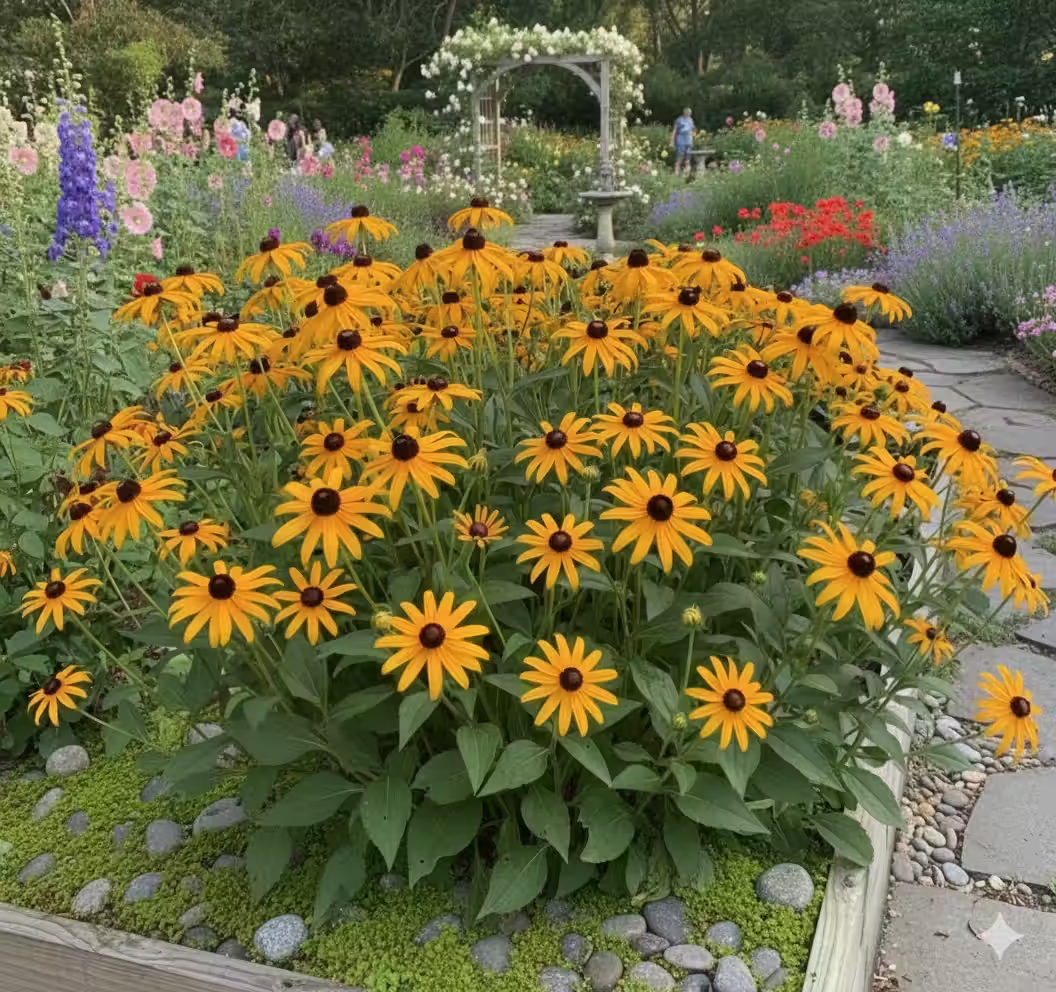
Black-eyed Susans produce thick basal rosettes that smother emerging weeds, then send up flowering stems that reseed strategically. They’re aggressive enough to outcompete weeds but controlled enough to not become invasive. The balance is perfect for low-maintenance gardens.
Hardy Geraniums (cranesbill types) spread wide and bloom prolifically. Varieties like ‘Rozanne’ flower from late spring through frost while expanding continuously. That combination of coverage and beauty makes them exceptional fillers that weeds can’t penetrate.
Coral Bells offer colorful foliage in shades most perennials don’t achieve—burgundy, lime, coral—while forming tight clumps that block weed seeds. In partial shade where color is scarce, they solve both aesthetic and maintenance problems simultaneously.
Sedum varieties handle conditions that kill most plants: poor soil, full sun, drought, neglect. Creeping types mat together; upright types like ‘Autumn Joy’ form clumps. Either way, they occupy space so completely that weeds find no foothold. Zero maintenance after establishment.
Ajuga spreads fast—sometimes too fast, but that’s exactly what you want for weed suppression. Those blue flower spikes in spring are bonus; the real value is that dense evergreen carpet that nothing penetrates. Works in sun or shade, tolerates foot traffic, asks for nothing.
Purple Coneflowers combine height, presence, and basal foliage that shades out competitors. They’re drought-tolerant, deer-resistant, and self-sow strategically without becoming invasive. Leave seed heads for birds; they’ll manage population naturally while blocking weeds.
Ferns own deep shade where little else grows. Ostrich ferns and lady ferns spread aggressively through rhizomes, their fronds creating layered canopy that eliminates light penetration. In woodland settings where weeds typically dominate, ferns flip the script entirely.
Bee Balm spreads through runners, forming colonies that expand annually. It attracts hummingbirds and butterflies while crowding out everything else. The fragrant foliage is bonus; the weed suppression is primary. Just divide every few years to maintain vigor.
Japanese Forest Grass creates arching mounds that shade soil completely in partial to full shade. That cascading foliage blocks light so thoroughly that weed seeds can’t germinate beneath it. In mass plantings, it forms continuous weed-free zones with minimal effort.
Catmint thrives in poor soil and drought—exactly where weeds usually win. It blooms for months, spreads into dense clumps, and requires essentially zero maintenance. Shear it mid-summer for fresh growth; otherwise ignore it. The plant handles everything else, including weed suppression.
Lady’s Mantle fills gaps with soft, scalloped leaves and chartreuse flowers. It self-sows modestly, creating natural colonies that expand slowly without aggression. Perfect for edges and underplanting where you want coverage without drama.
Matching Plant to Problem
The key is strategic placement:
- Deep shade: Hostas, ferns, Japanese forest grass
- Partial shade: Coral bells, hardy geraniums, lady’s mantle
- Full sun: Daylilies, black-eyed Susans, coneflowers, catmint
- Dry, poor soil: Sedum, lamb’s ear, catmint
- Moist areas: Bee balm, hostas, certain ferns
Plant the wrong species in the wrong spot, and it struggles while weeds thrive. Plant the right one, and it explodes while weeds disappear.
The Establishment Phase
These perennials aren’t instant solutions. First-year establishment requires weeding while they fill in. But that’s one season of effort for years of maintenance-free coverage.
Clear existing weeds thoroughly before planting. Space plants closer than recommended—you want faster coverage. Water consistently the first season. Mulch between plants initially to suppress weeds during establishment.
By year two, most of these perennials fill in completely. By year three, they’re self-maintaining weed suppressors that expand annually.
The Long-Term Reality
Once established, these beds require minimal intervention. Annual cleanup—cutting back dead foliage in spring—takes maybe an hour. Division every 3-5 years maintains vigor and provides propagation material. Otherwise, they manage themselves.
The time investment shifts from constant weeding to occasional maintenance. Instead of fighting the same weeds repeatedly, you’re managing thriving perennials that happen to eliminate weeds as a side effect of their growth.
What This Actually Saves
Calculate your annual weeding hours. Now multiply by a decade. These perennials eliminate most of that labor permanently after one season of establishment.
You’re not just saving time—you’re upgrading visual quality. Instead of bare mulch between plants or patchy beds with constant weed pressure, you get lush, continuous coverage with seasonal interest. Color, texture, flowers, foliage—all while requiring less work.
The Bottom Line
Weeds succeed because they’re optimized for colonizing empty space quickly. Trying to maintain empty space through removal is fighting evolution itself. You can’t win long-term.
The solution isn’t better weeding technique or more dedication. It’s eliminating the empty space weeds need. Fill it with aggressive, beautiful perennials that claim territory permanently, and the weeding problem solves itself.
One season of strategic planting ends years of weeding frustration. That’s not gardening advice—it’s basic strategy. Stop fighting weeds. Replace them with something better, then let biology handle enforcement.
