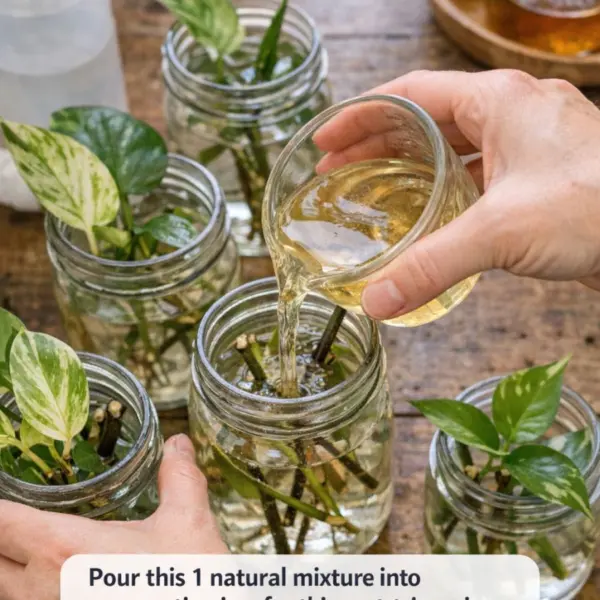
5. Step-By-Step: How To Mix And Prepare Your Root-Triggering Solution
Begin by preparing willow water. Place the chopped willow branches in a container and cover them with boiling water. Let the mixture steep for at least 24 hours to extract the beneficial compounds.
Next, strain the liquid into a clean bottle or jar, discarding the solid willow pieces. Add the fresh aloe vera gel to the willow water and mix thoroughly until the gel is fully dissolved. Your root-triggering solution is now ready for use.
6. How To Pour, Dilute, And Refresh The Mixture In Propagation Jars
To use the mixture, fill your propagation jars with the root-triggering solution, ensuring that the cuttings are submerged up to the node. It’s important to change the solution every 5-7 days to prevent bacterial growth and maintain its effectiveness.
If you find that the solution is too concentrated for delicate cuttings, you can dilute it with an equal amount of water. Monitor your cuttings regularly, and refresh the mixture as needed to keep the propagation environment ideal.
7. Best Plant Cuttings To Use With This Root-Boosting Hack
This natural root-boosting mixture is suitable for a wide variety of plant cuttings, including roses, hydrangeas, and succulents. Softwood cuttings, such as herbs and houseplants, also respond well to this treatment.
It’s particularly effective for plants that are known to be challenging to propagate through traditional methods. By using this mixture, even novice gardeners can achieve impressive results with their favorite plants.
8. Timing, Light, And Temperature For Maximum Root Growth
Timing is crucial when it comes to propagation. The best time to take cuttings is during the plant’s active growing season, typically in spring or early summer. During this time, plants have the energy reserves needed for root development.
Ensure that your propagation jars are placed in a well-lit area, but out of direct sunlight, as intense light can stress the cuttings. The ideal temperature range for root growth is between 65-75°F (18-24°C), providing a warm environment that encourages root formation.
9. Common Mistakes That Stop Roots From Forming
One common mistake is overwatering or using a mixture that is too concentrated, which can cause root rot or inhibit root growth. It’s important to strike the right balance between hydration and oxygen availability.
Another mistake is using old or unhealthy cuttings. Ensure your cuttings are fresh and taken from healthy parent plants to maximize the chances of successful rooting. Lastly, inadequate light or fluctuating temperatures can also hinder root development.
10. How To Transition Rooted Cuttings From Jars To Soil Or Hydro
Once your cuttings have developed a healthy root system, it’s time to transition them to soil or a hydroponic setup. Begin by hardening off the cuttings, gradually exposing them to increased light and air circulation.
When planting in soil, use a well-draining mix and plant the cuttings at the same depth they were in the propagation jars. Water them gently and keep the soil consistently moist but not waterlogged. For hydroponics, transfer the rooted cuttings to your setup, ensuring they have access to the necessary nutrients and light.
