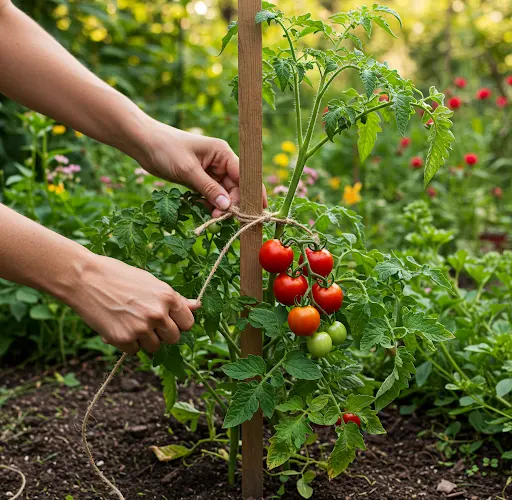
Tomatoes are among the most rewarding vegetables to grow at home, but they are also among the most demanding when it comes to support. As tomato plants grow, they become heavy with foliage and fruit, and without proper support they can easily bend, sprawl, or break. Learning how to tie tomato plants correctly is a key gardening skill that improves plant health, reduces disease, and leads to a larger, cleaner harvest.
Supporting tomatoes is not just about keeping plants upright. Proper tying improves air circulation, keeps fruit off the soil, reduces pest pressure, and makes watering, pruning, and harvesting much easier. The right method depends on the tomato variety, garden size, and available materials, but all systems follow the same basic principles.
Why Tomato Plants Need Support
Tomato stems are relatively soft and flexible. As fruit develops, branches can quickly become overloaded and collapse under their own weight. When plants sprawl on the ground, several problems arise: fruits are more likely to rot, pests gain easier access, and fungal diseases spread more quickly due to poor airflow and prolonged moisture on leaves.
Tying tomato plants helps:
- Prevent broken stems and branches
- Improve airflow and sunlight exposure
- Reduce fungal and bacterial diseases
- Keep fruit clean and pest-free
- Make harvesting faster and easier
Both determinate (bush-type) and indeterminate (vining) tomatoes benefit from support, though indeterminate varieties require stronger and taller systems.
Choosing the Right Support System
Before tying tomato plants, it is important to choose an appropriate support structure. Several reliable options are commonly used in home gardens.
Tomato cages are circular wire frames placed around young plants. They provide all-around support and are easy to install, making them ideal for beginners and smaller gardens.
Stakes are wooden, bamboo, or metal poles driven into the ground beside each plant. This method works well for both determinate and indeterminate tomatoes and allows precise control over plant shape.
Trellises use vertical or angled frameworks made of wires, netting, or panels. They are especially useful for indeterminate tomatoes grown in rows or greenhouses.
The Florida Weave is a popular system for growing many tomato plants in a row. It uses stakes and twine woven around plants to create a supportive wall.
Each system requires a slightly different tying technique, but the goal is always the same: support without restriction.
Best Materials for Tying Tomatoes
The materials used for tying should be soft, flexible, and strong enough to last through the growing season. Avoid thin wire or string that can cut into stems.
Good tying materials include:
- Strips of soft cloth from old shirts
- Garden twine or jute string
- Velcro plant ties
- Rubber or soft-coated plant ties
- Stretchable plant tape
- Biodegradable twine for eco-friendly gardens
Soft materials protect the stem while allowing room for growth.
Simple and Effective Tying Methods
Once your support system and materials are ready, tying can begin. Always start early, when plants are still small, to avoid damaging roots later.
1. Tying Tomatoes to Stakes
Staking is one of the simplest and most versatile methods.
Drive the stake into the ground about 5–7 cm away from the plant to avoid root damage. Begin tying at the base once the plant reaches 20–30 cm tall. Use a loose loop around the stem and the stake, leaving space for growth. Continue tying every 20–30 cm as the plant grows taller.
Never tie tightly. The stem should be able to move slightly in the wind, which actually helps strengthen it.
2. Tying Tomatoes to a Trellis
Trellises are excellent for indeterminate tomatoes that grow continuously.
Install the trellis before planting or while plants are still small. As the tomato grows, gently guide the main stem through the trellis openings. Use soft ties to secure side branches when necessary. Regular pruning helps keep plants manageable and prevents overcrowding.
This method maximizes airflow and sunlight while keeping plants vertical and organized.
3. The Florida Weave Method
The Florida Weave is ideal for long rows of tomatoes.
Place sturdy stakes every two to three plants. Starting about 30 cm above the ground, tie twine to the first stake, then weave it in a figure-eight pattern between plants and stakes. The string supports the plants from both sides. Add new layers of twine every 15–20 cm as plants grow.
This system is efficient, cost-effective, and works especially well for bushier tomato varieties.
4. Supporting Tomatoes with Cages
Tomato cages are easy to use and require minimal tying.
Place the cage over the plant early in the season. As the plant grows, gently guide branches inside the cage. For heavy fruit clusters, use soft ties to attach branches to the cage frame. Periodic pruning helps prevent overcrowding and improves airflow inside the cage.
Cages work best when they are tall and sturdy enough to handle mature plants.
5. Spiral Stake Method
Spiral stakes are metal supports with a corkscrew shape.
Insert the stake firmly into the soil next to the plant. As the tomato grows, gently wrap the main stem around the spiral. Side branches may need occasional tying for extra support. This method allows natural growth while keeping the plant upright and visually tidy.
Tips for Successful Tomato Tying
- Always tie loosely to avoid stem damage
- Check ties regularly and adjust as plants grow
- Remove damaged or diseased branches promptly
- Avoid tying leaves tightly, which restricts airflow
- Use biodegradable materials whenever possible
Supporting tomatoes is an ongoing task, not a one-time job. Regular attention ensures plants stay healthy throughout the season.
Strong Support, Better Harvests
Tying tomato plants properly is one of the most effective ways to improve plant health and increase yields. Whether you choose stakes, cages, trellises, or the Florida Weave, the right support system keeps plants upright, reduces disease, and makes gardening more enjoyable. With a little planning and regular care, your tomato plants will reward you with a generous harvest of clean, healthy, and delicious fruit.
