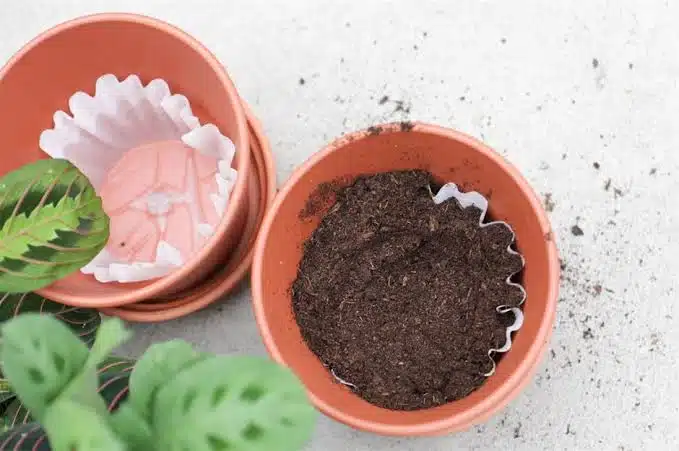
You don’t need expensive tools or special supplies to improve the health of your potted plants. Sometimes, the most effective solutions are already in your kitchen. One simple item — a paper coffee filter — can solve several common plant problems at once.
When you place a coffee filter at the bottom of your flower pot, you create a cleaner, more balanced growing environment for your plants. This small step takes seconds, costs almost nothing, and can make a noticeable difference over time.
Let’s break down why this trick works, how to use it correctly, and what benefits you can expect.
The Common Problem with Drainage Holes
Drainage holes are essential for healthy plants. They allow excess water to escape so roots don’t sit in soggy soil. However, they also cause a few frustrating issues.
Without any barrier, you may notice:
- Soil washing out every time you water
- Muddy water collecting in saucers
- Blocked drainage holes over time
- Uneven moisture inside the pot
- Faster soil breakdown
These problems can stress your plants and make maintenance messier than it needs to be.
How a Coffee Filter Solves These Issues
A paper coffee filter works as a gentle barrier. It allows water to pass through freely while keeping soil where it belongs.
Here’s what it does inside your pot:
- Holds loose soil in place
- Keeps drainage holes clear
- Improves water flow without trapping moisture
- Reduces mess under the pot
- Helps soil stay evenly moist
Unlike plastic or solid materials, coffee filters are breathable. That means roots still get the air and water they need to grow properly.
How to Use a Coffee Filter in a Flower Pot
You don’t need any special skills to use this method. It works for new plants and during repotting.
What You Need
- A flower pot with drainage holes
- One or two paper coffee filters
- Potting soil
- Your plant
Step-by-Step Instructions
- Turn the empty pot upside down and check the drainage holes.
- Place a coffee filter flat over the hole or holes.
- If the holes are large, overlap two filters.
- Add potting soil on top of the filter.
- Plant as usual and water gently.
That’s it. The filter stays in place and does its job quietly in the background.
Immediate Benefits You’ll Notice
Once you start using coffee filters in your pots, the difference becomes obvious quickly.
Cleaner Watering
When you water your plants, clear water drains out instead of muddy runoff. This keeps floors, shelves, and plant trays clean.
Less Soil Loss
You won’t see soil washing away with every watering. Your pot stays full, and you won’t need to top it off as often.
Better Drainage Control
The filter helps water move evenly through the soil. This reduces dry spots and prevents water from rushing out too quickly.
Healthier Roots
Roots grow best when they have access to both air and moisture. A coffee filter helps maintain that balance without suffocating the plant.
Works for Indoor and Outdoor Plants
This method isn’t limited to one type of plant or pot. You can use it almost anywhere.
It works well for:
- Indoor houseplants
- Outdoor containers
- Hanging baskets
- Terracotta pots
- Plastic or ceramic planters
Whether you’re growing herbs, flowers, or decorative plants, this small layer can improve the growing conditions.
Why Coffee Filters Are Better Than Rocks
Many people add gravel or stones to the bottom of pots, thinking it improves drainage. In reality, this often creates more problems.
Compared to rocks, coffee filters:
- Prevent soil from falling through holes
- Don’t trap water above the soil
- Are lightweight
- Break down naturally over time
- Are easier to use
Rocks add weight and don’t stop soil from escaping. A coffee filter does the job more effectively and with less effort.
How Long Does the Filter Last?
Paper coffee filters slowly break down as they stay moist. This is normal and not a problem.
In most cases:
- The filter lasts until the next repotting
- It won’t harm the plant as it decomposes
- It can be replaced easily when needed
Because the filter is biodegradable, it fits naturally into a plant-friendly routine.
Can You Use Used Coffee Filters?
Yes, you can reuse coffee filters as long as they’re clean.
Before using one:
- Shake or rinse off coffee grounds
- Let it dry if possible
A small amount of residue won’t harm most plants, but clean filters are best for indoor pots.
A Small Change That Makes Plant Care Easier
You don’t need complex systems to improve your plants’ health. By adding a coffee filter to the bottom of your pots, you reduce mess, protect roots, and keep soil where it belongs.
It’s a simple habit that makes watering easier and plants happier — and once you try it, you’ll likely use it every time you pot a plant.
Ready to Try It Yourself?
The next time you repot a plant or set up a new container, use a coffee filter and see the difference for yourself. If this tip helped you, share it with other plant lovers and explore more simple gardening ideas that make everyday plant care easier and more enjoyable.
