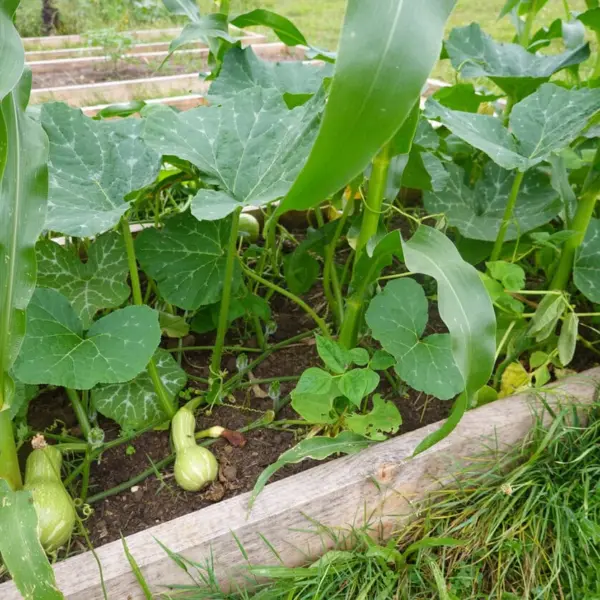
Here’s a simple truth I’ve learned over the years: growing corn alone is a missed opportunity for a-maize-ing results. Corn is a hungry crop, and when you pair it with the right companions, the whole bed becomes more productive.
I’m not into gimmicks or garden myths, just intercropping methods that genuinely lead to stronger plants and better harvests!
Ear-resistible Partners for a Productive Harvest

Corn grows tall and fast, but they need the right partners to handle the gritty ground-floor work of protecting the soil, managing moisture, and making better use of every inch of space.
Nitrogen Fixers:

Corn has a remarkable appetite, and I’ve learned the hard way that planting it alone can drain soil fast. Planting legumes builds a nitrogen surplus underground that your corn benefits from.
- Pole Beans: These are my go-to companions for corn. Even after the last beans are picked, I leave the roots in the ground so they can slowly break down and return nitrogen to the soil.
- Peas: I like using peas early in the season. Staggered planting allows these crops to work double shifts by providing a quick harvest, and once the plants are pulled or cut back they become green manure for the soil.
Wait until stalks reach about 6 inches before sowing beans. If they go in too early, these assertive climbers will strangle your crop before it finds its footing.
Quick note: Legumes don’t feed corn directly on demand, but they do improve the soil over time and help balance nitrogen in a busy garden bed, especially when you leave their roots in place after harvest.
Soil Protectors:

These low-growing companions do some of the hardest work in a corn bed. These sprawling partners shade the dirt, keep roots cool and moisture where it belongs.
- Winter Squash: This is a classic partner for corn. The the prickly vines discourage thirsty raccoons at bay, allowing massive leaves to focus on shading the soil and preserving moisture. But, I actually love how well they suppress weeds.
- Cucumbers: Choose them for a fast harvest and excellent ground cover. like planting them along the sunnier edges of the corn patch so they still get plenty of light while benefiting from a bit of wind protection from the taller stalks.
- Melons: Melons use the corn as a windbreak while they sprawl across the floor. They turn emptiness into a sweet and high-yield bonus.
I’ve also noticed they cut way down on weeds, which makes the whole bed easier to manage.
For best results, wait about two weeks after corn emerges before sowing squash, cucumbers, or melons. Planting them too early can let those vines outpace young corn and compete before the stalks are fully established.
Pest Control & Pollination:

Stop bugging out over pests! And instead of relying on sprays, I prefer to add colorful flowers to my beds that attract beneficial insects and create a more balanced space where pests don’t get out of hand.
- Marigolds: I use marigolds mainly to draw in helpful insects. Since these stinky guardians scare off aphids by bringing in lady beetles, lacewings, and other predators. Use them to ring the dinner bell for any passing predator.
- Nasturtiums: I use them as a clever trap crop. Aphids find them so attractive that they will often flock to them first and ignore your corn to party on the flowers.
- Dill: This is one of my favorite companions for corn. Once it flowers, it attracts tiny parasitic wasps that hunt earworms and aphids with relentless dill-igence, patrolling every stalk to keep your harvest safe while you relax.
- Borage: I like to plant mainly because it’s excellent for pollinators. Bees absolutely love it, and better pollination nearby helps the entire garden stay productive.
I like to plant these flowers at the same time as corn so the bouncers are on duty before pests try to worm their way into your harvest.
The Phases of Synchronized Sowing

Over the years, I’ve learned that planting everything at once usually causes problems. So, timing a corn-centric bed requires a bit of choreography so their friends don’t trip over one another.
Pods and Patience:
I like to start with peas early, tucking them along the edges of the garden bed as soon as the soil is workable in spring. They thrive in cool air and get growing well before summer heat arrives, helping improve soil health early in the season.
Launch marigolds indoors or inside a cold frame during that same week. A head start helps them bloom just as the first wave of corn pests arrives to scout the bed.
Borage is the exception. I’ve found it does best when direct-sown outdoors rather than transplanted. It germinates quickly once the soil warms a bit and settles in better when its roots aren’t disturbed.
Stalk Market Rises:
Wait until the soil reaches about 65°F before you direct sow your corn. Cold soil slows germination and leads to weak, uneven growth.
Plant it in sturdy blocks instead of a single line. A four-row minimum promises successful wind-driven pollination.
Hold off on planting the beans or squash. If they go in now, they will outpace the corn and pull the young stalks to the ground.
Bean There, Squash Here:
- After your corn reaches about 6-8 inches tall, tuck pole beans around each stalk so they can climb without pulling the corn down.
- Scatter winter squash, cucumbers, or melons throughout the gaps between those corn rows.
- Plant marigolds, dill, and borage into the corners or edges of the plot, where they won’t compete with corn but can still attract beneficial insects.
Spacing-wise, plant 1-2 bean seeds for every corn stalk, and your squash or melons about 3 feet apart. A single marigold or dill plant every 3 feet is plenty; you don’t need to pack them in for them to be effective.
The Final Ear-a:
Slice back aggressive squash vines in early summer to stop them from swallowing your young corn whole. Yank cucumbers and peas by mid-summer to clear space for wandering squash vines.
Shake your corn stalks on a quiet morning during late summer so the wind finishes its pollination chore. Harvest the corn first once autumn arrives, but leave bean roots inside the dirt to decay and release nitrogen.
Corn To Be Wild

Testing your green thumb yields results that are nothing short of legend-eary. You might start for the snacks, but you stay for the sheer pride of a perfect crop. And why not? Nothing beats the sound of a fresh harvest snapping off the stalk. Cob-gratulations.
