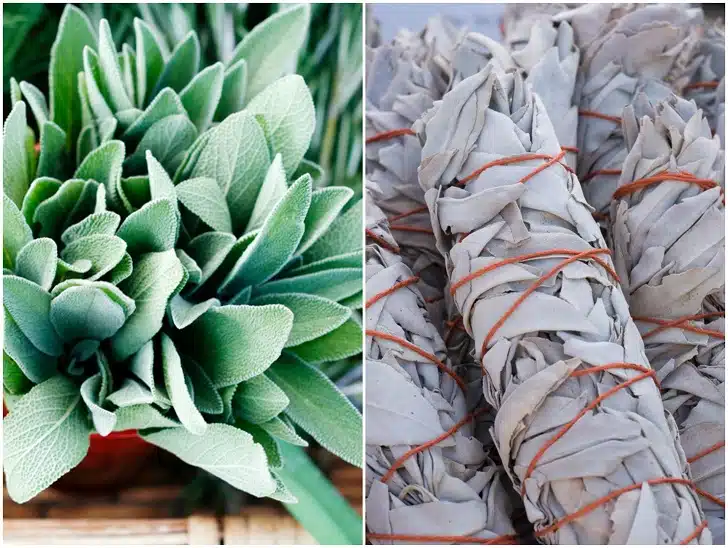
Sage doesn’t just benefit you – it benefits your entire garden.
- Attracts pollinators: The purple-blue flowers are magnets for bees, butterflies, and other beneficial insects.
- Repels pests: Sage’s strong aroma naturally repels pests like cabbage moths, carrot flies, and mosquitoes.
- Companion planting: Grow sage near cabbage, carrots, or brassicas to deter pests and improve growth.
Bonus tip: Plant sage near tomatoes to enhance their flavor and repel harmful insects like hornworms.
3. It’s a Nutritional and Medicinal Powerhouse
Sage is much more than a kitchen herb – it’s a potent natural remedy. It contains a rich array of antioxidants, essential oils, vitamins, and phytochemicals that have been linked to numerous health benefits.
Key nutrients and compounds:
- Rosmarinic acid & carnosic acid: Potent antioxidants that reduce inflammation and oxidative stress.
- Thujone & camphor: Support cognitive health and improve circulation.
- Vitamin K: Essential for bone health and blood clotting.
- Flavonoids & polyphenols: Strengthen the immune system and protect against chronic diseases.
Traditional and modern uses include:
- Improving memory and cognitive function
- Balancing hormones and reducing menopause symptoms
- Supporting digestion and easing bloating
- Strengthening the immune system
- Lowering cholesterol and blood sugar
Did you know? Research shows that sage extracts can improve memory and focus – a reason it’s sometimes called the “thinker’s herb.”
4. Sage Is Incredibly Versatile – 20+ Uses Across Home, Kitchen, and Medicine
If there’s one reason to grow sage above all others, it’s this: it’s one of the most multi-purpose plants you can grow.
Once established, a single sage plant can serve dozens of roles – from flavoring meals and soothing sore throats to cleaning your home and repelling insects.
Let’s explore 20 brilliant ways to use sage in every area of your life.
20 Brilliant Ways to Use Sage
I. Culinary Uses (1–6)
Sage is a classic culinary herb, especially in Mediterranean, Italian, and French cuisine. Its earthy, slightly peppery flavor enhances both savory and sweet dishes.
1. Flavor Roasted Meats and Vegetables
Sage pairs beautifully with roasted meats like chicken, pork, and lamb. Its strong flavor cuts through rich, fatty dishes.
How to use:
- Tuck fresh leaves under the skin of a chicken before roasting.
- Toss chopped sage with root vegetables and olive oil before baking.
Why it’s beneficial: Sage contains digestive enzymes that help break down fats, making heavy meals easier to digest.
2. Infuse Butter and Oils
Sage-infused butter or oil adds depth to pasta dishes, sauces, and even popcorn.
How to make:
- Melt butter and sauté fresh sage leaves until crispy.
- Strain and store the infused butter in the fridge.
- Alternatively, steep sage leaves in warm olive oil for 2–3 weeks.
3. Add to Soups and Stews
A few leaves transform basic soups into aromatic, comforting meals. Try adding sage to bean stews, lentil soups, or creamy chowders.
Pro tip: Sage pairs especially well with white beans, potatoes, and mushrooms.
4. Make Sage Tea
Sage tea has been used for centuries as a digestive tonic and immune booster.
How to prepare:
- Steep 5–6 fresh leaves (or 1 tsp dried) in hot water for 10 minutes.
- Add lemon and honey if desired.
Benefits: Sage tea can reduce inflammation, ease sore throats, support digestion, and relieve menstrual cramps.
5. Sage Vinegar or Honey Infusion
Infused vinegar or honey captures sage’s flavor and medicinal properties.
- Sage vinegar: Fill a jar with sage leaves and cover with apple cider vinegar. Steep for 3 weeks, then strain.
- Sage honey: Warm honey gently and pour over sage leaves in a jar. Let infuse for 2 weeks.
Uses: Salad dressings, marinades, natural cold remedies.
6. Herb Salt and Spice Blends
Dry sage leaves and blend with sea salt, garlic powder, and pepper for a flavorful herb salt. Use it on meats, veggies, or bread.
II. Medicinal and Health Uses (7–14)
Sage has a long tradition in herbal medicine – and science backs many of these uses.
7. Natural Cold and Flu Remedy
Sage tea soothes sore throats, reduces coughing, and helps clear mucus.
How to use:
- Combine sage with thyme and honey in hot water.
- Drink 2–3 times daily during cold or flu.
Why it works: Sage’s antimicrobial and anti-inflammatory properties fight infections and calm irritated airways.
8. Sore Throat Gargle
A sage gargle is one of the most effective natural remedies for throat infections.
Recipe:
- Boil 1 cup of water with 1 tbsp dried sage.
- Cool slightly, add salt, and gargle twice a day.
9. Cognitive Support and Memory Booster
Sage has been shown to improve memory, focus, and mental clarity – even in people with Alzheimer’s disease.
How to use:
- Drink sage tea daily.
- Diffuse sage essential oil while studying or working.
10. Hormone Balance and Menopause Relief
Sage helps reduce hot flashes, night sweats, and mood swings during menopause.
How to use:
- Drink 1 cup of sage tea daily.
- Take standardized sage extract supplements (consult your doctor first).
11. Digestive Aid
Sage stimulates bile flow and digestive enzymes, easing bloating and indigestion.
How to use:
- Drink sage tea after meals.
- Add fresh sage to fatty meals to support digestion.
12. Blood Sugar Regulation
Preliminary research suggests sage may help lower blood sugar levels and improve insulin sensitivity.
How to use: Drink unsweetened sage tea daily for metabolic support.
13. Anti-Inflammatory and Pain Relief
Sage compresses and essential oil can ease arthritis, sore muscles, and joint pain.
How to use:
- Soak a cloth in warm sage tea and apply as a compress.
- Massage diluted sage essential oil onto sore joints.
14. Mouth and Gum Health
Sage’s antibacterial properties make it ideal for oral care.
How to use:
- Gargle with cooled sage tea for gum inflammation.
- Add sage-infused water to homemade mouthwash recipes.
III. Beauty & Skincare Uses (15–17)
Sage’s antioxidants, essential oils, and antimicrobial properties make it a fantastic natural ingredient for DIY skincare.
15. Anti-Aging Toner
Sage tightens pores, reduces wrinkles, and rejuvenates skin.
How to use:
- Boil sage leaves in water, cool, and strain.
- Apply the infusion as a toner with a cotton pad.
16. Hair Rinse for Shine and Growth
Sage stimulates the scalp and reduces dandruff, promoting healthy hair growth.
How to use:
- Boil sage leaves in water, cool, and pour over hair after shampooing.
- Massage gently into the scalp and rinse after 10 minutes.
17. Natural Deodorant
Sage reduces perspiration and kills odor-causing bacteria.
How to use:
- Apply cooled sage tea to underarms with a cotton ball.
- Or mix sage essential oil with coconut oil and baking soda for a DIY deodorant balm.
IV. Home & Garden Uses (18–20)
Sage’s powerful aroma and antibacterial properties make it valuable beyond the kitchen and medicine cabinet.
18. Natural Insect Repellent
Burning dried sage leaves outdoors repels mosquitoes and flies. You can also make a spray by steeping sage in vinegar for two weeks and using it on garden plants.
19. Cleansing and Purification (Smudging)
For centuries, sage has been used in spiritual practices to purify spaces, clear negative energy, and promote mental clarity.
How to use: Dry sage bundles and burn them slowly, wafting the smoke around your home or workspace.
20. Companion Plant in the Garden
Plant sage around vegetable beds to repel pests and attract pollinators. It’s especially helpful near carrots, cabbage, and tomatoes.
Growing and Harvesting Sage: A Quick Guide
Planting
- Soil: Well-drained, slightly sandy soil.
- Sun: Full sun (at least 6–8 hours a day).
- Spacing: 12–18 inches apart.
Watering
Water deeply but infrequently. Allow the soil to dry between waterings.
Harvesting
- Harvest leaves once the plant is well-established (about 2 months after planting).
- Pick leaves in the morning when essential oil content is highest.
- Dry excess leaves by hanging them in a warm, dark, ventilated place.
Sage is more than just a kitchen herb – it’s a living medicine chest, a pest repellent, a pollinator magnet, a beauty ingredient, and a centuries-old remedy rolled into one.
