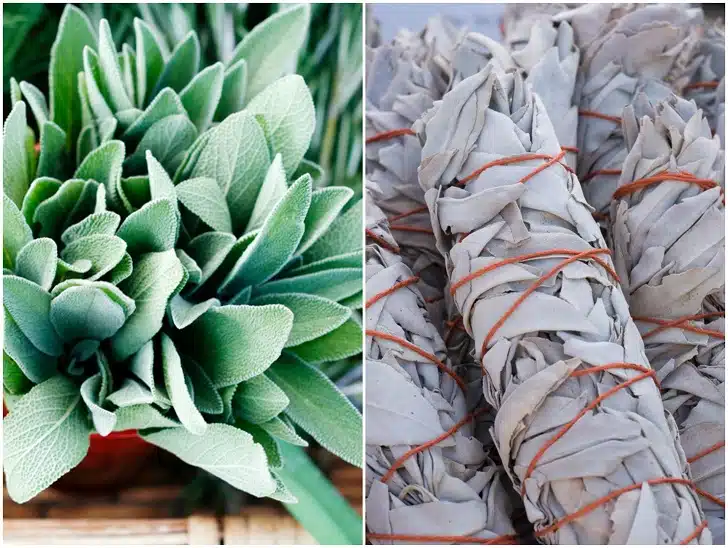
Sage is one of those plants that seems almost too good to be true.
It’s a hardy, aromatic perennial that’s easy to grow, beautiful in the garden, and packed with uses that span centuries – from ancient healing and sacred rituals to culinary, medicinal, and household applications.
If you’re looking for a versatile herb that earns its space many times over, sage (Salvia officinalis) is it.
What Is Sage?
Sage (Salvia officinalis) is a perennial herb native to the Mediterranean, part of the mint family (Lamiaceae).
Its name comes from the Latin salvare, meaning “to heal” or “to save” – a hint at the herb’s long history as a medicinal and spiritual powerhouse.
Ancient Greeks and Romans revered sage as a sacred plant for longevity and wisdom. In medieval Europe, it was known as the “herb of immortality.”
Even today, herbalists and holistic practitioners consider it one of nature’s most valuable herbs.
Sage is best known for its silvery-green leaves, earthy aroma, and distinctive flavor, but beyond its culinary use, it offers a wealth of health, garden, and household benefits.
4 Reasons to Grow Sage in Your Garden
1. It’s an Easy, Low-Maintenance Perennial Herb
Sage is one of the easiest herbs you’ll ever grow. Once established, it thrives with minimal care – even beginners can succeed.
- Hardiness: Sage is hardy in USDA zones 4–9. Once planted, it returns year after year.
- Drought-tolerant: Its Mediterranean roots mean it’s highly resistant to drought once established.
- Low maintenance: Needs little fertilizer, minimal pruning, and rarely suffers from pests.
- Versatile growing options: Can be grown in garden beds, containers, raised beds, or even indoors on a sunny windowsill.
Planting tip: Sage prefers full sun, well-drained soil, and moderate watering. Avoid overwatering – too much moisture is the quickest way to kill it.
2. Sage Attracts Pollinators and Repels Pests
TO CONTINUE READING THE ARTICLE PLEASE SEE PAGE 2
