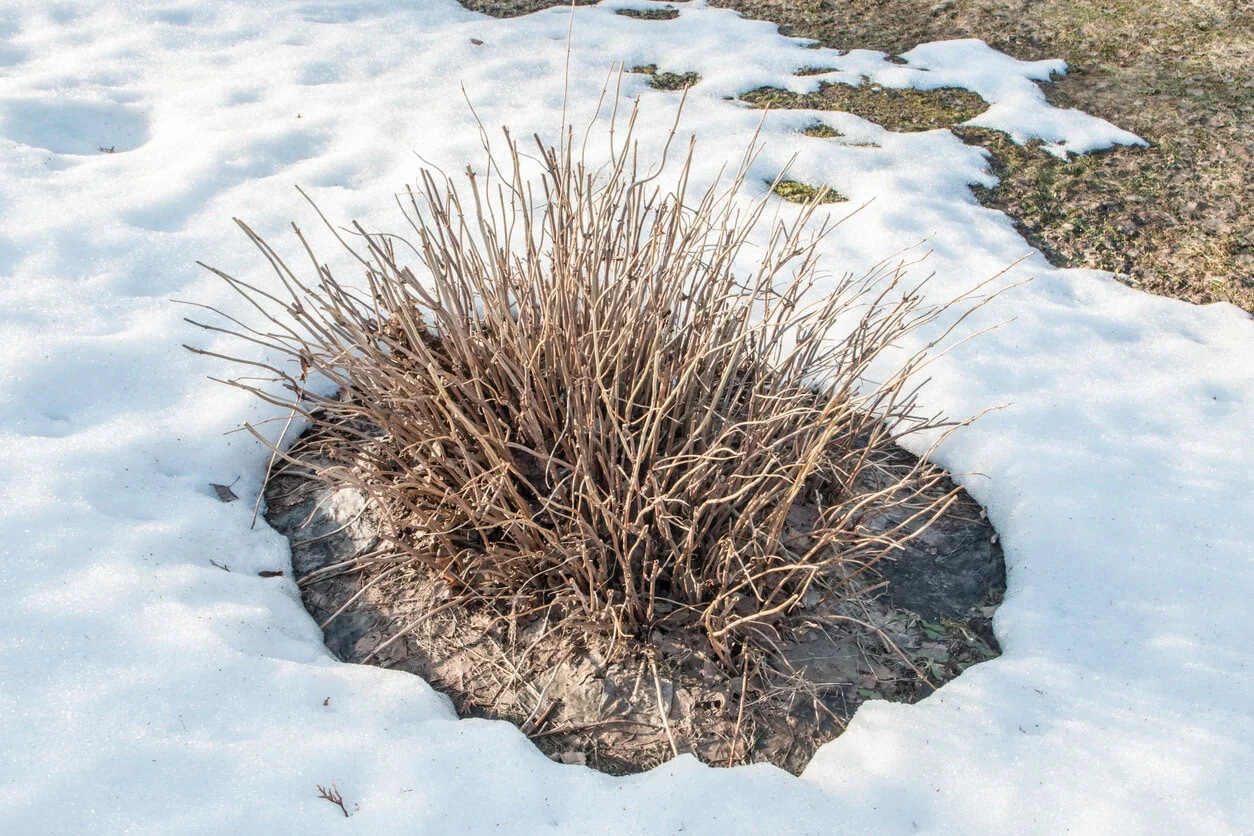
I’m a sucker for a giant bloom. But back when I was still a gardening n00b, I played a risky game of chicken with a hard freeze, a bag of mulch, and a watering can… and I lost.
Ever since, I’ve learned that a little winter prep goes a long way. In my experience, these four simple jobs can make the difference between sad sticks in spring and big, beautiful hydrangea flowers in summer.
Let’s wrap our heads around them now, so your garden can be blooming marvelously later.
Job 1: Leave the Spent Blooms in Place

It is tempting to deadhead those brown flowers the second they lose their luster, I know. I spent my first few seasons obsessing over a perfectly tidy yard, and it backfired every single spring.
I couldn’t stand the sight of decay. But I realized too late that I was basically undressing my hydrangeas for winter. By early spring, the wind had completely dried out the stems, and my summer flower count hit zero!
Now, I leave the old heads alone through the colder months. Those dried-out petals act like a little shield and protect the tiny buds tucked just below the bloom. They take the cold and wind damage so the new growth doesn’t have to.
Beyond the survival aspect, they actually look incredible catching the frost. It’s a solid perk when the rest of the yard looks bleak.
Job 2: Mulch the Base Before Hard Freezes

Hydrangeas have shallow roots that really don’t appreciate the rapid freeze-thaw roller coaster of winter. When the ground repeatedly freezes and warms, it can heave the roots upward and stress the whole plant.
That’s why your second job is simple: protect the base before deep cold sets in.
I pile a thick layer of wood chips, shredded leaves, or leaf mold around the plant to insulate the roots. I usually aim for about three to four inches of coverage.
Do not let the mulch touch the actual woody stems directly. That can trap moisture and lead to rot. Instead, create a little “mulch donut” around it.
I once skipped mulching during a lazy autumn, and by April, my bigleaf hydrangea looked like it had spent ten rounds in a blender. Never again.
If you’re wondering what else hydrangeas need as winter starts winding down, we wrote an article about a few essential hydrangea care tasks to tackle in February.
Job 3: Protect Plants From Windburn

If the wind in your area is relentless, your hydrangeas are going to suffer. Cold winter wind can dry out the stems and buds until they become brittle and snap.
I fought back last year by wrapping burlap around three wooden stakes to build a basic little shrub-shack. It was not exactly a feat of modern architecture, but it broke the spirit of the wind without suffocating the plant.
Just don’t use plastic. It can trap heat during the day, then freeze the plant at night, creating the perfect recipe for damage. Burlap breathes, so it works much better as a simple wind screen.
Job 4: Water During Dry Winter Spells

Hydrangeas are experts at playing dead, yet dormancy offers no hall pass to ignore the soil.
During a dry winter stretch, I poke a finger into the ground. If the earth feels like dust two inches down, your shrub is quietly struggling.
Moist soil holds onto warmth better than dry soil, which helps protect the roots from serious freeze damage. That said, you should only drag the hose out when the temperatures rise above 40°F, so the water can soak in properly.
Otherwise, if the ground is frozen solid, you’ll just craft a private ice rink.
Proper hydration also helps prevent winter sun and wind from drying your investment (aka your hydrangea). In my experience, stressed, thirsty roots almost always lead to weaker growth and fewer blooms once spring returns.
And if you do all of this but still aren’t seeing flowers, we explain the most common reasons hydrangeas don’t bloom in another article.
The One Big Mistake: Don’t Get Pruner-Happy

The biggest blunder in the history of hydrangea care involves the pruning shears.
Most of the popular varieties, like Bigleaf and Oakleaf, bloom on old wood. It means the flowers you admire in July were actually formed back in the late summer of the previous year.
If you go out there during winter and start trimming away, you are literally cutting off your summer flowers before they even bloom.
A few years ago, I watched my neighbor neatly pruning his hydrangeas down to about 12 inches in January. He had the tidiest sticks in the neighborhood… but he didn’t see a single flower for two years.
In my experience, it’s best to keep the shears in the shed unless you know you’re growing a Panicle or Smooth hydrangea. Those specific types bloom on new wood and can handle harder pruning.
But most others carry their buds through the winter, so heavy pruning is best avoided. If you do need to shape them, wait until after flowering, once the summer flowers finally fade.
If you want a clear visual guide, we explain exactly how to prune hydrangeas that bloom on old wood versus new wood, with photos of the most common varieties.
And since timing depends so much on where you live, we also put together a guide on the best time to prune hydrangeas for each growing zone.
The False Spring Trap

Your local freeze dates are the ultimate playbook for every chore.
You want to apply your mulch donut only after the first hard freeze to lock the ground in a steady slumber. If you mulch too early, rodents may nest in that cozy warmth, and you can also encourage more freeze-thaw cycling instead of preventing it.
Similarly, these dates define your watering window too. You must hydrate the soil before the earth freezes solid. But you can safely retire the burlap and bring out the shears only after the last frost date passes in spring.
Quick tip: Most green thumbs start with a Plant Hardiness Zone Map, but honestly, I’ve had the best luck checking frost dates through a local extension office or a simple zip-code search before I plan spring cleanup.
Stemming the Winter Tide

And if you’ve already cut yours back too far, don’t panic! We also explain whether hydrangeas will grow back if they’ve been cut down, and what you can expect next season.
Anyone who’s spent enough winters making gardening mistakes knows that a little preparation saves a lot of heartache in May. Your hydrangeas are tougher than they look, true, but even strong gals need a bit of extra care and protection.
Once you’ve handled these simple winter tasks, you can head back inside for some cocoa. Your summer garden is already off to a ground-breaking start.
